 China eBike
UN 38.3 for E-Bike Battery Imports: What the Test Summary Proves
Learn what a UN 38.3 e-bike battery test summary supports for transport, how to match it to a shipment, and what it does not prove.
Importing an e-bike battery is not simply a matter of confirming voltage, capacity, price, and delivery terms. Lithium-ion batteries are regulated in transport because damaged, defective, incorrectly packaged, or improperly declared batteries can present a fire risk.
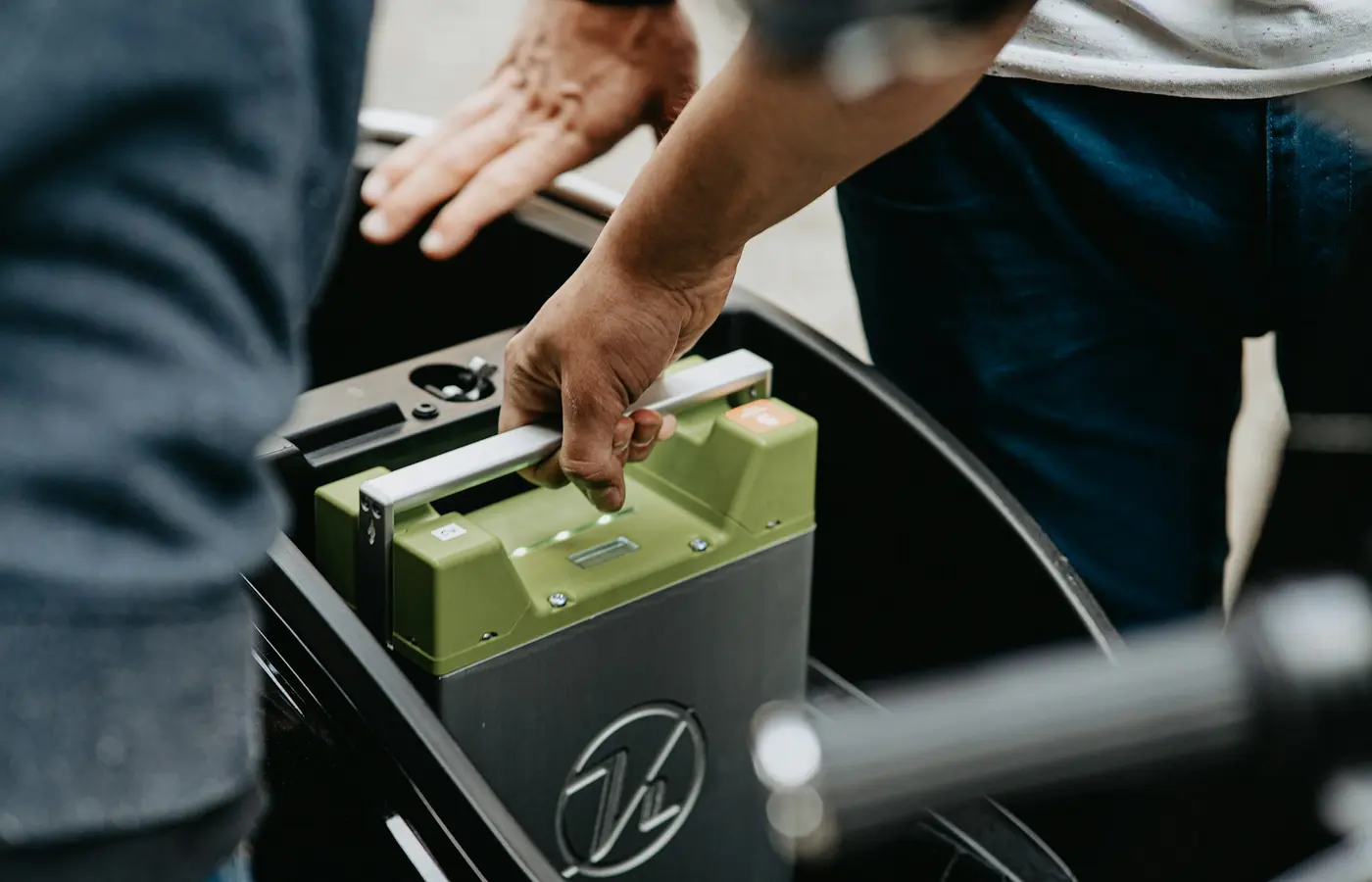
For many importers, the first document requested by a freight forwarder or buyer is a UN 38.3 test summary. It is an important document, but it is often misunderstood. A valid summary can support the proposition that a lithium battery type has completed the transport tests described in the UN Manual of Tests and Criteria. It does not automatically prove that the battery is safe in every use case, compliant in every destination market, accepted by every carrier, or identical to the pack that will arrive in the container.
The practical question is therefore not just, “Does the supplier have a UN 38.3 document?” It is: Does the document demonstrably apply to the exact e-bike battery being shipped, and does the planned shipment meet the transport requirements of the selected route and carrier?
What a UN 38.3 Test Summary Is—and Why Importers Need It
UN 38.3 refers to subsection 38.3 of Part III of the United Nations Manual of Tests and Criteria. The subsection addresses tests for lithium cells and batteries in the context of transport.
In practical terms, the testing programme is intended to evaluate whether a lithium battery type can withstand certain conditions that may occur during transportation. The tests are not a general endorsement of a battery design, its charger, its battery-management system settings, or the safety of the complete e-bike.
A test summary is a document that communicates relevant information about the tested cell or battery and the outcome of the applicable UN 38.3 testing. It is distinct from a full laboratory report. A supplier may possess both, but an importer should not assume that a report number alone is enough for a freight booking or customs file.
Request the summary early—ideally before paying a deposit, finalising a purchase order, or booking freight. This gives time to identify mismatched part numbers, unclear battery configurations, and documentation gaps before cargo is packed.
For an e-bike importer, the main value of the summary is transport traceability:
- It helps identify the battery type represented as having passed the relevant transport tests.
- It gives the forwarder or carrier supporting information when they assess a shipment.
- It creates a document trail that can be compared with the purchase order, invoice, packing list, labels, and battery specification.
- It can reveal whether the supplier is providing documentation for a different capacity, enclosure, cell type, or battery revision.
A summary should be treated as one component of a shipment file, not as the shipment file itself.
The Transport Tests Behind UN 38.3
The UN 38.3 programme includes a sequence of transport-related evaluations designed around mechanical, environmental, and electrical stresses. The exact test names, sequence, conditions, and pass criteria should be checked against the current applicable edition of the UN Manual of Tests and Criteria rather than copied from an old supplier presentation or online checklist.
That distinction matters because lithium battery transport rules are detailed and may change through updated editions, modal regulations, and carrier procedures.
At a high level, the programme is concerned with whether cells and batteries can tolerate specified transport-abuse conditions without outcomes that the UN procedure treats as failure. Depending on the battery type and construction, the testing framework may involve conditions associated with pressure, temperature change, vibration, shock, external electrical events, and other transport-relevant stresses.
For an importer, the key point is not to memorise a list of test labels. The useful question is whether the supplier can show that the specific battery type or legitimately covered battery family has been evaluated under the applicable UN 38.3 framework.
Do not infer more than the document supports. Passing transport testing does not establish that a battery will:
- remain safe after a severe crash, crushing event, water ingress, or unauthorised repair;
- perform reliably for a particular number of charge cycles;
- work safely with every charger or e-bike controller;
- meet the consumer-product rules of the destination market; or
- be accepted under every airline, ocean carrier, courier, or forwarder policy.
Those are separate questions requiring separate evidence.
What to Check in a UN 38.3 Test Summary
A test summary is most useful when it can be matched line by line to the battery you are buying. Ask the supplier for both the summary and a controlled battery specification. Then compare those documents with your commercial paperwork.
The review should focus on identity, configuration, and accountability.
| Review area | What to compare | Why it matters |
|---|---|---|
| Battery identity | Brand, manufacturer identity, battery model, part number, and revision where available | A similar product name may conceal a different battery design. |
| Electrical specification | Nominal voltage, rated capacity, watt-hours, and chemistry description | A different capacity or voltage can indicate a different pack configuration. |
| Cell configuration | Cell manufacturer or cell type, cell format, series/parallel arrangement, where documented | A pack using substituted cells may not be the tested configuration. |
| Physical construction | Housing, connectors, enclosure version, and protective features where stated | Changes to the enclosure or pack architecture can affect whether the document applies. |
| Test-document identity | Summary or report identifier, issue date, laboratory or issuing entity, and authorisation details where shown | These details help establish a traceable audit trail. |
| Shipment paperwork | Purchase order, invoice, packing list, carton markings, and battery labels | The goods being booked should be identifiable as the goods covered by the documents. |
Ask for the controlled specification, not only a marketing datasheet
A retail-style datasheet may state “48 V 20 Ah” while omitting the information that distinguishes one pack from another. For a transport-document review, request the supplier’s controlled technical specification or equivalent manufacturing document.
Useful details may include:
- internal and external model numbers;
- chemistry description;
- rated voltage and rated capacity;
- calculated watt-hour rating where provided;
- cell make and model, if the supplier discloses it;
- cell arrangement or pack architecture, where relevant;
- battery-management-system version or revision, where controlled;
- enclosure and connector version; and
- manufacturing revision history.
Not every supplier will disclose every engineering detail. However, a supplier should be able to explain, in writing, why its supplied battery is the same as—or properly covered by—the battery identified in the UN 38.3 summary.
Check consistency across documents
A common documentation risk is that each document looks plausible in isolation but the set does not match. For example, a summary may identify one battery model, while the invoice uses a generic battery description and the carton label shows another part number.
Resolve these inconsistencies before shipment. A written explanation should identify the relationship between the names or numbers, such as an internal factory number and a customer-facing part number. Keep that explanation with the shipment file.
How to Tell Whether the Summary Applies to Your E-Bike Battery
A genuine-looking UN 38.3 summary may still be irrelevant to your order. This is especially important in e-bike sourcing, where a nominally similar battery may be supplied with different cells, a revised battery-management system, a different case, or a higher capacity.
The basic rule is simple: do not match by voltage alone. A 48 V battery is not necessarily equivalent to another 48 V battery, even if both are sold for the same style of e-bike.
Treat changes as questions, not assumptions
The following changes should trigger a review rather than an automatic assumption of coverage:
- a different battery model number or revision;
- changed cell supplier, cell model, or cell format;
- different rated capacity or watt-hour rating;
- revised series/parallel configuration;
- altered enclosure, mounting rail, connector, or cable assembly;
- changed battery-management system hardware or firmware where it affects pack operation;
- a replacement battery sold under a similar commercial name; or
- a supplier change between samples and production.
Some related products may be legitimately covered by a test programme or documented battery family. However, that conclusion requires a documented basis. Ask the manufacturer to state clearly whether the production battery is identical to the tested unit or why it is covered by the underlying test evidence.
A useful supplier confirmation should identify:
- the battery model and revision being supplied;
- the relevant UN 38.3 summary or report identifier;
- whether the supplied battery is identical to the tested configuration or covered as a related configuration; and
- the person or department responsible for the statement.
If the answer is vague—such as “same battery, no problem”—pause the shipment process. Vague assurances are not a substitute for controlled documentation.
Consider direct verification when the exposure is high
For a large order, a new supplier relationship, a battery change, or a shipment with difficult air-freight routing, consider escalating the review. Options may include requesting a fuller report package from the supplier, asking the issuing laboratory whether it can verify the document, or engaging a qualified dangerous-goods professional.
This is not an accusation of fraud. It is normal risk control when a document governs the transport of a regulated product.
What UN 38.3 Does Not Prove
A UN 38.3 e-bike battery test summary has a defined transport purpose. Importers should avoid using it to make broader claims that it cannot support.
It does not, by itself, prove:
- overall product safety: Transport testing is not a complete battery safety assessment for normal use, abuse, charging, storage, repair, or end-of-life handling.
- charger compatibility: A battery may need to be assessed with its intended charger, charging connector, communications system, and battery-management strategy.
- complete e-bike compliance: The e-bike, battery, charger, motor system, wiring, and controls may each be subject to separate destination-market requirements.
- destination-market conformity: Legal requirements vary by market and may apply to the complete vehicle, electrical equipment, electromagnetic compatibility, labelling, documentation, and producer responsibilities.
- carrier acceptance: A carrier or forwarder can require additional declarations, packaging evidence, booking approval, quantity controls, state-of-charge limits, or route-specific conditions.
- quality consistency: A test summary does not demonstrate that every production battery uses the same controlled materials and process as the tested unit.
- long-term durability: It does not establish expected calendar life, cycle life, capacity retention, or performance in extreme climates.
This distinction is commercially important. A seller that presents UN 38.3 as proof that an entire e-bike package is “fully certified” is combining separate compliance questions into one unsupported claim.
UN 38.3 in a Shipment File: Documents and Questions for Suppliers and Forwarders
Build the shipment file before cargo reaches the warehouse. Waiting until a forwarder asks for documents can lead to rework, storage charges, missed sailings, or a last-minute switch to a more expensive route.
Documents to request from the supplier
The exact document list depends on the transport mode, battery condition, packaging arrangement, destination, and forwarder. As a starting point, request:
- the UN 38.3 test summary for the battery being supplied;
- the battery specification and model/revision information;
- a written confirmation linking the supplied battery to the summary;
- safety data sheet documentation where relevant to the planned shipment;
- the supplier’s stated transport classification and shipping description;
- packaging specifications or packing information relevant to the battery shipment;
- battery and carton label artwork or photographs; and
- commercial documents showing the same product identification used in the technical file.
For batteries installed in e-bikes, ask whether the supplier treats the shipment as batteries contained in equipment, batteries packed with equipment, or another applicable transport configuration. Do not select a classification merely because it appears easier to ship; the description must reflect the actual consignment.
Questions for the freight forwarder or carrier
The forwarder should be asked about the actual proposed route, not just its general lithium-battery service. Confirm in writing:
- whether the forwarder and intended carrier will accept the planned battery and e-bike configuration;
- what documents must be submitted before booking or cargo handover;
- whether the battery must meet additional packing or preparation conditions;
- whether any operator approval or dangerous-goods declaration process applies;
- whether route-specific restrictions affect the shipment; and
- what information must appear on shipping marks and commercial documents.
A forwarder’s initial willingness to quote is not necessarily acceptance of the finished shipment. Keep written booking confirmation and the final documentation checklist.
Importer Decision Framework: When to Proceed, Pause, or Escalate
A disciplined decision process is more useful than treating UN 38.3 as a yes-or-no checkbox.
Proceed when
Proceed toward booking when the battery model and configuration are consistently identified across the UN 38.3 summary, supplier specification, purchase order, invoice, packing list, and shipment labels. You should also have written confirmation that the selected forwarder or carrier accepts the planned shipment configuration and documentation.
Pause when
Pause the shipment when the summary is missing, the model number differs without explanation, the capacity or cell configuration appears inconsistent, or the supplier cannot explain whether a design revision is covered. Also pause when the forwarder has not confirmed its current acceptance conditions.
Escalate when
Escalate to the supplier’s compliance team, the issuing laboratory, the freight forwarder, carrier, or a qualified dangerous-goods adviser when the battery family relationship is unclear, the shipment includes unusual configurations, the batteries are damaged or returned, or the route has restrictive handling conditions.
The practical takeaway is straightforward: a UN 38.3 test summary is essential transport evidence for many lithium-ion e-bike battery transactions, but it is only useful when it is traceable to the goods being shipped. Match the document to the production battery, confirm the carrier’s requirements, and keep transport evidence separate from broader product-safety and market-compliance claims.
Frequently Asked Questions
Is UN 38.3 required for every lithium-ion e-bike battery shipment?
Not necessarily in every scenario. Requirements can depend on the transport mode, battery condition, shipment configuration, classification, packaging, route, and applicable dangerous-goods rules. Carriers and forwarders may also impose additional conditions. Confirm the requirements for the specific shipment rather than relying on a general rule.
Can one UN 38.3 test summary cover multiple e-bike battery models?
It may be possible for related battery configurations to be covered, but importers should not assume that similar-looking models qualify automatically. Ask the manufacturer to document the relationship between the tested battery and the supplied battery, including relevant differences in cells, capacity, enclosure, electronics, and revision status.
Is a UN 38.3 test summary the same as a battery safety certificate?
No. A UN 38.3 test summary relates to lithium battery transport testing. It is not a universal battery safety certificate, proof of charger compatibility, complete e-bike compliance document, or guarantee of market access in a particular country.
What should an importer do if the battery model number does not match the UN 38.3 summary?
Pause the shipment review and request a written explanation supported by controlled technical documentation. The supplier should identify whether the different number is a commercial alias, an internal part number, a revision, or a different battery. If the relationship cannot be clearly documented, seek further verification before booking freight.