 China eBike
Torque Sensor vs Cadence Sensor: Which E-Bike Assist Feels Better?
Understand torque sensor vs cadence sensor e-bike assist, how each responds to pedaling, and what to compare before buying.
The better e-bike assist system is not necessarily the one with the more expensive-sounding sensor. The more useful question is how much you want the motor to follow your own pedaling effort.
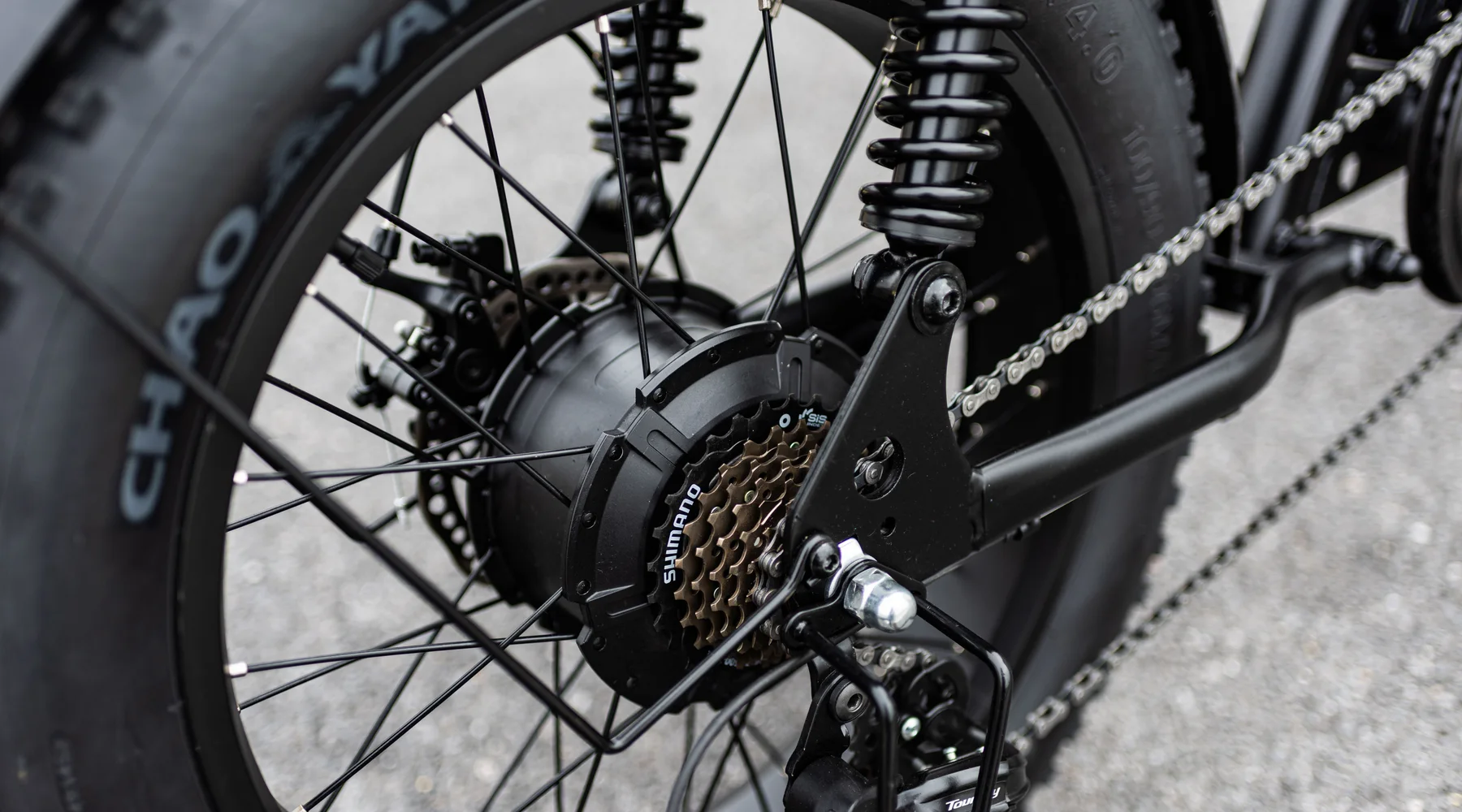
A rider who wants to press harder on a hill and feel the bike respond with more support may prefer a torque-responsive system. A rider who wants dependable motor help once the pedals begin turning may prefer a cadence-oriented system. Both can work well, and both can feel poor if the controller programming, assist modes, motor, or gearing are poorly matched to the bike’s purpose.
The practical comparison between a torque sensor vs cadence sensor starts with what each sensor measures. From there, buyers should consider the entire drive system rather than treating a sensor label as a verdict on ride quality.
Choose the assist feel you want before comparing sensor names
An e-bike’s pedal-assist system uses information about the rider’s pedaling to decide when and how to run the motor. The controller is the electronic unit that processes that information alongside the selected assist level and other system inputs. It then commands the motor to provide support within the limits set by the bike’s hardware and programming.
A few terms make the distinction easier to understand:
- Pedal assist: Motor support delivered while the rider pedals. The behavior varies by system and selected mode.
- Cadence: The rotation rate of the cranks, commonly expressed as pedal revolutions per minute. A cadence sensor primarily identifies that the cranks are moving.
- Torque: In this context, the force a rider applies through the pedals and drivetrain. A torque sensor measures that input or a related drivetrain load.
- Controller calibration: The software and settings that determine how quickly support starts, how it builds, how it changes between modes, and how it stops.
The sensor is therefore an input, not the whole system. A manufacturer may use cadence, torque, wheel speed, motor speed, selected assist mode, and other inputs together. Some systems explicitly combine cadence and torque information rather than relying on only one type of measurement.1
For a buyer, the central choice is often this:
- Do you want assistance that more closely rises and falls with pedal pressure?
- Or do you want a more consistent level of motor support after pedaling begins?
Neither answer is inherently more correct. A relaxed commuter, a cargo-bike user, and a recreational rider can reasonably want different behavior from the same route.
How cadence sensors detect pedaling
A cadence sensor detects crank or pedal rotation. Many designs use a rotating magnetic ring and a fixed sensor near the bottom bracket area, although the physical design varies between systems.
Once the system detects forward pedaling, the controller can activate motor assistance. The amount of support is usually shaped largely by the selected pedal-assist level and controller programming. In a simple implementation, the rider selects a low, medium, or high assist setting, starts turning the pedals, and the motor provides the programmed level of help for that setting.
This does not mean every cadence-sensor e-bike behaves as a crude on/off switch. The controller may add a gradual power ramp, use speed information to alter delivery, or delay and soften motor cut-off. Some systems are programmed for quick engagement in traffic; others prioritize a smoother transition.
Still, the basic distinction remains: a cadence sensor mainly knows that the rider is pedaling, not necessarily how forcefully the rider is pedaling. E-bike manufacturers commonly describe cadence sensing as a method that responds to pedal movement, while torque sensing responds to pedal pressure or force.2
What cadence-based assist can feel like
In practical riding, cadence-oriented assist may suit riders who want the motor to take on a predictable share of the work once pedaling starts. It can be useful when a rider prefers to spin the pedals lightly while the system delivers a selected level of support.
Potential characteristics include:
- Motor assistance begins after the system recognizes crank movement.
- Higher assist levels may provide more motor output without requiring proportionally harder pedaling.
- Changes in the rider’s pedal pressure may have less immediate effect on motor output than they would on a torque-responsive system.
- The exact start-up and cut-off behavior depends substantially on controller tuning.
These characteristics should not be read as quality judgments. A smooth, well-calibrated cadence system can be appropriate for urban commuting, utility riding, or riders who prioritize simple operation. Conversely, abrupt engagement or a long delay before support starts can make a particular implementation less pleasant, regardless of sensor category.
How torque sensors measure pedal effort
A torque sensor measures force applied through the pedals, crank, bottom bracket, rear dropout, or another part of the drivetrain, depending on the system’s design. The controller can use this signal to vary motor support in relation to rider effort.
If the rider presses harder on the pedals, the system may increase assistance. If the rider eases off, it may reduce assistance. This is why torque-responsive e-bikes are often associated with an assist feel that tracks the rider’s contribution more closely.
However, the sensor alone does not dictate that feeling. The controller still determines how strongly it reacts to the torque signal. A system can be calibrated to provide subtle support in a low mode, strong proportional support in a high mode, or a blend that also considers cadence and speed.
Manufacturers that use multi-sensor systems describe pedal force and cadence as complementary inputs. Gazelle, for example, states that its Bosch-equipped e-bikes use both torque and cadence information to inform assistance.3 That example illustrates an important buying point: the label “torque sensor” may not describe every input used by the controller.
What torque-responsive assist can feel like
A torque-based system may appeal to riders who want their effort to remain central to the riding experience. The rider can often influence acceleration and climbing support by changing pedal pressure rather than only changing the selected assist level.
Common expectations include:
- Stronger pedaling can bring stronger assistance.
- Easing pedal pressure can reduce support, even while the cranks continue turning.
- The motor may feel more connected to changes in riding effort.
- Maintaining a desired level of support may require more active pedaling than on some cadence-oriented systems.
Those are tendencies, not guarantees. A poorly calibrated torque system can feel overly sensitive, weak at low cadence, or unexpectedly forceful. A well-tuned cadence system can feel smooth and intuitive. The rider should judge the complete implementation where possible.
Torque sensor vs cadence sensor: response, effort and low-speed control
The table below describes broad functional differences. It does not predict the behavior of every e-bike using either sensor type.
| Riding factor | Cadence sensor tendency | Torque sensor tendency | What can change the result |
|---|---|---|---|
| Primary pedal input | Crank rotation | Pedal force or drivetrain load | Sensor design and controller logic |
| Motor start | Begins after pedal movement is detected | Can respond to pedal force, often alongside crank movement | Start threshold and power ramp |
| Change in rider effort | May have limited direct effect at a fixed mode | Often changes assistance more directly | Assist mode and calibration |
| Steady cruising | Can provide consistent selected support while pedaling | Can encourage support that follows changing rider effort | Terrain, cadence, speed limits, motor output |
| Stop-start riding | Depends on detection delay and ramp-up | Depends on low-speed calibration and force threshold | Controller settings, gearing, rider technique |
| Coasting or stopping pedaling | Assistance should stop according to system programming | Assistance should stop according to system programming | Cut-off logic and applicable regulations |
Starting from a stop
At low speed, the important issue is not simply which sensor is fitted but how the bike starts. A cadence system may need a portion of crank rotation before it recognizes pedaling. A torque system may react to a rider’s initial pedal pressure, but it can also be tuned to avoid unintended surges.
For frequent traffic-light starts, test whether the bike provides enough assistance soon enough for the rider’s needs, while remaining controllable in confined spaces. A walk-assist function, if fitted, is a separate feature and should not be confused with the pedal sensor.
Climbing and changing pace
On a climb, torque-responsive assistance may allow a rider to signal increased demand naturally by pushing harder. Many riders value that relationship on variable terrain. But gearing remains critical: an e-bike with unsuitable gearing can still be awkward to climb, whatever sensor it uses.
A cadence-oriented system can also be effective uphill, particularly if its higher assist settings provide adequate support at the rider’s chosen pedaling rate. The trade-off may be that the rider controls the level of help more through assist-mode selection than through small changes in pedal pressure.
Coasting and cut-off behavior
Both sensor types are used to identify when pedal-assisted motor support should stop. The precise behavior can vary when the rider stops pedaling, backpedals, changes gear, or resumes pedaling after a brief pause.
This is a system-specific area worth checking in the owner’s manual, technical sheet, or a test ride. Do not infer legal compliance from sensor type. Rules covering motor power, speed cut-off, throttles, and other requirements depend on the jurisdiction where the e-bike will be used or sold.
Efficiency and range: why the sensor is only one variable
It is tempting to assume that a torque sensor automatically delivers better range because it can make motor support track rider effort. That conclusion is too broad.
A torque-responsive system may encourage some riders to contribute more human power, particularly in lower assist modes. In that situation, battery use may be lower than if the same rider uses a high, steady level of motor support. But the outcome depends on how the bike is ridden and how the controller is programmed.
Range is affected by many factors, including:
- Selected assist level
- Rider effort and pedaling style
- Terrain and elevation changes
- Rider, cargo, and bike weight
- Wind and surface conditions
- Average speed and acceleration frequency
- Tire pressure and tire type
- Motor efficiency at the operating point
- Battery capacity, condition, and temperature
- Gear selection and controller calibration
Manufacturers also routinely identify assist setting and riding conditions as range variables rather than promising one fixed result.4 Without controlled testing of comparable bicycles under the same conditions, there is no reliable universal percentage advantage for either sensor type.
For importers and product managers, this means sensor choice should be evaluated alongside battery size, motor output characteristics, gearing, tires, and the intended assist modes. A range claim based only on “torque sensor” or “cadence sensor” would not be technically meaningful.
When each sensor type may suit your riding
A torque sensor may be worth prioritizing if you:
- Want the motor to respond noticeably to changes in pedal pressure.
- Ride rolling terrain and prefer to modulate support through your own effort.
- Value a closer connection between pedaling input and acceleration.
- Expect to use lower assist settings while contributing a meaningful share of propulsion.
A cadence sensor may be worth prioritizing if you:
- Prefer steady, predictable support once you begin pedaling.
- Want to pedal lightly while the selected assist mode does more of the work.
- Use an e-bike mainly for commuting, errands, or utility riding where simple operation matters.
- Would rather change assist modes than continually vary pedal pressure to influence motor output.
For riders facing frequent starts, both designs can work. The deciding detail is often low-speed behavior: how rapidly assistance arrives, how smoothly it builds, and how easy the bike is to control while maneuvering.
For importers, the sensor should be considered part of product positioning, not a shortcut to a quality ranking. A cadence-based commuter e-bike may be entirely appropriate when the intended customer wants accessible, consistent support. A torque-responsive system may better suit a product aimed at riders who expect a more effort-linked pedal-assist experience. Confirm the actual sensor configuration and mode behavior in the supplier’s technical documentation rather than relying on marketing shorthand.
A practical checklist for comparing e-bike assist systems
Before buying, specifying, or importing an e-bike, work through the following questions:
- What sensor or sensors does the bike use? Confirm whether it uses cadence, torque, or a combination of inputs.
- What does each assist mode change? Ask whether modes alter peak output, response sensitivity, support ratio, speed behavior, or several of these at once.
- How does assistance start? Check for pedal rotation requirements, initial power ramp, and behavior on steep starts.
- How does assistance stop and restart? Review the manual or test the response when pedaling pauses, coasting begins, or pedaling resumes.
- What other information does the controller use? Cadence, wheel speed, motor speed, and pedal force can all influence the final behavior.
- Does the motor and gearing match the intended terrain? Sensor type cannot compensate for unsuitable gear ratios or inadequate low-speed motor behavior.
- Can you test the bike in realistic conditions? Include a hill, repeated starts, low-speed turns, and your typical preferred assist setting.
- What do local regulations require? Verify the current rules for the market where the bike will be used or sold; sensor type alone does not establish compliance.
The practical takeaway is simple: choose a torque sensor when you want assistance to more closely follow how hard you pedal, and consider a cadence sensor when you want reliable motor support after pedaling begins. Then look beyond the sensor label. The controller calibration, assist modes, motor, gearing, and intended riding conditions will determine whether the e-bike actually feels right.
Frequently asked questions
Is a torque sensor always better than a cadence sensor on an e-bike?
No. A torque sensor can provide assistance that more closely tracks pedal force, but that is not automatically preferable for every rider. Some riders prefer the more consistent support available from a cadence-oriented system. Controller tuning, motor characteristics, gearing, and assist modes all affect the final ride feel.
Do torque sensors make an e-bike use less battery power?
Not automatically. A torque-responsive system may use less energy in some situations if it encourages the rider to contribute more power or use lower assist modes. Actual battery use also depends on terrain, speed, load, weather, tire condition, motor efficiency, battery capacity, and controller programming.
Can an e-bike use both a torque sensor and a cadence sensor?
Yes. Some e-bike systems combine cadence and torque information, sometimes with speed and motor data, to manage motor assistance. Check the documentation for the specific drive system to understand which inputs it uses.3
What should I check besides the sensor type before buying an e-bike?
Check the available assist modes, start-up response, cut-off and restart behavior, motor characteristics, gearing, battery capacity, bike weight, tires, and local legal requirements. If possible, test the e-bike on the kind of roads, hills, and stop-start conditions you expect to ride.