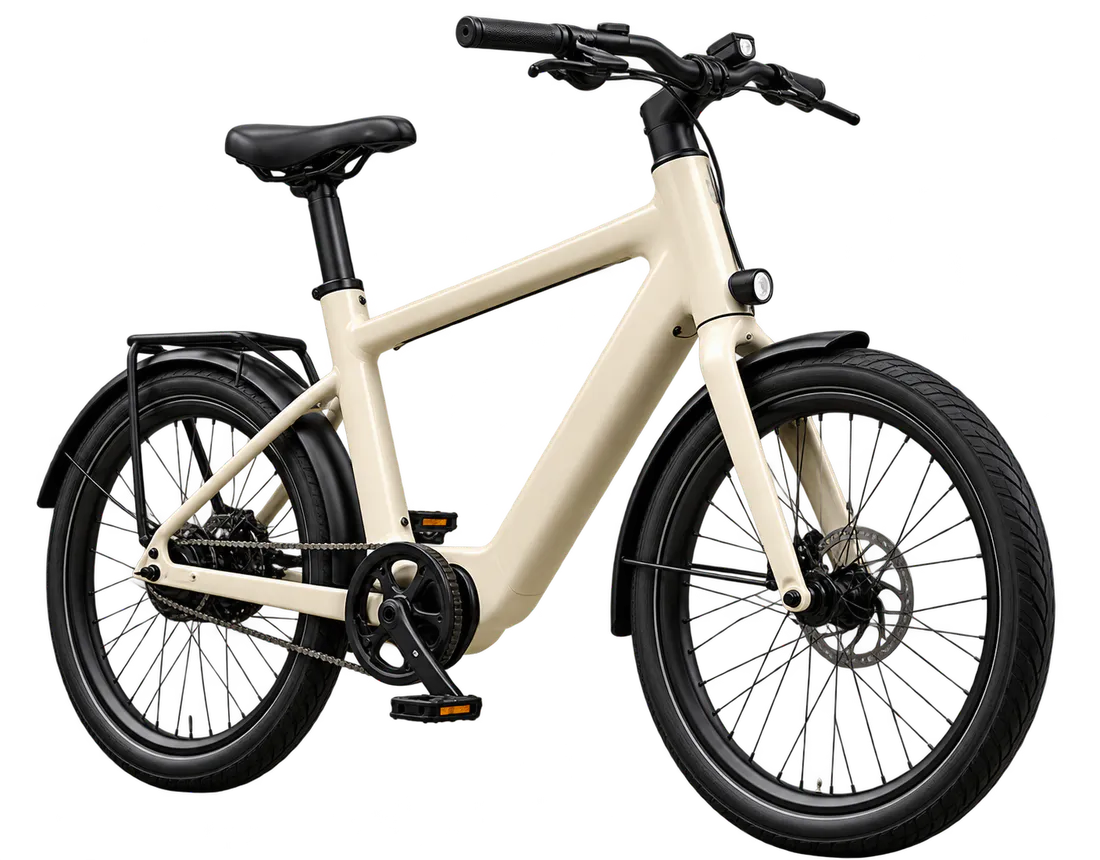
 China eBike
Removable vs. Integrated E-Bike Batteries: Charging, Security and Service Tradeoffs
Compare removable and integrated e-bike batteries for home charging, theft exposure, weather protection, replacement access and service.
The practical question is not whether a battery looks tidy inside a frame. It is whether the battery layout works with the places where you park, charge and service the bike.
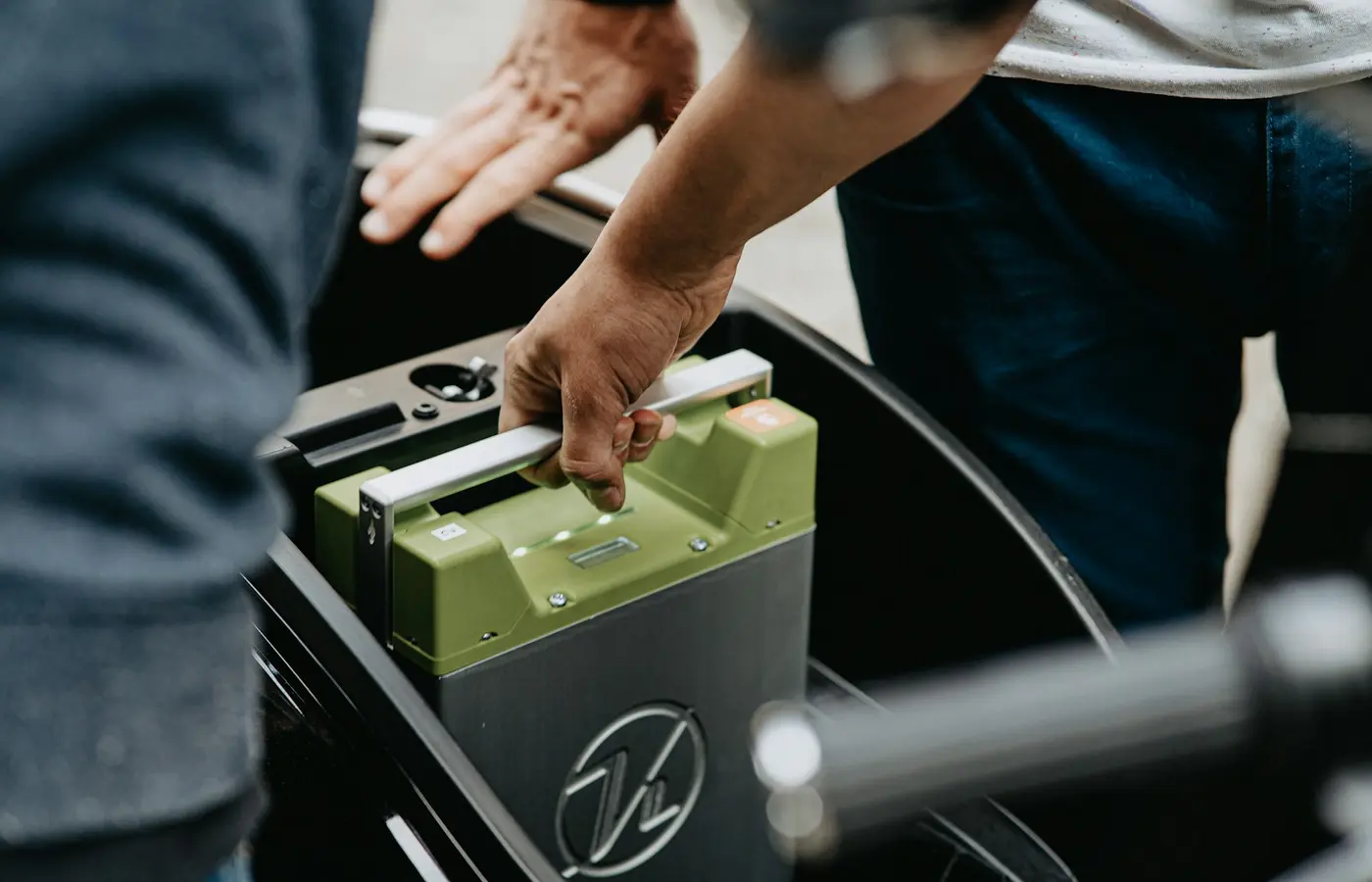
A removable battery is often the easier choice for riders who keep an e-bike in a garage, shared bike room or outdoor space without a convenient power outlet. An integrated battery can suit riders who can bring the whole bicycle to a suitable charging location and prefer a cleaner-looking frame. But these categories are less simple than they appear: many batteries concealed inside a downtube are still removable through a locked cover or frame opening.
Before buying, check the documentation for the exact model. Frame appearance alone does not tell you whether a pack can be removed, charged off the bike or replaced without workshop work.
Choose the battery layout around your charging and storage routine
Manufacturers use overlapping terms, so it helps to separate the main designs.
- Externally mounted removable battery: The battery sits on the outside of the frame, commonly on the downtube or behind the seat tube. It is usually released with a key and latch or rail mechanism.
- Removable in-frame battery: The battery is housed inside the frame but can be removed through an access port, cover or opening. It may require a key, tool or a particular removal sequence.
- Fixed integrated battery: The battery is enclosed within the frame and is not intended for routine owner removal. Access may require workshop procedures.
- Semi-integrated battery: This broad description is sometimes used for batteries that are partially enclosed or visually blended into the frame. It does not, by itself, establish whether the battery is removable.
External batteries are generally easier to charge and replace, while frame-integrated designs can leave more usable frame space for accessories such as bottle cages or bags.1 Those are useful general tendencies, not guarantees. An in-frame battery may be straightforward to remove; an external battery may have an awkward latch, be heavy to carry or require the key to remain in the lock during removal.
When comparing models, ask the dealer or manufacturer four direct questions:
- Can the battery be removed by the owner?
- Can it be charged while installed, removed, or both?
- What key, cover, tool or sequence is required to remove it?
- Is the replacement battery available as a listed spare part in your market?
Those answers are more valuable than a product photo.
Charging convenience: carrying a battery versus moving the whole e-bike
For many buyers, charging is the deciding factor in the removable vs integrated e-bike battery comparison.
A removable pack lets the rider leave the bicycle in a storage area and bring only the battery to the charging point. That can be especially useful in apartments, offices, shared garages and buildings where bringing a full-size e-bike indoors is impractical. It can also reduce the need to route a charger or extension lead through a hallway, doorway or communal area.
The tradeoff is handling. A battery pack has weight, a hard case and electrical contacts that should be treated carefully. Removal may also involve unlocking the pack, opening a cover, supporting the battery as it slides out and reinstalling it securely before riding. A rider who makes this trip every day should try the procedure in person where possible, rather than assuming that any removable battery will be equally convenient.
A fixed or difficult-to-remove integrated battery shifts the routine in the other direction: the whole bicycle must be placed where charging is permitted and practical. For a rider with secure garage space and an outlet near the bike, this may be simple. For someone who stores the bike in a basement cage or public bike room, it may be a serious limitation.
Charging convenience also depends on the charging port. On some systems, the port is easy to reach with the battery installed; on others, it sits behind a cover or low on the frame. Check whether the cable can be connected without bending sharply, creating a trip hazard or exposing the port to dirt and water.
Follow the instructions supplied for the specific battery and charger. Manufacturers may specify whether installed charging is supported, where charging should take place, the appropriate temperature range and what to do if a pack has been dropped, damaged or behaves unusually. Do not assume that instructions for one battery system apply to another.
Storage temperature matters too
The ability to bring a removable battery indoors may help riders avoid leaving it in an excessively hot or cold storage space. That does not mean every indoor location is automatically suitable. The manufacturer’s instructions should govern charging and storage conditions, including any advice on ventilation, temperature, charger use and supervision.
For a bike stored outside or in an unheated space, assess both parts of the workflow: whether the battery can be removed conveniently and whether there is a suitable place to keep and charge it.
Security: battery theft, bike theft and what locks can actually address
Battery security and bicycle security are related but different problems.
A removable battery can be taken from the bike if an offender can defeat, bypass or exploit its attachment system. Removing the battery when leaving an e-bike parked can deny an opportunistic thief an easily detachable component and also makes the bike less immediately usable. However, it leaves the rider carrying the pack and does not prevent theft of the bicycle itself.
An integrated or in-frame battery may be less visible and less accessible at a glance. If it is behind a locked frame cover or requires a specific release procedure, it may present another barrier to quick removal. But a hidden battery does not make the bike theft-proof, and a keyed battery lock should not be treated as a substitute for securing the frame.
The battery lock is primarily a retention mechanism. Its design, construction and resistance to attack vary by model. Manufacturer descriptions of locks or anti-theft features should be read as information about the mechanism provided, not as evidence that theft cannot occur. Polygon, for example, presents removable and non-removable systems as a choice involving convenience, security and daily use rather than a universal winner.2
For public parking, separate the decisions:
- Use an appropriate lock to secure the frame to a suitable fixed object.
- Consider whether removing the battery is practical and permitted by the battery’s instructions.
- Avoid leaving accessories, chargers or loose battery keys visible.
- Check that the battery is fully latched before riding away; a loose pack is both a loss risk and a riding hazard.
A removable battery can be an advantage for frequent public parking if carrying it is acceptable. Conversely, a rider who regularly parks only briefly may find repeated removal inconvenient. The right answer depends on the location, duration and ability to take the battery along.
Weather protection and damage exposure: assess the whole system
An integrated battery has more surrounding frame structure than an externally mounted pack. That may reduce direct exposure to knocks in some situations and can create a cleaner exterior. It does not establish that the battery, frame or electrical system has a particular water-resistance level.
Likewise, an externally mounted battery is not automatically unsuitable for wet riding. Many e-bikes are designed with protected battery cases, sealed connectors and covered charging ports. The relevant question is what the manufacturer says about the complete model, including the battery cover, charging port, seals, connectors and cleaning method.
Do not infer wet-weather capability from battery position alone. If a manufacturer publishes an ingress-protection rating, read it in the context of the exact component or complete system it covers. A rating for a display, for example, does not necessarily describe the battery enclosure or the e-bike as a whole.
Before choosing either layout, check the owner documentation for:
- permitted riding conditions;
- instructions for closing battery and charging-port covers;
- cleaning guidance;
- warnings about pressure washers, submersion or direct water spray;
- procedures after a crash, water exposure or suspected damage; and
- storage requirements when the bike is not in use.
Integrated frames can make dirt and water management around the battery less obvious, while an external pack makes the mounting rail and contacts easier to inspect. Neither observation should replace the maintenance schedule in the manual. On either design, keep covers properly seated, inspect visible seals and contacts, and do not use a damaged battery or connector.
Replacement and service: check access, parts availability and compatibility before buying
Routine removal is not the same as long-term serviceability.
An external removable battery is often simpler to swap when a compatible replacement is available. This is one reason general buying guidance frequently describes external packs as easier to replace.1 But replacement is only straightforward if the manufacturer still supplies the correct pack and if the model’s electronics accept it.
Modern e-bike batteries are commonly part of a system that includes a battery-management system, charger, motor controller, display and diagnostic software. A pack with similar voltage, capacity or physical dimensions may not be compatible. Using an unapproved battery or charger can create operational, warranty and safety issues. Use the parts and procedures specified by the manufacturer.
A removable in-frame battery may be easy to replace once the owner understands the access sequence. A fixed integrated pack may require removal of covers, drivetrain parts, wiring guides or other frame components. In some designs, the process is intended for an authorised workshop. That can be reasonable for a rider with good dealer access, but it matters more if the nearest service point is distant or if the bike is being imported into a market with limited support.
Before purchase, ask for specific answers on the following points:
| Question | Why it matters |
|---|---|
| Is a replacement battery currently offered for this model? | Availability is more important than the battery’s mounting style. |
| Is the battery owner-removable? | This determines whether off-bike charging and simple swapping are possible. |
| Does replacement require dealer diagnostics or software pairing? | It affects where and how service can be completed. |
| What does the warranty say about battery service? | Warranty conditions may specify approved parts and service routes. |
| Is there a service manual or documented dealer procedure? | It indicates whether access is routine or more involved. |
| How are damaged or end-of-life batteries handled locally? | Lithium-ion battery transport, recycling and disposal routes can be restricted. |
For importers and buyers considering Chinese e-bike brands, local parts support deserves particular attention. A visually attractive integrated design is less reassuring if there is no clear path to obtain a compatible replacement battery, charger, lock core or frame cover in the destination market.
A decision checklist for removable and integrated e-bike batteries
Use your routine, rather than styling alone, to narrow the choice.
| Your situation | Usually worth prioritising | What to verify |
|---|---|---|
| Apartment or shared storage with no outlet near the bike | A genuinely removable battery | Pack weight, removal steps and a suitable indoor charging location |
| Secure garage with an outlet beside the bike | Either layout can work | Whether installed charging is supported and how the port is accessed |
| Frequent public parking | A plan for both bike and battery security | Frame-locking strategy, battery latch design and whether you will carry the pack |
| Regular wet-weather riding | The manufacturer’s complete weather-care guidance | Port covers, cleaning limits, stated ratings and service instructions |
| Limited dealer access | Straightforward parts and service support | Battery availability, warranty route and whether diagnostics are required |
| Need to transport or store the battery separately | A removable system may be more practical | Manufacturer instructions and applicable transport rules |
The most useful rule is simple: buy the battery layout you can charge safely and maintain realistically. Choose a removable pack if off-bike charging and accessible replacement are central to your routine. Consider an integrated design if you can charge the whole bike conveniently and prefer the frame layout it enables. In either case, confirm the exact model’s removal method, charging instructions, spare-parts support and weather guidance before committing.
Frequently asked questions
Can an integrated e-bike battery still be removable?
Yes. Many batteries housed inside a downtube or other frame section can be removed through a locked access point, cover or hatch. Others are fixed or intended for workshop removal only. Check the model manual and product specification rather than relying on appearance.
Is it safe to charge an e-bike battery while it is installed in the bike?
Only if the manufacturer permits installed charging for that battery and charger combination. Follow the supplied instructions on charging location, temperature, cable connection and inspection. If the manual is unclear, contact the manufacturer or authorised dealer before charging it on the bike.
Are removable e-bike batteries easier to steal?
They can be more accessible because they are designed to be removed. A keyed latch may add a barrier, but it does not secure the entire bicycle or guarantee that the battery cannot be taken. Removing the battery while parked may reduce the opportunity for quick battery theft, but the frame still needs to be locked appropriately.
Can I replace an integrated e-bike battery myself?
It depends on the model. Some in-frame batteries are designed for owner removal; others require tools, a specific sequence, diagnostic work or professional service. Use only the manufacturer-approved battery and follow its documented procedure. Do not substitute a pack based solely on matching voltage or shape.
Footnotes
-
Polygon Bikes, Removable vs Fixed E-Bike Battery. ↩