 China eBike
Hub Motor vs. Mid-Drive: Which E-Bike Motor System Fits Your Riding?
Compare hub motors and mid-drives for hills, commuting, cargo, handling, drivetrain wear and service before choosing an e-bike.
The hub motor vs. mid-drive decision is not mainly about which system is more advanced. It is about how an e-bike will be used: the route’s gradients, expected cargo, riding speeds, willingness to shift gears, and access to service all matter.
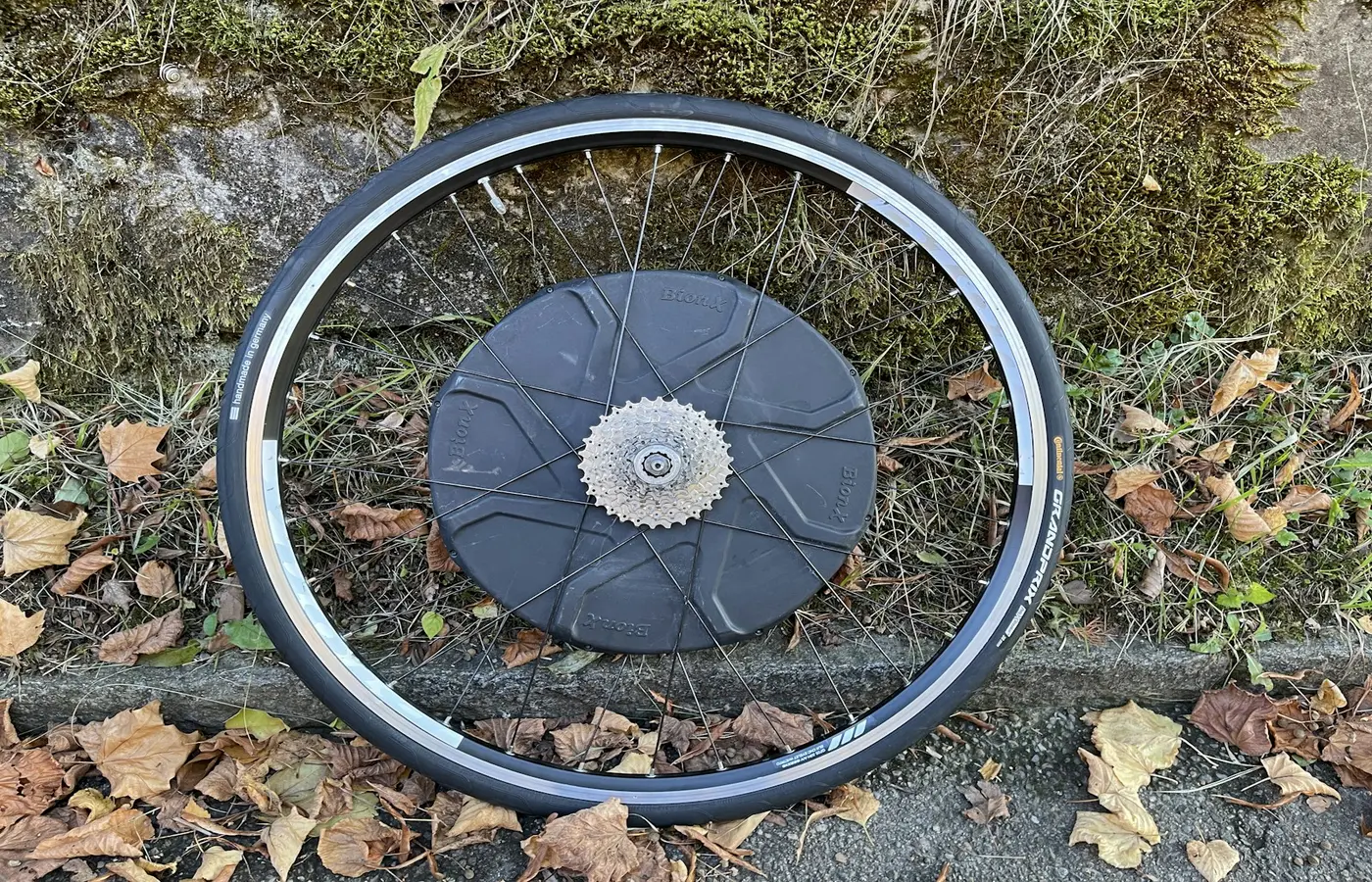
A hub-motor commuter can be an effective and durable choice for a largely flat route. A mid-drive can make better use of a wide gear range on long climbs or under heavy loads. But neither layout guarantees a particular result on its own. Motor tuning, battery capacity, tire grip, bicycle geometry, rider input and the specific drivetrain can change the outcome substantially.
Hub Motor vs. Mid-Drive: Start With the Power Path
The main difference is where the motor sends its power.
A hub motor sits inside a wheel hub and drives that wheel directly. It may be fitted to the front wheel or, more commonly on current e-bikes, the rear wheel. A mid-drive motor sits around the bottom-bracket area and adds power at the crank. Its force then travels through the chain or belt, rear sprocket or internal gear hub, and finally to the rear wheel.
Motor-location layouts are covered in the technical review E-Bike Motor Drive: A Review of Configurations and Capabilities.1 The layouts may look like a packaging choice, but they change how the motor interacts with the bicycle.
| Motor layout | Where power enters the bike | Key practical implication |
|---|---|---|
| Front hub | Front wheel | Separate powered wheel, but front-tire grip and steering feel need consideration |
| Rear hub | Rear wheel | Direct rear-wheel assistance without routing motor force through the chain |
| Mid-drive | Crank and drivetrain | Motor can use the bike’s selected gears, but also loads drivetrain components |
A rear hub and a mid-drive can both be pedal-assist systems, throttle-controlled systems, or offer a combination depending on the market and the bicycle’s legal classification. Local rules may define legal e-bike categories by continuous rated power, assisted speed, throttle function or other conditions. Buyers should check current government or regulatory requirements in the place where the bike will be used rather than assuming a watt figure means the same thing everywhere.
How Each System Uses Gears
A conventional hub motor has a relatively fixed relationship to wheel speed. The motor may have internal reduction gearing, but the rider’s derailleur or internal rear gear selection does not change the motor’s effective gearing in the same direct way it does with a mid-drive.
Hub motors generally fall into two broad mechanical types:
- Geared hub motors use internal planetary gears to let a smaller motor spin faster than the wheel. They are common on lighter commuter-oriented e-bikes.
- Direct-drive hub motors have no internal reduction gears and rotate with the wheel. Their size, weight and performance characteristics vary widely by design.
A mid-drive, by contrast, drives through the bicycle transmission. As Portescap’s overview of e-bike motor architectures describes, a mid-drive transfers power through the chain and sprocket system.2 Selecting a lower gear on a climb lets the motor, as well as the rider, operate at a more suitable crank speed. Selecting a taller gear supports higher-speed riding on flatter ground.
That does not mean a rider must shift constantly. Many systems have sensors and control software that smooth assistance, while some e-bikes use internal gear hubs or electronically managed shifting. Still, gear choice is fundamentally more important to a mid-drive’s performance and mechanical loading.
Why shifting matters more with a mid-drive
On a steep hill, a rider on a mid-drive can downshift before cadence becomes too low. That reduces the force needed at the pedals and can help the motor remain within a useful operating range. Starting in an excessively high gear, especially with cargo aboard, can feel strained and may increase load on the chain, sprockets and shifting components.
With a hub motor, shifting still matters for the rider’s comfort and pedalling efficiency, but it does not re-gear the motor itself. A sufficiently capable rear hub system can climb a hill well, yet its ability to sustain that work depends on its controller, battery, thermal behaviour, wheel size, load, slope, surface and speed.
Research comparing configurations on steep roads found that motor placement, cadence and transmission selection can materially affect modeled and tested system outcomes.3 Those findings are useful context, not a universal ranking of every hub and mid-drive sold today. The study’s results depend on the configurations examined.
Hills, Cargo and Efficiency: The Important Trade-Offs
The common shorthand is that mid-drives are better for hills. The more precise statement is that a mid-drive can use the bike’s gears, which is often valuable on sustained climbs, repeated stop-start riding and heavy-load routes.
This matters most when several demands occur at once:
- steep or prolonged gradients;
- a rider who must start frequently from low speed;
- heavy rider, passenger or cargo mass;
- a route where lower gears are regularly needed;
- off-road climbing where speed changes constantly.
A well-matched mid-drive with an appropriately low gear can maintain a practical cadence while climbing. This is one reason many cargo bikes and e-mountain bikes use centrally mounted motors. It is not proof that every mid-drive will outperform every hub motor. A lightly tuned mid-drive on a poorly geared bike may be less suitable for a particular hill than a robust rear hub system with sufficient battery and thermal capacity.
Do not compare torque figures in isolation
Manufacturers often list motor torque in newton-metres (Nm), but published figures are not automatically comparable across brands or motor layouts. They may refer to different points in the system, different test conditions, peak rather than sustained output, or different control modes.
For climbing, the more useful questions are:
- What gear range does the bicycle have?
- How much total mass will it carry?
- What is the route’s steepest and longest climb?
- Is the motor designed to reduce output when hot?
- How does the bike perform at low speed under load?
- Is the battery large enough for the expected route and conditions?
Efficiency also should not be reduced to motor location. A mid-drive may keep the motor in a more favourable operating range through gear selection. A hub system may be very efficient at steady urban speeds on flatter terrain. Total energy use depends on terrain, speed, assist setting, rider effort, wind, tire pressure, temperature, payload, controller calibration and many other factors.
Ride Feel, Weight Distribution and Handling
Motor location changes where mass is carried, but the complete bike matters more than the motor alone. Battery placement, frame geometry, wheelbase, tire choice, rack loads and suspension design can all have larger effects than a few general rules suggest.
A mid-drive places motor mass low and near the centre of the frame. This can be useful on bikes that need predictable handling through turns, over uneven surfaces or when carrying loads. It also leaves both wheels free to use conventional hubs, which can simplify wheel selection on some designs.
A rear hub places motor mass at the rear wheel. For many commuting bikes, this is an entirely practical arrangement. The rear wheel is normally the driven wheel on a bicycle, and rider weight often helps rear-tire traction. However, the wheel can be heavier to lift, remove and service.
A front hub distributes propulsion to the front wheel, separate from the rider’s pedal-driven rear wheel. This can be useful in some conversion and utility applications, but it deserves attention on loose, wet or steep surfaces. The Energies review notes potential front-wheel slip and steering-control considerations for front-hub configurations.1 These are design and riding considerations, not evidence that front hubs are automatically unsuitable.
For an urban commuter, the practical handling question is often simple: can the rider comfortably park, lift, turn and store the bike? For a cargo or off-road bike, weight distribution, tire grip, geometry and the manufacturer’s approved load limits become more important.
Maintenance, Wear and Repair Considerations
Neither architecture is maintenance-free. The better choice is often the one that can be serviced competently where the bike will live.
A mid-drive sends motor force through the chain, chainring, cassette or freewheel, derailleur and rear hub mechanism. Those are normal bicycle wear items, but high-assistance riding, frequent climbing and poor shifting habits can increase their workload. Keeping the drivetrain clean, lubricated and adjusted matters. Replacing a worn chain before it accelerates sprocket wear is particularly important on a heavily used mid-drive.
A hub motor does not normally transmit its motor torque through the chain and rear sprockets. That may reduce motor-related drivetrain load in some use cases, but it does not make the entire e-bike lower-maintenance. The wheel, spokes, controller, wiring, battery, brake system and motor itself still require appropriate inspection and service.
Hub systems can also make wheel work more specialized. A motor wheel may have a heavier rim assembly, a cable connection and a specific axle arrangement. Before buying, check whether a local workshop is equipped and willing to service the wheel, replace spokes, change tires and diagnose electrical faults.
Mid-drive systems can require brand-specific diagnostic tools, firmware access or approved replacement parts. Buyers should ask the dealer:
- Which local workshops support this motor system?
- Are replacement batteries, displays, sensors and chargers available locally?
- Can the dealer obtain a replacement motor or controller if needed?
- What is the procedure for wheel removal and drivetrain service?
- Are firmware diagnostics restricted to authorized service centres?
The mechanical complexity of a mid-drive is one reason its service requirements should be understood before purchase, rather than inferred from the layout alone.2
Which Layout Fits Commuting, Cargo and Off-Road Riding?
The following guide is a starting point, not a substitute for comparing individual bikes.
Relatively flat commuting
A rear hub motor is often a sensible option where routes are mostly level, speeds are moderate and simplicity is valued. It can provide smooth assistance without requiring the rider to think much about motor gearing. A front hub can also work for appropriate urban use, provided traction, fork compatibility and service quality have been properly addressed.
Choose the bike based on battery capacity, total weight, brake quality, tire suitability, weather protection and support availability—not motor placement alone.
Mixed-terrain commuting and regular hills
Both systems can work. A hub bike may be enough when hills are short or moderate and the rider can accept a lower climbing speed. A mid-drive becomes more compelling when routes include repeated climbs, steep grades, frequent starts or a strong need to preserve natural pedalling cadence through a wide speed range.
E-cargo bikes
For passenger or goods carrying, look first at the manufacturer’s maximum system weight, approved cargo or passenger configuration, braking system, wheel specification and low-gear range. A mid-drive is often attractive because it can use low gears during loaded starts and climbs. But a rear hub cargo bike may also be suitable if its system is designed and rated for the intended payload and route.
Avoid treating a nominal motor rating as a cargo capacity rating. The frame, brakes, wheels, tires, rack or box, and overall weight approval are at least as important.
Technical off-road riding
Mid-drives are common on e-mountain bikes because central mass and gear-dependent assistance can suit variable-speed climbing and uneven terrain. This is not just about climbing power: ground clearance, suspension kinematics, tire traction, braking control and intended-use rating matter as well.
Hub motors can be used off-road, but the added unsprung mass of a hub motor in a suspension wheel and the demands of changing terrain are factors worth assessing carefully for the specific bike.
FAQ
Are mid-drive e-bikes always better for hills than hub-motor e-bikes?
No. Mid-drives can use the bicycle’s gears, which is a major advantage on sustained or steep climbs. But a particular hub-motor bike may still climb a given route effectively depending on power delivery, thermal limits, battery condition, total load, wheel size and traction.
Do mid-drive motors wear out chains and cassettes faster?
They can increase drivetrain loading because motor force travels through the chain and sprockets. Wear depends heavily on shifting technique, cleaning, lubrication, chain condition, assistance level and terrain. It should not be assumed that every mid-drive has the same maintenance interval.
Is a rear hub motor good enough for commuting with hills?
Often, yes. It depends on how steep, long and frequent those hills are, as well as rider and cargo mass. Test riding the actual bike on a representative hill is useful when possible, but buyers should also confirm the manufacturer’s stated operating limits and local support arrangements.
Should I choose a hub motor or mid-drive for an e-cargo bike?
Start with payload approval, braking capacity, low-speed control, gearing and the steepest loaded route. A mid-drive may suit frequent loaded climbing; a properly specified hub system can suit flatter delivery, utility and family routes. The motor layout is one part of the cargo-bike system.
A Practical Decision Framework
Choose based on the riding problem, not a general hierarchy.
A hub motor deserves close consideration if the bike will mainly cover flatter routes, carry modest loads, and benefit from straightforward pedal operation. A mid-drive deserves close consideration if the bike will face sustained climbs, heavy cargo, technical terrain or frequent low-speed starts where a wide gear range is useful.
Before committing, verify these points for the specific model:
- steepest and longest regular climb;
- rider, passenger and cargo mass;
- available gear range and shifting system;
- maximum system weight and intended-use category;
- expected cruising and climbing speeds;
- battery capacity and replacement availability;
- tire grip and braking equipment for the route;
- local dealer diagnostics, parts and wheel-service support.
The best choice is the complete e-bike that matches those requirements—not simply the bike with a hub motor or the one with a mid-drive.