 China eBike
How to Compare E-Bike Range Claims: Test Conditions, Assist Modes, and Rider Load
Learn how to compare e-bike range claims by checking battery watt-hours, assist mode, route, speed, load, weather, and test conditions.
A published e-bike range figure is useful only when it answers a practical question: how far can this bike travel under conditions similar to mine?
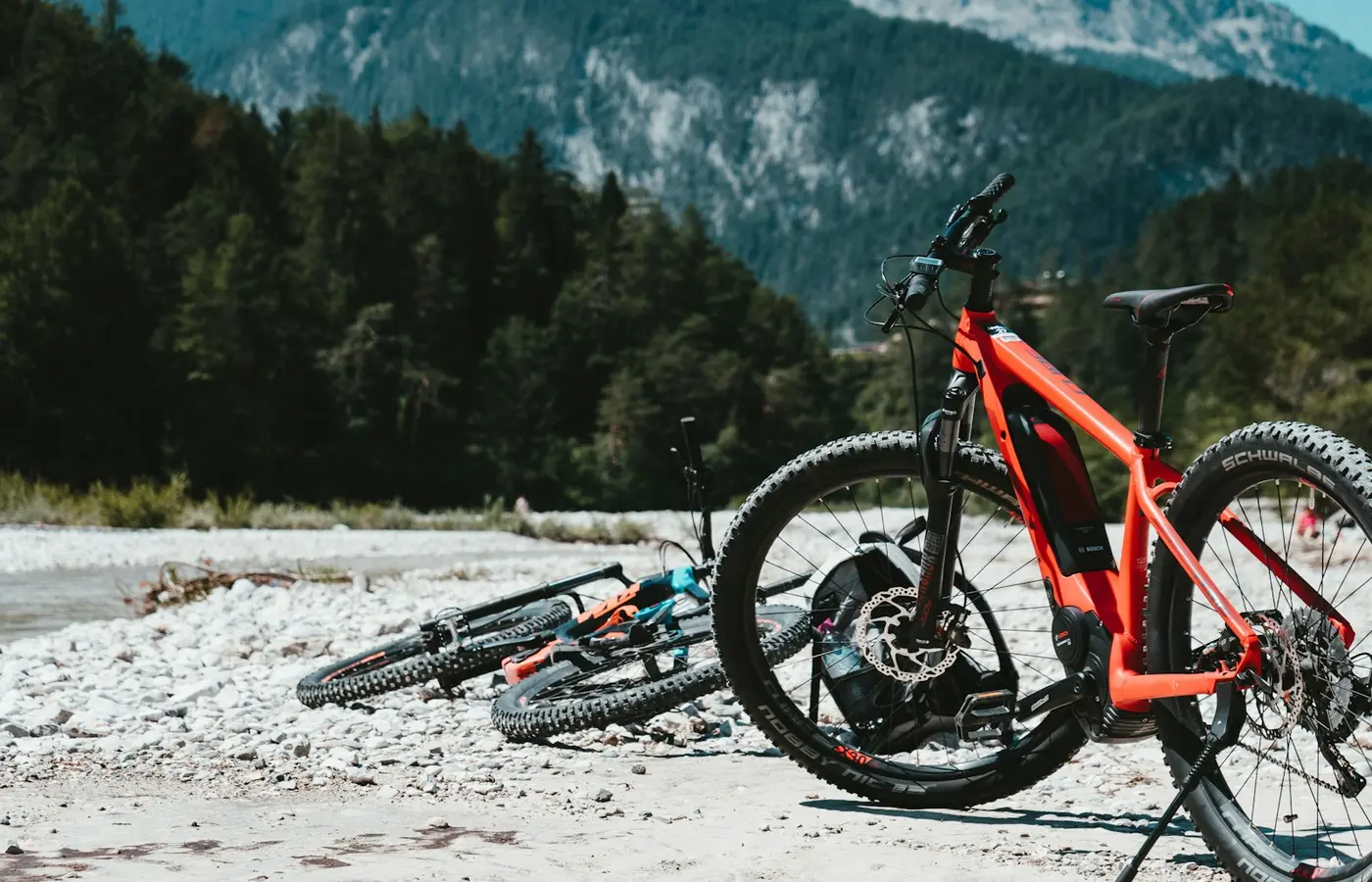
Two bikes may advertise very different maximum ranges even when their batteries, motors, and likely real-world performance are relatively close. One claim may come from a low-assistance ride on flat roads with steady pedalling. Another may describe a higher-assistance setting, a different battery option, or an estimate rather than a documented test.
The larger number is not automatically wrong, and the smaller number does not automatically indicate an inefficient e-bike. The key is whether the underlying conditions are disclosed.
For buyers, importers, and fleet operators, an advertised range should be treated as a scenario, not a universal prediction. A meaningful comparison starts with battery energy, then examines how that energy was used during the claimed test.
Start With the Question: Are These Two Range Claims Actually Comparable?
Before comparing kilometres or miles, identify what type of range figure each brand is presenting.
A range claim may be one of three things:
- Manufacturer maximum range claim: Usually the longest distance the brand expects under favourable conditions. It may be valid for its stated scenario, but it is not necessarily representative of every rider or route.
- Controlled test result: A result produced using a documented route, rider load, assist mode, battery configuration, and end-of-test criterion.
- Rider-specific estimate: A prediction based on an individual route, riding style, weather, load, and bike setup.
These categories should not be treated as interchangeable. A manufacturer might state “up to” a certain distance, while an independent reviewer may report the distance achieved on one particular route. Both figures can be informative, but neither can be compared fairly without context.
Ask these questions first:
- Was the same battery size fitted to both bikes?
- Which assist mode was used?
- Was the rider pedalling continuously, occasionally, or not at all?
- Was throttle use included?
- Was the route flat, rolling, or mountainous?
- What was the rider-and-cargo load?
- What speed and weather conditions applied?
- What counted as the end of the test: a low-battery warning, reduced assistance, or complete motor cut-off?
If those details are missing, the number may still be useful as a broad indication, but it is not a like-for-like comparison.
Read the Battery Figure First: Watt-Hours, Not Just Volts or Amp-Hours
Battery capacity is the starting energy budget for an e-bike range comparison. The most useful headline figure is usually watt-hours, written as Wh.
Watt-hours combine voltage and amp-hour capacity:
Volts × amp-hours = nominal watt-hours
For example, a hypothetical 36 V, 14 Ah battery has a nominal capacity of:
36 × 14 = 504 Wh
That does not mean every one of those 504 Wh will necessarily be available for propulsion. Battery-management settings may reserve energy at the top or bottom of the charge range, and the usable energy can change with temperature, battery age, and load. Unless the manufacturer states usable capacity separately, it is safer to describe the calculated number as nominal capacity.
Why volts alone are not enough
A 48 V battery is not automatically larger than a 36 V battery. Its actual energy capacity also depends on amp-hours.
For example:
| Battery label | Nominal calculation | Comparison value |
|---|---|---|
| 36 V, 14 Ah | 504 Wh | 504 Wh |
| 48 V, 10 Ah | 480 Wh | 480 Wh |
| 48 V, 15 Ah | 720 Wh | 720 Wh |
The 48 V, 10 Ah pack has a higher voltage than the 36 V, 14 Ah pack, but slightly less nominal energy. When comparing range claims, look for Wh first and treat voltage as part of the wider electrical-system specification.
A bigger battery can support a longer ride, but it does not guarantee a longer result in every comparison. A heavier bike, a more powerful support setting, faster riding, wider tyres, steep routes, or frequent throttle use can consume that energy more quickly.
Assist Mode and Throttle Use Can Change the Meaning of a Range Claim
E-bikes do not use a fixed amount of electricity per kilometre. Their energy consumption changes with the amount of work supplied by the motor.
In a low-assistance mode, the rider supplies a larger share of the propulsion. The motor contributes less, which generally preserves battery energy. In a high-assistance mode, the motor supplies more of the effort, which generally increases electrical demand.
Terms vary by brand. Common labels include Eco, Tour, Normal, Sport, Turbo, Boost, or custom modes. These names are not standardized. One brand’s “Tour” setting may provide a different level of support from another brand’s setting with the same name.
For any published range claim, check whether the manufacturer identifies:
- The selected assist mode
- Whether assistance was fixed or changed during the ride
- The rider’s pedalling contribution
- Whether a throttle was used
- The average riding speed
- The motor and controller configuration
Throttle use needs separate disclosure
A throttle can be valuable for starting on hills, moving through traffic, or riding when pedalling is difficult. But a throttle-only journey is not directly comparable with a pedal-assist ride in which the rider provides consistent effort.
A range statement such as “up to 80 km” has very different meaning if it was achieved with steady pedalling in low assist rather than with sustained throttle operation. A transparent product page should make that distinction clear.
This is especially relevant when comparing e-bikes across markets. Legal classifications, permitted throttle functions, speed limits, and motor-output rules differ by jurisdiction. Those regulatory differences can influence the way a product is configured and tested, even when two models appear similar on paper.
Route, Speed, Stops, and Wind: Why a Flat-Route Result May Not Predict Your Commute
The route is often the largest missing variable in an e-bike range claim.
A smooth, flat road at a steady pace is easier to compare than a city route with traffic lights, climbs, rough surfaces, and changing wind. Neither route is inherently more legitimate. They simply answer different questions.
The following factors can materially affect energy use:
- Elevation gain: Added mass matters more on climbs because the bike and rider must gain height.
- Surface: Loose gravel, mud, soft ground, and rough paths can require more effort than smooth pavement.
- Speed: Air resistance rises as speed increases, so higher sustained speeds generally require more energy.
- Stops and accelerations: Repeated starts can draw more power than a continuous steady ride.
- Wind: A headwind can make a flat route behave more like a climb from an energy-demand perspective.
- Tyres and pressure: Tyre type, width, tread, pressure, and condition affect rolling resistance and handling.
- Traffic conditions: Congestion, junctions, frequent braking, and detours make a route less repeatable.
When reading a range claim, compare the stated route with your own typical use. A buyer with a short, flat urban commute may care most about stop-start riding and carrying work equipment. A rural rider may care more about rolling terrain, wind exposure, and long distances between charging opportunities. A cargo-bike user should pay particular attention to total load and hills.
A route similarity checklist
A published test is more relevant to your use if it broadly matches your:
- Typical road or trail surface
- Daily elevation gain
- Normal travel speed
- Number of stops and starts
- Usual cargo load
- Seasonal temperature
- Exposure to headwinds
- Preferred assist setting
A flat-road maximum-range figure can still be useful. It indicates what may be possible under a favourable, defined scenario. It should not be treated as a prediction for a steep, fast, heavily loaded route unless the manufacturer has provided evidence for that use case.
Temperature, Rider Weight, and Cargo: Record the Whole System Load
Range is determined by the complete moving system, not the bicycle alone. That system includes the bike, rider, clothing, tools, child seats, panniers, groceries, trailers, and other cargo.
Added mass is especially relevant on climbs and during repeated acceleration. On a steady, flat route, its influence may be less obvious than factors such as speed, wind, tyre setup, and assist level. This is why it is not useful to apply a universal penalty for every extra kilogram. The outcome depends on the route and how the bike is ridden.
For a meaningful range test, record:
- Rider mass
- Cargo mass
- Accessories carried on the bike
- Trailer or child-seat use, where applicable
- Total estimated riding load
Temperature should also be recorded. Battery behaviour and available performance can differ in cold conditions, while charging and storage instructions may specify particular temperature limits. Follow the battery manufacturer’s guidance for charging, storage, and operation rather than assuming that all lithium-ion packs behave identically.
Battery age and condition also matter. A new battery and an older battery with many charge cycles may not deliver the same usable energy, even if both originally carried the same nominal Wh label. If comparing a used e-bike with a new one, the original advertised range should be treated only as historical context.
Compare Claims With a Simple Range-Test Disclosure Checklist
The most useful range claim is not necessarily the highest one. It is the one with enough information for a buyer to judge whether the test resembles their own use.
The following checklist is an editorial comparison framework, not a legal requirement, certification procedure, or formal industry standard.
| Field to disclose | Why it matters |
|---|---|
| Battery capacity in Wh | Establishes the nominal energy budget. |
| Battery configuration | Identifies optional, dual-battery, or extended-range setups. |
| Battery age and starting charge | Helps distinguish a new, fully charged pack from another condition. |
| Assist mode | Shows how much motor support was selected. |
| Throttle use | Separates throttle-assisted or throttle-only riding from pedalling. |
| Rider and cargo load | Makes load-dependent results easier to interpret. |
| Route distance and elevation | Indicates whether hills were part of the test. |
| Surface and traffic conditions | Helps explain rolling resistance and stop-start use. |
| Average speed or speed approach | Higher speeds can change energy demand substantially. |
| Temperature and wind observations | Adds environmental context. |
| Tyre setup | Tyre type and pressure can affect resistance. |
| End-of-test definition | Clarifies whether the test ended at warning level, cut-off, or another point. |
Missing fields do not automatically prove that a range claim is misleading. Some manufacturers may simply provide a concise product-page figure and put further details in a manual or support document. However, absent information reduces comparability.
For importers and dealers, this checklist can also improve product communication. If a range claim is translated from a Chinese supplier specification, retain the original conditions where possible rather than publishing only the maximum distance. Clarify whether the figure applies to a particular battery option, rider load, mode, and speed limit in the target market.
Turn a Published Figure Into a Useful Personal Range Estimate
The most reliable range estimate for a particular rider comes from repeated use on familiar routes. The goal is not to create false precision; it is to build a practical understanding of what the bike can do under the conditions that matter.
Start with a fully charged battery and a route you know well. Record the same variables each time so that differences are easier to explain.
A practical self-test log
For each ride, note:
- Date and season
- Starting battery state
- Ending battery indication
- Distance travelled
- Route and elevation profile
- Assist mode or modes used
- Whether throttle was used
- Rider and cargo load
- Typical speed or average speed, if available
- Temperature and notable wind conditions
- Tyre setup and pressure check
- Any unusual conditions, such as heavy traffic or off-road sections
Repeat the ride in the modes you actually use. If you commute in a middle assist setting but only test Eco mode, the result may not answer your real question. It is also useful to repeat a familiar route in colder and warmer periods, provided the battery is operated and charged within the manufacturer’s stated conditions.
Avoid relying solely on the final battery-bar display. Such indicators can be coarse, and their behaviour may vary under load. If the bike’s display or app provides energy-use data, record it, but do not assume data from different brands is measured or calculated in exactly the same way.
A Better Buying Decision Than “Which One Has the Biggest Range?”
When comparing otherwise similar e-bikes, use this order of questions:
- Does each bike have enough nominal battery capacity for my planned route with reserve?
- Are the advertised range conditions disclosed and relevant to my riding?
- Which assist mode will I realistically use most often?
- How much load, climbing, wind, and stop-start riding does my route include?
- Can I charge reliably at home, work, or during longer trips?
- Does the brand provide clear battery specifications, operating guidance, and replacement-battery information?
A single maximum-range number is best read as the outer edge of one stated scenario. For a useful comparison, match battery watt-hours, assist setting, route, speed, load, weather, and test endpoint as closely as possible. When those details are unavailable, plan conservatively and prioritize the bike whose documented conditions best resemble your own use.
Frequently Asked Questions
What is a fair way to compare e-bike range claims from two different brands?
Compare nominal battery capacity in Wh first, then check whether both brands disclose the same key conditions: assist mode, throttle use, rider-and-cargo load, route elevation, surface, speed, temperature, wind, and end-of-test definition. If the conditions differ or are not disclosed, treat the figures as broad scenarios rather than direct competitors.
How do I calculate an e-bike battery’s watt-hour capacity?
Multiply the battery’s nominal voltage by its amp-hour rating. For example, a 48 V, 12 Ah battery has a nominal capacity of 576 Wh. This is a starting comparison figure; usable energy may differ because of battery-management settings, temperature, age, and operating conditions.
Does a higher assist mode reduce e-bike range?
Usually, higher assistance requires the motor to contribute more energy, which can reduce range compared with a lower setting on the same route. The actual difference depends on rider input, speed, terrain, load, motor control strategy, wind, tyres, and other conditions.
How should I test my own e-bike’s real-world range?
Use a fully charged battery, ride a familiar route, and record distance, assist mode, throttle use, load, weather, route conditions, and ending battery indication. Repeat the test under the modes and seasonal conditions that reflect your normal riding. The result will be more useful than a generic estimate because it reflects your bike, route, and riding style.