 China eBike
GB 17761-2024 vs. GB 43854-2024: What Each Chinese E-Bike Standard Covers
GB 17761-2024 covers the complete electric bicycle, while GB 43854-2024 addresses its lithium-ion battery cells and packs.
An e-bike manufacturer, buyer, or importer may see both GB 17761-2024 and GB 43854-2024 in a specification file. The important question is not which standard is more important. It is which product is being assessed.
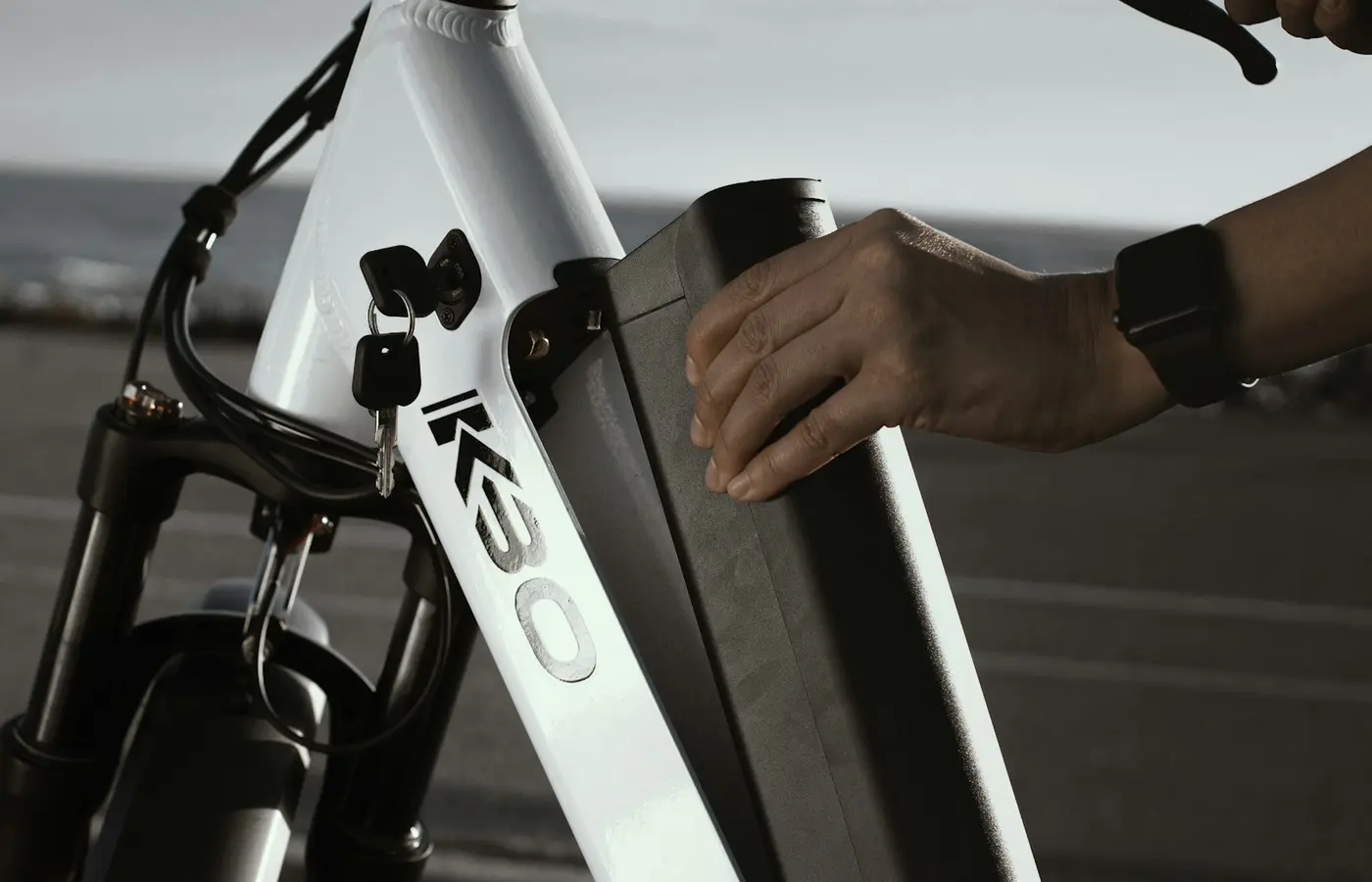
GB 17761-2024 is the mandatory Chinese safety standard for the electric bicycle as a complete vehicle. GB 43854-2024 is the mandatory safety standard for lithium-ion cells and battery packs used on qualifying electric bicycles. They are connected, but they are not interchangeable.
A battery meeting GB 43854-2024 does not, by itself, establish that the finished bicycle meets GB 17761-2024. Conversely, a vehicle-level compliance review cannot ignore the battery standard where the bicycle uses an in-scope lithium-ion battery. For products intended for the Chinese domestic market, businesses also need to check the applicable conformity-assessment, certification, transition, and enforcement requirements for the relevant sale date.
Start with the compliance question: vehicle standard or lithium-battery standard?
The simplest distinction is the object regulated by each standard:
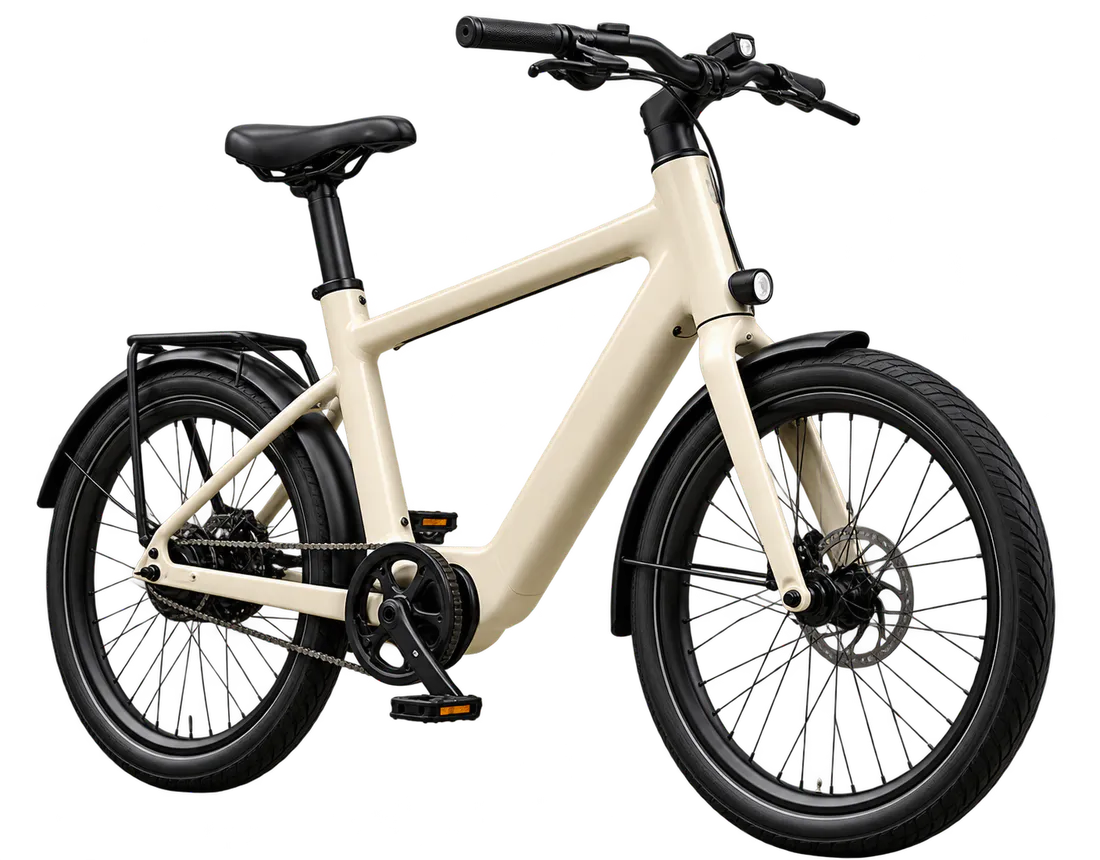
- GB 17761-2024, Safety technical specification for electric bicycle, addresses the electric bicycle as a finished product.
- GB 43854-2024, Safety technical specification of lithium-ion battery for electric bicycle, addresses lithium-ion battery cells and battery packs used in the defined electric-bicycle category.
The National Standard Information Public Service Platform lists GB 43854-2024 as a current mandatory national standard, published on April 25, 2024 and implemented on November 1, 2024.1 Official government guidance explains that its scope is limited to lithium-ion batteries for electric bicycles defined by GB 17761 and having a maximum output voltage not exceeding 60 V.2
GB 17761-2024 replaces GB 17761-2018. The published standard text identifies September 1, 2025 as its implementation date and describes its subject as electric bicycles.3 That date matters: a compliance review should establish which version applied when the product was manufactured, certified, offered for sale, or placed on the relevant market.
For practical purposes, think of the two standards as separate layers:
- Vehicle layer: Is the finished product an electric bicycle, and does the complete bicycle meet the applicable vehicle standard?
- Battery layer: If it uses an in-scope lithium-ion battery, does the cell and pack meet the dedicated battery safety standard?
- Market-entry layer: What certification, registration, product-marking, transport, and local-market requirements apply at the time and place of sale?
The third layer cannot be assumed from the first two. Mandatory technical standards and the route used to demonstrate conformity are related but distinct questions.
What GB 17761-2024 covers: the electric bicycle as a complete product
GB 17761-2024 is a whole-vehicle standard. Its published text states that it specifies technical requirements and corresponding test methods for areas including bicycle marking, bicycle safety, mechanical safety, electrical safety, fire retardancy, plastic ratio, positioning, communication and dynamic safety monitoring, anti-tampering, instruction manuals, enterprise quality-assurance capability, and product consistency.3
This scope is considerably broader than a battery test programme. A battery may be one of the most safety-critical assemblies on an e-bike, but it is not the bicycle itself.
The practical meaning of vehicle-level compliance
A GB 17761 review concerns how the bicycle is designed, configured, documented, and controlled as a complete product. Depending on the applicable provisions and product configuration, that can involve questions such as:
- whether the product is presented and marked as an electric bicycle;
- mechanical and bicycle-related safety characteristics;
- electrical-system safety beyond the battery pack alone;
- fire-retardant material requirements and vehicle material controls;
- anti-tampering design considerations;
- instructions supplied with the finished product;
- positioning, communication, and dynamic safety-monitoring functions where the applicable standard requires them; and
- whether production controls maintain consistency between the assessed product and mass-produced bicycles.
This does not mean every legacy bicycle automatically needs the same engineering changes, or that every listed topic operates identically across every product and transition period. Manufacturers should verify the applicable clauses of the current official text, related implementation notices, and the precise product configuration before making a conformity claim.
For buyers and procurement teams, the distinction is useful because a battery report cannot substitute for finished-bike documentation. A supplier that provides only battery paperwork has not necessarily demonstrated compliance for the frame, electrical system, labelling, instructions, anti-tampering provisions, or other complete-bike requirements.
What GB 43854-2024 covers: lithium-ion cells and battery packs
GB 43854-2024 focuses specifically on lithium-ion battery safety for qualifying electric bicycles. It applies at both the cell and battery-pack levels, rather than treating the battery as a generic accessory.
The official government interpretation says the standard includes cell safety requirements and establishes battery-pack safety entry requirements covering electrical safety, mechanical safety, environmental safety, thermal propagation, coordinated charging, data collection, and marking.2
Cell-level and pack-level requirements are not the same
A cell is the individual electrochemical unit. A battery pack is the assembled product used on the bicycle, typically including cells, connections, enclosure, battery-management functions, and other pack-level components.
The distinction matters because a safe cell does not automatically result in a safe pack. Pack design affects protection logic, electrical connections, enclosure integrity, charging behaviour, communication, data handling, and the way a fault may spread between cells.
Official and regulator-hosted interpretations identify test and safety areas including:
- overcharge, overdischarge, external short circuit, and temperature protection;
- crush, acceleration shock, vibration, and drop-related mechanical stresses;
- low pressure, temperature cycling, immersion, and other environmental exposures;
- thermal propagation;
- coordinated charging;
- data collection; and
- marking requirements.24
These categories should not be read as a guarantee that a compliant battery cannot fail or catch fire in real-world use. The policy purpose described by regulators is to improve intrinsic battery safety and reduce safety risks, not to eliminate every possible hazard.2
Product boundary: lithium-ion e-bike batteries, not every small-vehicle battery
GB 43854-2024 does not govern every lithium-ion battery used in a light electric vehicle. The official interpretation specifically excludes lithium-ion batteries for electric scooters, balance vehicles, electric motorcycles, and electric tricycles.2
That boundary is important for exporters and overseas buyers. A battery designed for a fast electric scooter or an electric motorcycle may be marketed alongside e-bike products, but that does not make GB 43854-2024 the appropriate Chinese battery standard for that product. Product classification must come first.
Where the two standards meet—and where they do not
The standards overlap because the battery is installed on the bicycle. Their core regulated objects remain different.
| Question | GB 17761-2024 | GB 43854-2024 |
|---|---|---|
| Primary regulated object | The complete electric bicycle | Lithium-ion cells and battery packs for qualifying electric bicycles |
| Main product boundary | Electric bicycles covered by the vehicle standard | Lithium-ion batteries used on GB 17761-defined electric bicycles, with maximum output voltage not exceeding 60 V |
| Main safety focus | Whole-vehicle design, safety, marking, documentation, anti-tampering, production consistency, and related requirements | Cell and pack electrical, mechanical, environmental, thermal, charging, data, and marking safety |
| What it does not establish on its own | That every installed battery meets its dedicated battery requirements | That the complete bicycle meets vehicle-level requirements |
| Typical evidence to review | Complete-bike specifications, labels, instructions, configuration records, and applicable conformity documents | Battery nameplate, specifications, instructions, test evidence, certification evidence where applicable, and configuration traceability |
The standards therefore meet at the vehicle-battery interface. A bicycle manufacturer needs a battery that is appropriate for the vehicle category and configuration. A battery supplier needs to ensure that the supplied pack remains within the evaluated design and is correctly identified for its intended e-bike use.
The standards do not merge into one requirement. It would be inaccurate to say that GB 43854-2024 “replaces” GB 17761-2024, or that one test report proves full compliance with both standards.
Mandatory compliance and certification are not the same question
Both standards are mandatory national standards, but a mandatory standard is not identical to a certification programme.
The official GB 43854-2024 policy interpretation cites Article 25 of China’s Standardization Law: products and services that do not conform to mandatory standards may not be produced, sold, imported, or provided. The guidance states that electric-bicycle lithium-ion batteries sold domestically must meet the standard after its implementation.2
Separately, the compulsory product certification implementation rule for electric-bicycle lithium-ion batteries applies to cells and battery packs for electric bicycles meeting GB 17761 requirements. It identifies GB 43854 as the certification basis and describes a certification model involving type testing, an initial inspection of enterprise quality-assurance capability and product consistency, and post-certification surveillance.5
That rule is useful, but it should not be treated as a permanent shortcut. Certification catalogues, implementation rules, transition arrangements, and enforcement dates can change. Before shipment or sale, manufacturers and importers should verify current notices from the relevant Chinese authorities and certification bodies for the specific product category.
This is especially important where a product sits near a classification boundary or where a battery is sold separately. The applicable route may depend on the product’s actual design, rated and maximum electrical characteristics, intended vehicle category, and the date it enters the market.
Practical checks for manufacturers, importers, and buyers
For manufacturers and battery suppliers
Create separate requirement matrices rather than one generic “China compliance” checklist.
For the bicycle:
- identify the applicable GB 17761 version for the product and market date;
- map complete-bike requirements to engineering specifications;
- control the approved vehicle configuration, including battery integration;
- maintain labels, instructions, and product-consistency records; and
- confirm whether applicable certification or other market-entry processes have been completed.
For the lithium-ion battery:
- identify the cell and pack design covered by the assessment;
- map GB 43854 requirements to the pack architecture and protection functions;
- maintain traceability for cells, battery-management components, enclosure, connectors, and software or firmware where relevant;
- ensure that marking and documentation match the actual supplied pack; and
- control design changes after certification or test evaluation.
A battery pack that is electrically similar but uses different cells, a different battery-management system, altered enclosure materials, or changed charging behaviour may require reassessment. The relevant question is not whether the supplier regards the revised part as equivalent, but whether it remains within the applicable compliance and certification controls.
For importers
Chinese GB compliance may be commercially valuable evidence, but it is not automatically sufficient for another country or region. Importers should separately check the destination market’s vehicle classification, electrical-safety rules, battery transport obligations, product-liability expectations, consumer-information requirements, and conformity-assessment route.
Request documentation that identifies the exact supplied configuration. A report for a different nominal capacity, case design, battery-management system, charger, or bicycle model may have limited value.
For buyers and procurement teams
The government guidance advises consumers to review the battery nameplate, specification sheet, and instructions, or ask the seller for relevant test reports or certification documents.2 For commercial buyers, the review should go further:
- confirm the battery manufacturer, model, chemistry, voltage information, capacity, and production identification where available;
- check that battery documentation matches the actual pack supplied with the bicycle;
- request evidence relevant to GB 43854-2024 for an in-scope lithium-ion pack;
- request separate complete-bike documentation relevant to GB 17761-2024 where the bicycle is intended for China; and
- confirm the current certification and market-entry position for the planned sales date.
Documents alone are not conclusive if they do not match the physical product. Model identifiers, labels, pack configuration, and supplier records should be consistent across the bicycle, battery, invoice, specification sheet, and conformity documentation.
Frequently asked questions
Does GB 43854-2024 replace GB 17761 for electric bicycles?
No. GB 43854-2024 addresses lithium-ion battery cells and packs for qualifying electric bicycles. GB 17761-2024 addresses the complete electric bicycle. A battery standard cannot replace the vehicle-level standard.23
Does GB 43854-2024 apply to an electric motorcycle or electric scooter battery?
Not according to the official scope interpretation. It excludes batteries used in electric motorcycles, electric scooters, balance vehicles, and electric tricycles.2 The correct standard and regulatory route should be determined from the actual vehicle category.
Is a GB 43854-2024-compliant battery enough to make an e-bike compliant in China?
No. It may address the battery portion of the product, but it does not demonstrate complete-bike compliance under GB 17761-2024 or resolve all applicable certification and market-entry requirements.
What documents should a buyer or importer request for a Chinese e-bike lithium battery?
At minimum, request the battery nameplate details, specification sheet, instructions, and relevant test or certification evidence. Verify that these documents identify the actual battery model and configuration supplied. For a complete e-bike, request separate vehicle-level documentation rather than relying solely on battery records.2
Decision framework: which standard should you check first?
Use this sequence when reviewing an e-bike or battery programme:
- Classify the finished product. Determine whether it is an electric bicycle within the scope of GB 17761.
- Identify the battery. Confirm whether it is a lithium-ion cell or battery pack used on that bicycle.
- Check the battery standard. For an in-scope lithium-ion e-bike battery, review GB 43854-2024 and its November 1, 2024 implementation status.1
- Check the vehicle standard. Review the complete bicycle against GB 17761-2024, which replaced GB 17761-2018 and is identified in the published text as implemented from September 1, 2025.3
- Confirm the compliance route. Check current CCC, conformity-assessment, transition, and market-entry requirements for the precise product, sales date, and jurisdiction.
- Match evidence to hardware. Make sure labels, specifications, test records, certification documents, and the physical bicycle and battery describe the same configuration.
The practical conclusion is straightforward: GB 17761-2024 is the complete-bike rulebook, while GB 43854-2024 is the dedicated lithium-ion battery safety rulebook for e-bikes within that category. A sound compliance review needs both perspectives, followed by confirmation of the current market-entry requirements.
Footnotes
-
National Standard Information Public Service Platform: GB 43854-2024 ↩ ↩2
-
Chinese Government: Nine questions and answers on GB 43854-2024 ↩ ↩2 ↩3 ↩4 ↩5 ↩6 ↩7 ↩8 ↩9 ↩10
-
Published English rendering of GB 17761-2024 — use the official Chinese standard text and current regulator notices for formal compliance decisions. ↩ ↩2 ↩3 ↩4
-
Xinjiang Market Regulation Administration: GB 43854-2024 interpretation ↩
-
Compulsory Product Certification Implementation Rule for Electric-Bicycle Lithium-Ion Batteries ↩