 China eBike
EU E-Bike Import Compliance: CE Marking, EN 15194, and Importer Checks
A practical guide to EU e-bike compliance, CE marking, EN 15194, supplier records, battery documents, and importer checks before shipment.
Importing an e-bike from China into the European Union is not a matter of collecting a CE logo and a battery test report. The central question is whether the exact vehicle placed on the EU market matches the legal classification, conformity evidence, labels, instructions, and technical configuration documented by the supplier.
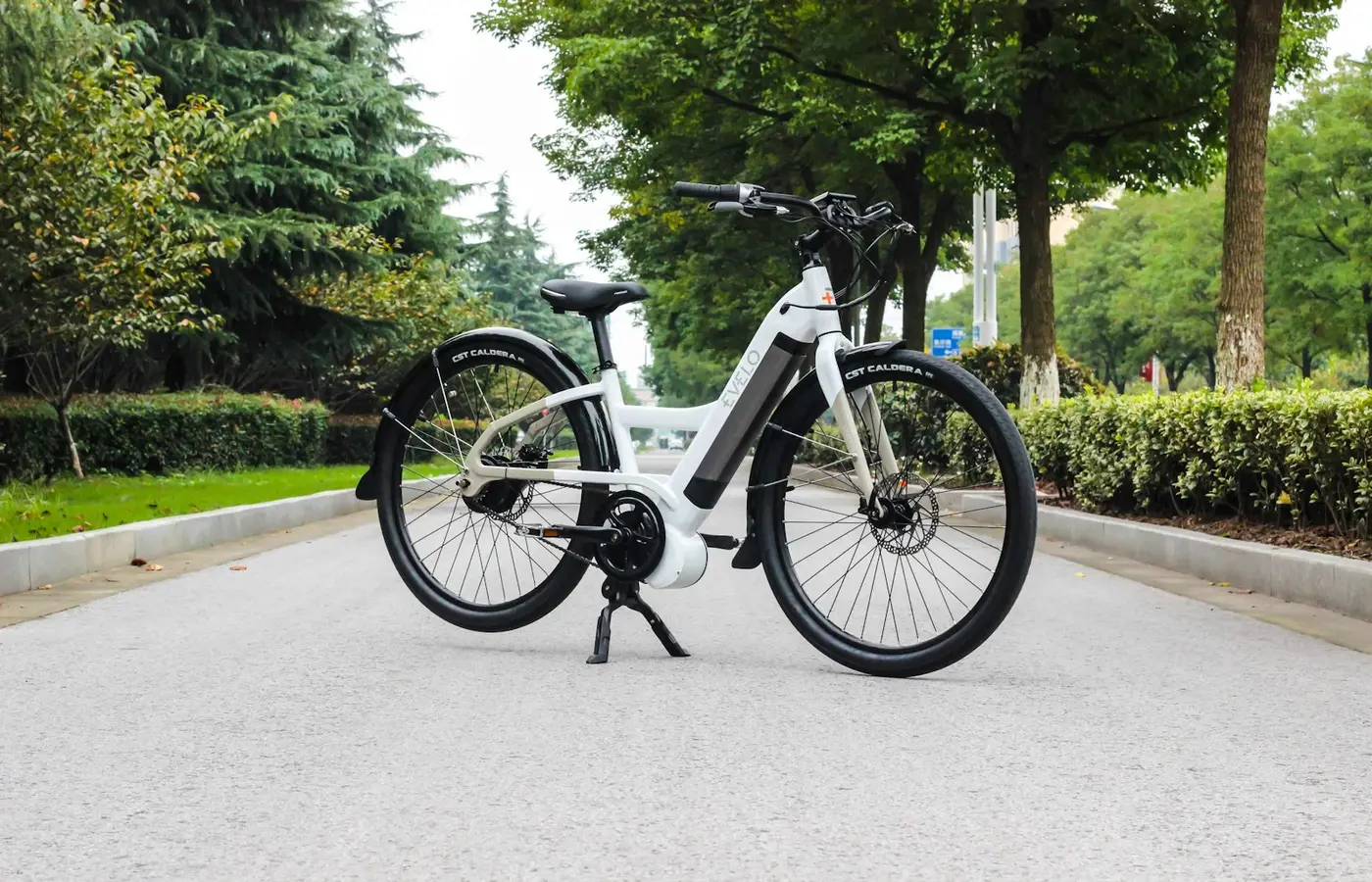
That distinction matters because a bicycle that appears similar to an ordinary pedal-assist e-bike can fall into a different regulatory route if its power output, assistance speed, throttle behaviour, or pedal-assist logic changes. A supplier may also offer several versions of one frame platform, with different motors, controllers, batteries, displays, or firmware settings. Evidence for one version does not automatically cover another.
For an importer, the practical approach is product-by-product verification: classify the vehicle first, identify the applicable EU legislation, review evidence for the finished configuration, and check that production and shipment records match the reviewed product.
Start with classification: EPAC or L-category vehicle?
The first decision is whether the vehicle is an electrically power-assisted cycle (EPAC) outside the scope of EU L-category vehicle type approval, or whether it is instead subject to the type-approval framework for mopeds, motorcycles, and related vehicles.
Under Regulation (EU) No 168/2013, the exclusion commonly used for pedal-assisted cycles is narrowly framed. In broad terms, it concerns cycles with pedal assistance equipped with an auxiliary electric motor whose maximum continuous rated power does not exceed 250 W, where motor output is progressively reduced and finally cut off before the vehicle reaches 25 km/h, or sooner if the cyclist stops pedalling.
The familiar “250 W / 25 km/h” shorthand is therefore useful, but incomplete. Importers should also review how the vehicle actually behaves.
Questions to ask before requesting CE documents
Request a written technical description for the exact proposed configuration, including:
- Maximum continuous rated motor power and the basis used to state it.
- Maximum assisted speed in each riding mode.
- Whether assistance requires pedalling.
- What happens when the rider stops pedalling.
- Throttle, boost, walk-assist, and start-assist functions.
- Controller limits and display settings.
- Firmware version and whether settings can be altered by dealers or end users.
- Motor, controller, battery, display, and charger model numbers.
- All planned country variants and optional equipment.
Throttle functions deserve particular attention. A throttle can affect classification depending on how it operates, at what speed, whether pedalling is required, and how the complete vehicle is configured. Do not assume that a throttle-equipped model follows the same route as a pedal-assist-only model merely because it uses the same frame and battery.
Similarly, a product should not be classified from a catalogue headline such as “250 W motor.” The relevant question is whether the vehicle’s complete design, declared ratings, and operational behaviour meet the applicable legal conditions.
If a model sits near a classification boundary, pause the purchase process and obtain specialist conformity or legal advice for the intended Member State market. A type-approval issue cannot reliably be solved after a container has shipped.
What CE marking means for an e-bike sold in the EU
CE marking is not a generic certificate issued for an e-bike model in isolation. It is the manufacturer’s declaration that the finished product complies with applicable EU harmonisation legislation and that the required conformity-assessment process has been completed.
For an EPAC, the applicable framework may involve more than one legal act. The precise list depends on the product and fitted equipment. Examples that may require assessment include machinery-related requirements for the complete e-bike, electromagnetic compatibility requirements, radio-equipment rules for wireless functions, and requirements relevant to chargers or other electrical equipment. Battery, packaging, waste, consumer-information, and national-language obligations may also need separate review.
The applicable legislation should be determined for the exact product and target market at the date it is placed on the market. It is not safe to use a generic “EU certificate” as a substitute for that exercise.
Manufacturer, authorised representative, and importer roles
The manufacturer is generally responsible for designing and manufacturing the product in conformity with applicable requirements, preparing technical documentation, conducting or arranging the relevant assessment, issuing an EU declaration of conformity where required, and affixing CE marking when the legal conditions are met.
A manufacturer established outside the EU may appoint an authorised representative for specified tasks. That appointment does not automatically transfer every manufacturer responsibility, and importers should verify what authority the representative actually has.
The importer has its own obligations. Before placing a product on the EU market, the importer should take reasonable steps to verify that the manufacturer has completed the required conformity process and that required documentation, markings, traceability information, and instructions accompany the product as applicable. Importers must also avoid placing products on the market when they have reason to believe that they are non-compliant.
In practical procurement terms, the importer should be able to answer four questions:
- Who is the legal manufacturer of this finished e-bike?
- Which legislation has the manufacturer declared applicable?
- Does the evidence cover the exact imported configuration?
- Can the importer trace each shipped unit to the relevant production and conformity records?
A downloadable file titled “CE certificate” may be useful background evidence, but it is not enough on its own. Check who issued it, what product it identifies, what it actually evaluates, and whether the model, components, and version match the goods being ordered.
EN 15194: what the standard supports—and what it does not prove
EN 15194 is the European standard associated with electrically power-assisted cycles. It can provide a structured technical route for assessing relevant aspects of an EPAC, including system-level considerations that matter for an electrically assisted bicycle.
However, EN 15194 is not the whole legal framework for every e-bike, and a statement that a product is “EN 15194 certified” should not end the importer’s review.
A harmonised standard may provide a presumption of conformity for the requirements it covers when it is cited in the Official Journal of the European Union under the relevant legislation. That presumption has limits:
- It applies only to the requirements covered by the cited standard.
- It depends on the cited edition and any stated restrictions or limitations.
- It does not automatically cover unrelated legislation or fitted equipment.
- It does not prove that a different model, optional battery, revised controller, or changed firmware is covered.
Before relying on EN 15194, confirm the current Official Journal citation, the edition used by the supplier, the applicable legal act, and the scope of the evidence. This should be done at the time of import, not only when the supplier first developed the platform.
Match the report to the actual bicycle
A useful test report should identify enough of the product to establish a credible link to the finished model. Look for model names, photographs where available, component references, controller or battery identification, test dates, report scope, and any exclusions.
Ask the supplier to explain, in writing, how the report maps to the ordered product. If the report covers a 36 V battery and the purchase order specifies a 48 V battery, or if a tested display has been replaced by a connected display with Bluetooth capability, treat that as a potentially material change rather than a clerical detail.
The pre-order compliance file to request from a Chinese supplier
A compliance review is easier before tooling, production deposits, and shipping arrangements are fixed. The goal is not to demand every possible factory document; it is to obtain a controlled file that identifies the same product you intend to import.
The following matrix separates the most useful records by purpose.
| Area | Documents or evidence to request | What to verify |
|---|---|---|
| Product identity | Model list, SKU list, product specification, photographs, serial-number format | The exact model and variant match the purchase order. |
| Conformity | EU declaration of conformity, technical-file index, applicable test reports | Legal manufacturer, product identification, legislation, standards, dates, and signatory details are coherent. |
| Core components | Bill of materials, motor, controller, battery, BMS, display, charger, brake, and frame specifications | Component model numbers match the reviewed configuration. |
| Software control | Firmware versions, controller parameters, mode settings, configuration access controls | Speed, power, throttle, and pedal-assist behaviour cannot change without review. |
| Product information | Labels, warning labels, user instructions, assembly information | Required information is present and can be supplied in target-market languages where required. |
| Production control | Incoming inspection records, final inspection plan, serial traceability, change-control procedure | The supplier can detect and manage deviations after approval. |
| Supplier identity | Manufacturer business details, factory address, authorised representative details if applicable | The legal entity named in documents is identifiable and consistent. |
Put configuration control into the purchase agreement
A product can become non-conforming after initial documentation is reviewed if the factory substitutes parts during production. This is common enough in component-constrained supply chains that it should be addressed contractually.
The purchase order or supply agreement should require written notice and importer approval before material changes to:
- Motor or motor winding specification.
- Battery pack, cells, BMS, or battery enclosure.
- Charger model or charging profile.
- Controller hardware or firmware.
- Display, app, Bluetooth, GPS, or other radio module.
- Frame, fork, braking system, wheels, or tyres.
- Speed limit, power mode, throttle, or pedal-assist settings.
- Labels, instructions, or declared manufacturer information.
This does not turn the importer into the manufacturer, but it gives the importer a practical way to prevent undocumented substitutions from entering the supply chain.
Battery, charger, and shipping documents are not the same as product compliance
An e-bike shipment can involve three overlapping document sets: complete-product conformity evidence, component evidence, and transport documentation. They should be reviewed separately.
Complete-product records
These concern the finished e-bike placed on the EU market. They may include the declaration of conformity, technical-file records, applicable test evidence, instructions, labels, and traceability information.
Battery and charger records
Battery packs and chargers need their own identification and technical evidence. Request the battery-pack model, cell specification, nominal voltage and capacity, BMS configuration, charger model, connector type, and compatibility information. A battery supplied with one model should not automatically be assumed suitable for another model with a different electrical system or charging arrangement.
Shipping and dangerous-goods records
Lithium-battery transport documentation addresses transport risk. Depending on the shipment arrangement, this may include evidence linked to the UN Manual of Tests and Criteria, packaging instructions, and dangerous-goods declarations. Carriers and freight forwarders may request different information depending on whether batteries are shipped installed in equipment, packed with equipment, or separately.
A UN 38.3-related test summary or report can be important for transport, but it is not CE evidence and does not prove that the finished e-bike meets EU market-access requirements. Conversely, CE marking on a finished product does not remove the need to meet applicable transport rules.
Importer checks before shipment and after arrival
Document review should be paired with physical checks. The most effective point to find a mismatch is before the goods leave the factory, when correction remains practical.
Before shipment
Use a pre-shipment checklist that compares production units against the approved file:
- Confirm model, SKU, colour, battery, motor, controller, display, and charger against the purchase order.
- Sample serial numbers and confirm they follow the agreed traceability format.
- Inspect CE marking and required manufacturer or product-identification information as applicable.
- Confirm importer details will be added in the required manner where applicable.
- Review the declaration of conformity for the final model and version.
- Check supplied instructions, warnings, and assembly information.
- Confirm that firmware and controller settings match the approved configuration.
- Verify battery labels, charger labels, plug type, and rated electrical information.
- Confirm the shipping file matches the actual battery arrangement and packaging.
After goods arrive
Incoming inspection should repeat key identity and traceability checks rather than assume that the shipped batch matches the approved sample. Retain the documents needed to demonstrate due diligence and to support cooperation with market-surveillance authorities if questions arise.
Importers should also maintain a corrective-action process. If there is reason to believe a product is non-compliant, the appropriate response may include withholding stock from sale, investigating affected serial-number ranges, contacting the manufacturer, correcting the issue, or taking further action where required. The correct response depends on the product, risk, applicable law, and the Member States involved.
Do not treat customs clearance as confirmation that an e-bike is compliant. Customs, market-surveillance authorities, online marketplaces, insurers, and national authorities may assess different records and may act at different points in the supply chain.
Frequently asked questions
Is EN 15194 mandatory for e-bikes sold in the EU?
Not as a standalone rule for every electrically assisted bicycle. EN 15194 can be a harmonised standard that supports a presumption of conformity for requirements within its scope, subject to its current Official Journal citation, edition, and limitations. The importer must first confirm the vehicle classification and applicable legislation.
Does a CE certificate prove that an e-bike is compliant?
No. CE marking is tied to the manufacturer’s conformity assessment and supporting documentation for the finished product. A third-party report or certificate may be relevant evidence, but it should be reviewed alongside the declaration of conformity, technical documentation, product identity, and configuration details.
What documents should an EU importer request from a Chinese e-bike supplier?
At minimum, request the declaration of conformity, technical-file index, relevant test evidence, model and component specifications, bill of materials, labels, instructions, firmware and controller-setting records, battery and charger specifications, traceability procedures, and transport documentation where relevant. Each document should map to the exact ordered configuration.
Is a UN 38.3 battery test report enough to sell an e-bike in the EU?
No. UN 38.3-related evidence concerns lithium-battery transport testing. It does not establish conformity of the finished e-bike for EU market placement and should not be treated as CE evidence.
A practical decision framework
Proceed with an order only when these four elements align:
- Classification: The product’s actual power, speed, pedal-assist, and throttle behaviour fit the intended regulatory route.
- Documentation: The declaration, technical records, test evidence, and applicable standards identify the same product and configuration.
- Traceability: The manufacturer, importer, model, components, firmware, and serial numbers can be linked through controlled records.
- Physical verification: Samples and production goods match the reviewed file, labels, instructions, and shipping arrangement.
Pause and escalate when the vehicle has uncertain throttle behaviour, adjustable speed or power settings, connected radio equipment, a changed battery or charger, incomplete documentation, or a late production substitution. For EU e-bike compliance, a generic factory model is not the product being assessed. The relevant product is the exact e-bike that reaches the customer.