 China eBike
How to Estimate E-Bike Range for a Specific Route
Estimate e-bike range for a planned route using remaining battery energy, recent Wh-per-distance data, terrain, assist level, weather, and reserve.
The useful question before a ride is rarely, “What is this bike’s maximum range?” It is: “Can the battery I have now complete this specific route, with enough margin for unexpected conditions?”
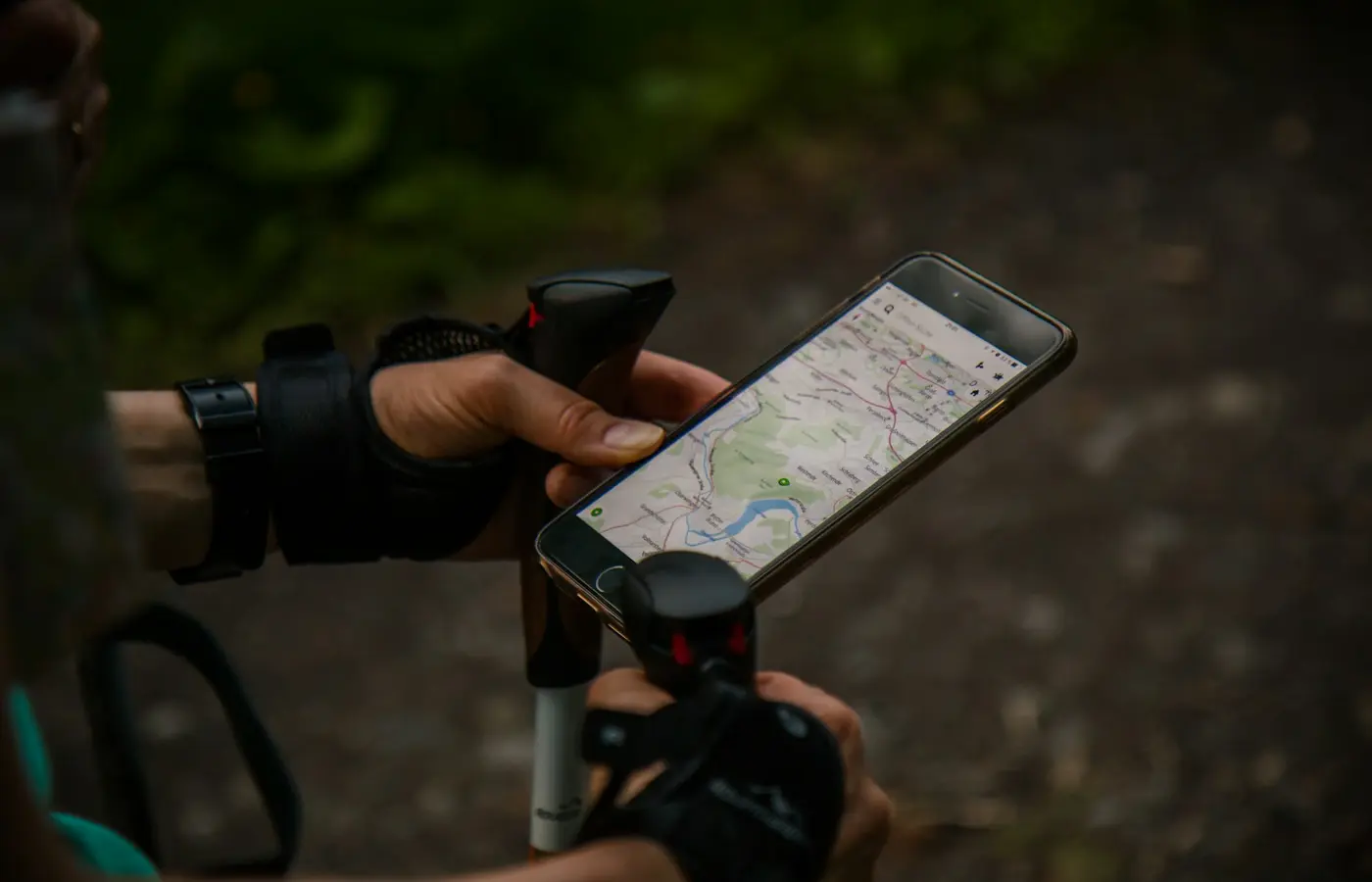
To estimate e-bike range well, begin with remaining battery energy and consumption from comparable recent rides. Then adjust for what will be different today: climbing, assist level, speed, rider and cargo mass, stops, surface, wind, and temperature.
This produces a planning estimate, not a guarantee. Battery displays, route elevation data, and personal ride records can narrow uncertainty, but they cannot remove it entirely. The most dependable estimates are usually based on a rider’s own history on similar routes rather than a published maximum-range claim.
Research into e-bike range prediction supports that approach. Models using cycling behaviour and route characteristics can improve on estimates based only on battery state and assist setting; one study also found that a cyclist’s past energy consumption can be highly useful for predicting that rider’s future use.1
Start With a Route-Specific Range Budget
Think of your battery as an energy budget measured in watt-hours (Wh), not as a fixed number of kilometres or miles.
A route-specific range budget has four parts:
- Energy currently available — ideally expressed as remaining Wh, or estimated from battery percentage.
- Your baseline consumption — Wh per kilometre or Wh per mile from comparable rides.
- Route and condition adjustments — especially climbing, assist level, speed, load, wind, surface, and temperature.
- A reserve — energy deliberately left unused at the end of the plan.
Manufacturer range figures can be useful as broad context, but they are conditional figures. A published range may assume flat terrain, low assistance, a relatively light rider, mild weather, and limited acceleration. Cycling Electric notes that assistance mode, drive unit, battery size, cadence, gear use, acceleration, braking, tyre pressure, and rider profile can all affect real-world range.2
That does not make a manufacturer figure meaningless. It means it should not be used as the sole basis for deciding whether a hilly round trip is feasible on a partly charged battery.
Before leaving, use your route planner or map to identify:
- total distance;
- total ascent and descent;
- the length and steepness of major climbs;
- likely road or trail surface;
- places where frequent stops are likely;
- an approved charging opportunity, if one is genuinely available; and
- a shorter return route or other fallback option.
A route with the same distance as a previous ride can require much more energy if it adds a long climb, exposed headwind, loose gravel, heavier cargo, or sustained high-speed riding.
Translate Your Battery and Recent Rides Into a Baseline
Confirm the battery’s nominal energy
Battery capacity is commonly stated in amp-hours (Ah), while route planning works better in watt-hours (Wh). If the battery documentation gives nominal voltage and capacity, calculate nominal energy as:
Nominal battery Wh = nominal voltage (V) × capacity (Ah)
For example, a battery specified as 36 V and 14 Ah has a nominal energy rating of:
36 × 14 = 504 Wh
This is a nominal specification, not a promise that every one of those watt-hours is accessible during every ride. Battery-management systems may retain a reserve, and available energy can vary with temperature, battery condition, discharge rate, and the bike’s control system. Do not assume a universal “usable capacity” percentage unless the bike or battery manufacturer documents it for that model.
Estimate remaining energy cautiously
If the display reports battery percentage and you know the nominal battery energy, a simple starting estimate is:
Estimated remaining nominal Wh = nominal battery Wh × displayed battery fraction
For a 504 Wh battery showing 60%:
504 Wh × 0.60 = about 302 Wh
Treat that result as a planning approximation. Some displays show battery bars rather than a precise state-of-charge percentage, and bar readings may not correspond evenly to energy remaining.
Use Wh per distance from your own rides
The most practical baseline is your recent energy use per kilometre or mile on a comparable ride:
Baseline range = estimated remaining Wh ÷ recent Wh per distance
If your recent comparable rides used 8 Wh/km and you estimate 302 Wh remains:
302 Wh ÷ 8 Wh/km = about 38 km
Or, if your records are in miles and you used 13 Wh/mile:
302 Wh ÷ 13 Wh/mile = about 23 miles
The calculation is simple; choosing comparable data is the harder part. A useful comparison ride has similar:
- terrain and elevation gain;
- assist mode and typical pedalling effort;
- average speed and stop frequency;
- rider and cargo load;
- tyre type and pressure;
- surface quality; and
- temperature and wind exposure.
Many displays and companion apps provide some combination of battery percentage, trip distance, average speed, and estimated remaining range. GPS ride records can add elevation data. If your system reports actual Wh used, that is especially useful, but the availability and accuracy of this data varies by bike.
A study of planned-route power consumption notes that many e-bike displays estimate remaining range from battery capacity and selected assistance level alone, even though route characteristics also matter.3 When available, your own ride history is therefore often a better starting point than a single fixed display estimate.
Adjust the Baseline for Climbing, Assist Level, and Speed
Treat elevation as a major route change
Climbing requires energy to move the combined mass of bike, rider, clothing, and cargo uphill. On an e-bike, that additional work may come partly from the rider and partly from the battery, depending on assist mode, gearing, cadence, motor behaviour, and gradient.
Do not apply a universal “Wh per metre climbed” rule. The result varies too much across bikes and riders. Instead, compare your planned route with rides you have already logged:
- Was the previous route flat while the new route has sustained climbing?
- Does the planned route contain a steep section likely to require high assistance?
- Will you begin the return journey after most of the climbing is complete, or face a major ascent late in the ride?
For a new hilly route, use a higher expected consumption figure than your flat-route average. If your display or ride app records Wh/km by trip, rides with similar elevation profiles are the most relevant reference.
Match your estimate to the assist level you will actually use
Assist modes are not just labels. They change how much motor support is requested and can materially change consumption. Consult your bike’s manual for the meaning of its modes, throttle behaviour where fitted, speed limits, and any automatic or adaptive settings.
A realistic estimate should reflect your intended mode, not the mode used in an optimistic range claim. If you normally ride in low assist but expect to use high assist on hills or while carrying cargo, calculate from rides that reflect that likely behaviour—or add a larger planning margin.
Higher sustained speeds usually require more energy
Air resistance rises rapidly as speed increases, making sustained fast riding more energy-intensive than slower riding. The effect is especially relevant for speed pedelecs and for riders using high assistance on open roads. Research on cycling behaviour and speed pedelecs identifies higher assisted speeds as a source of substantially greater energy use, but the exact effect depends on the rider, bicycle, route, weather, and system settings.4
For planning purposes, avoid borrowing a low-speed, low-assist consumption figure for a ride that will involve long periods near the bike’s assisted speed limit.
Account for Load, Stops, Surface, Wind, and Temperature
Not every factor needs a numerical multiplier. In most cases, it is safer to recognise the direction of the effect and choose a more conservative consumption value.
| Condition | Likely planning effect | Practical response |
|---|---|---|
| Heavier rider or cargo | More energy needed, especially on climbs and during acceleration | Use data from loaded rides where possible; retain more reserve |
| Frequent stops | More acceleration and braking than a steady ride | Base the estimate on urban riding, not open-road cruising |
| Loose, rough, or soft surface | Increased rolling resistance and lower efficiency | Expect higher consumption than on smooth pavement |
| Strong headwind | Greater aerodynamic demand | Plan conservatively, especially on exposed routes |
| Cold weather | Potentially reduced available battery energy and altered performance | Check manufacturer guidance and avoid relying on warm-weather ride data |
| Incorrect tyre pressure | Can increase rolling resistance and affect handling | Stay within the tyre and wheel manufacturer’s stated limits |
A manufacturer’s testing assumptions can show why published range is conditional rather than universal. Ride1Up, for example, describes a range-test context involving a 160 lb rider, flat roads, low pedal assist, good weather, and no throttle use.5 Those conditions are not an industry standard and should not be treated as representative of every Chinese e-bike or every rider. They are a reminder to compare any stated range with the conditions of the planned trip.
Tyre pressure and load limits should come from the tyre, wheel, and bike documentation for the specific model. Do not exceed a stated maximum load or inflate tyres beyond their permitted range in pursuit of lower rolling resistance.
Temperature deserves particular caution. Cold conditions can reduce available battery performance, but the scale depends on battery chemistry, battery temperature, state of charge, load, battery age, and the e-bike system. Use battery or bike manufacturer guidance where it exists; otherwise, treat cold weather as a reason to increase your reserve rather than apply a generic percentage reduction.
Use a Conservative Trip-Planning Worksheet
The following workflow is practical for a commute, weekend route, delivery run, or unfamiliar ride.
1. Record the planned route
Write down:
- outbound, return, and total distance;
- total ascent and where it occurs;
- road, path, or trail surfaces;
- expected weather, including wind and temperature; and
- whether the route includes a reliable charging stop.
For a round trip, do not assume the outbound battery use can simply be doubled. The return may have different wind, traffic, climbing, or assist needs.
2. Choose a comparable recent ride
Select one or several rides with similar conditions. Record distance, battery used if known, assist level, elevation, weather, and cargo. If you have multiple comparable rides, use the more energy-intensive result for conservative planning.
3. Calculate baseline consumption
Use either a measured figure from a display or app, or estimate it from a known battery-state change:
Wh per km = estimated Wh used ÷ distance travelled
Then calculate:
Estimated route energy = planned distance × expected Wh per km
Use miles instead if that is how your data is recorded; the important point is to keep units consistent.
4. Choose a route-adjusted consumption figure
If the planned ride adds important demands—more ascent, higher assistance, heavier cargo, colder weather, strong wind, or rougher surface—raise the expected Wh per distance figure. When unsure, use a comparable “hard day” from your own records rather than a best-case average.
5. Set a rider-selected reserve
A reserve is not a universal percentage. It is a deliberate margin chosen for the consequences of running low where you are riding.
A short urban trip with frequent charging options may justify a smaller reserve than a remote route, a long climb near the end, cold weather, or a journey where battery depletion would create a safety or access problem.
Calculate:
Required starting energy = estimated route energy + chosen reserve
If estimated remaining energy is below that total, do not treat the trip as comfortably covered.
6. Reassess during the ride
Check battery state after the first major climb or after roughly the first third of the route. Compare actual consumption with the plan. If the battery is dropping faster than expected, take action early: reduce assist, lower speed, pedal more, avoid an optional detour, or switch to a shorter return route.
Keeping a simple log will improve future predictions. A useful format is a note or spreadsheet with route type, distance, ascent, assist mode, temperature, cargo, and Wh/km or Wh/mile. Over time, this becomes a rider-specific range map for your bike.
Decide Whether to Ride, Charge, Reduce Assist, or Change the Route
Use the estimate to make a decision before the battery is low.
Ride as planned when estimated remaining energy clearly covers route energy plus your selected reserve.
Charge before leaving or en route when the route is feasible only with a known, permitted charging stop. Follow the battery manufacturer’s charging, handling, and temperature guidance. Do not assume every café, workplace, or public socket is suitable or authorised for e-bike battery charging.
Reduce expected consumption when the margin is narrow but the trip is still necessary. The most direct changes are usually lower assist on easier sections, lower sustained speed, smoother pacing, appropriate tyre pressure, lower cargo mass, and a route with less climbing or better shelter from wind.
Change the route or transport plan when the trip depends on a best-case battery reading, a highly uncertain return leg, or a reserve you are not comfortable sacrificing.
Legal settings should be treated separately from range planning. Rules on motor power, throttle operation, and assisted speed differ by jurisdiction. Check the applicable official rules rather than relying on a general e-bike recommendation.
Frequently Asked Questions
How do I calculate e-bike range from watt-hours and Wh per mile?
Divide estimated remaining battery energy in Wh by your recent energy use in Wh per mile:
Estimated range in miles = remaining Wh ÷ Wh per mile
For example, 280 Wh remaining divided by 14 Wh/mile gives an estimate of 20 miles. Then reduce confidence in that estimate if the planned route is hillier, faster, colder, windier, or more heavily loaded than the rides used to establish 14 Wh/mile.
How much does climbing reduce e-bike range?
There is no reliable universal conversion because the effect depends on total mass, gradient, assist level, rider input, motor system, speed, surface, and route profile. Use elevation data to identify added climbing, then compare with your own rides that have similar ascent. If no comparable record exists, plan with a higher consumption figure and a larger reserve.
Should I trust the range estimate shown on my e-bike display?
Use it as one input, not the final answer. Some estimates are based mainly on remaining battery state and current assist level, while a route-specific prediction also needs information about upcoming terrain, riding style, speed, and conditions.3 Check whether the display estimate appears consistent with your recent actual consumption and planned route profile.
How can I estimate whether I have enough battery for a round trip?
Calculate the whole route, including both directions, rather than estimating one leg and doubling it automatically. Include the direction of major climbs, probable wind changes, stops, cargo, and the assistance level you expect to use later in the day. Add a reserve before deciding that the battery is sufficient.
Practical takeaway
To estimate e-bike range for a particular route, start with remaining energy in Wh and divide it by your own recent Wh-per-distance figure. Then choose a more conservative consumption value when the planned ride adds climbing, high assist, speed, load, headwinds, rough surfaces, frequent stops, or cold weather.
The decision is straightforward: if remaining energy comfortably exceeds the estimated route requirement plus a reserve you have chosen, ride. If it does not, charge, reduce the planned demand, or choose a different route. A simple record of real rides will make this calculation more useful than any single advertised range number.