 China eBike
 E-Bike Rated vs Peak Power: How to Read Chinese Motor Specifications
Learn what rated and peak e-bike motor power mean, how Chinese listings use watt figures, and what to check before comparing models or markets.
A Chinese e-bike listing may state 250 W, 500 W, 750 W, or even several watt figures for the same model. That does not automatically mean the listing is inaccurate—but it does mean buyers need to ask what each number describes.
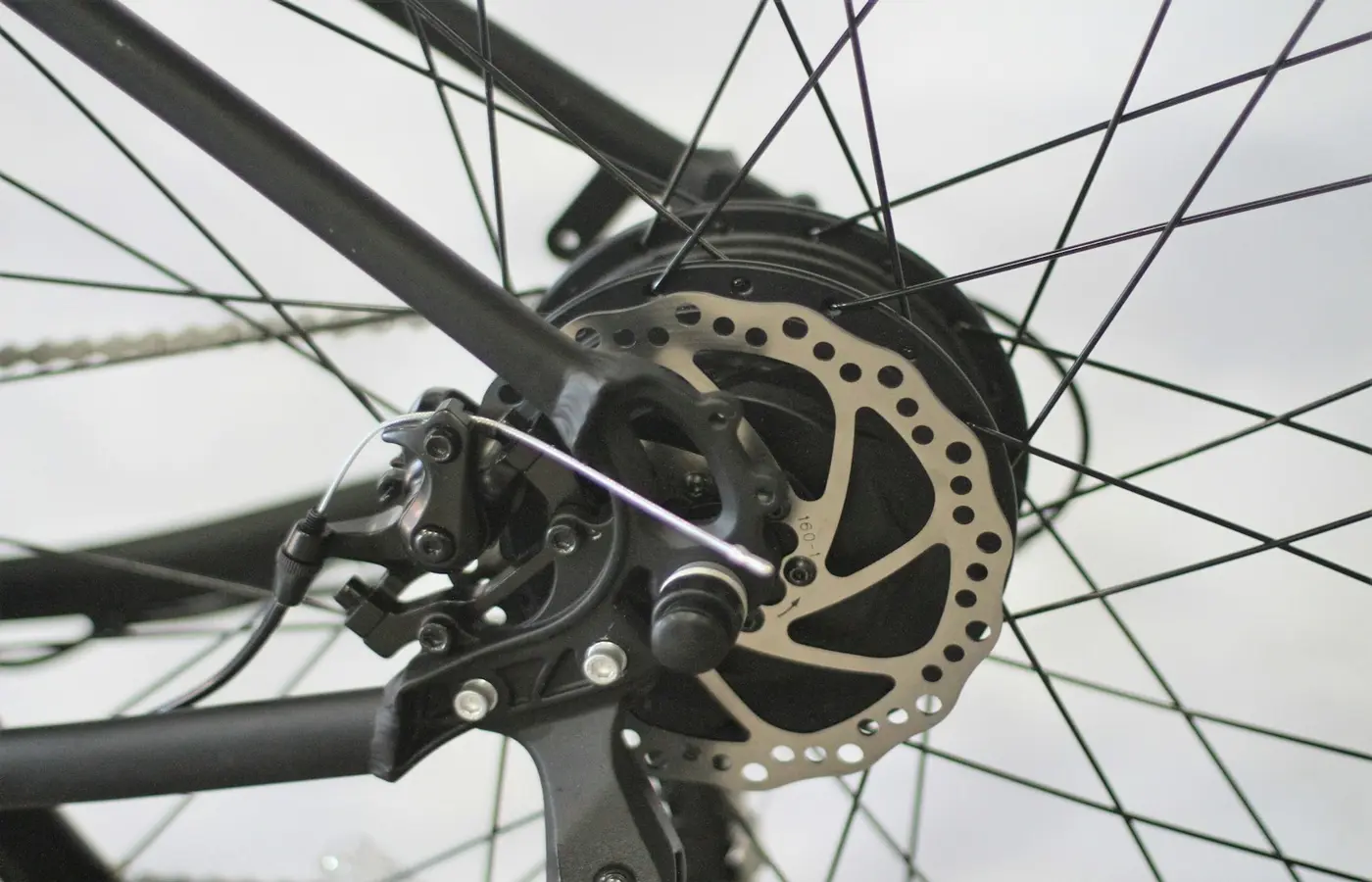
The central distinction is between rated power and peak power. Rated power is intended to describe output the drive unit can sustain under its stated rating conditions. Peak power describes a higher output that may be available only temporarily. Neither figure, on its own, tells a buyer exactly how quickly the bike will accelerate, how well it will climb, how far it will travel, or whether it fits a legal e-bike category in the destination market.
For buyers comparing Chinese-made e-bikes, complete documentation matters more than the largest number on a product page. The useful question is not simply, “How many watts is it?” It is: what kind of power is being stated, where was it measured, and what battery, controller, and legal category surround that figure?
Start With the Number That Answers Your Buying Question
A watt is a unit of power: the rate at which energy is converted or delivered. In an e-bike drive system, it can refer to several different things:
- mechanical power delivered by the motor;
- electrical power drawn from the battery;
- a continuous or nominal motor rating;
- a short-duration maximum or peak figure; or
- a controller limit calculated from battery voltage and current.
These are related, but they are not interchangeable.
For example, a seller may advertise a “1,000 W system” because the controller can briefly draw roughly that level of electrical input under favorable conditions. Another seller may describe the same motor family with a lower nominal rating based on its continuous operating capability. This is one reason identical or closely related motors can appear with very different watt labels across listings.
Grin Technologies, a supplier of e-bike components and technical resources, notes that there is no single universally consistent watt rating for an e-bike motor system. The usable output depends on the motor, controller, battery, operating conditions, and the chosen rating method.1
That does not mean all power claims are meaningless. It means they need context. When reviewing a listing, first establish whether the stated wattage is:
- rated, nominal, or continuous motor output;
- maximum or peak motor output;
- electrical input power; or
- an undefined marketing figure.
If a product page does not say which one it is, treat the number as incomplete rather than as a confirmed measure of performance.
Rated Power: The Output a Motor Can Sustain
Rated power, often called nominal power or continuous rated power, is generally intended to describe the mechanical output a motor can provide continuously without overheating or damaging its components under the manufacturer’s rating conditions.
Bosch eBike Systems distinguishes between rated continuous output and maximum power, describing rated continuous output as the mechanical power a drive unit can provide continuously without overheating or damage.2 That distinction is useful beyond Bosch products because it identifies the core technical issue: sustained output is constrained by heat.
Electric motors generate heat in their windings, magnets, controller electronics, and associated wiring. At low speed, on steep climbs, under heavy loads, or in high ambient temperatures, a motor may produce substantial torque while receiving limited cooling. A system that can deliver a high burst of power may not be able to maintain that output indefinitely.
Rated motor power is not battery power
A common error is to confuse the motor’s rated output with the battery’s electrical capability.
A battery is usually described by voltage and capacity. For example:
- Voltage (V) describes the electrical potential of the pack.
- Amp-hours (Ah) describe charge capacity.
- Watt-hours (Wh) describe stored energy, calculated approximately as voltage multiplied by amp-hours.
The controller manages how current from the battery is supplied to the motor. The motor then converts some electrical input into mechanical output, with losses from heat and resistance along the way.
Therefore, a 500 W-rated motor does not imply that the battery permanently supplies exactly 500 W, and a battery capable of supplying more than 500 W does not prove that the motor has a 500 W continuous mechanical rating.
For a model-specific assessment, the strongest documents are the motor label, the manufacturer manual, technical datasheet, and controller specification. Retailer copy is useful for identifying a claimed specification, but it is not equivalent to a documented rating basis.
Peak Power: A Short-Duration Maximum, Not a Constant Output
Peak power is the highest output a drive system can produce for a limited period under suitable conditions. It may be available during hard acceleration, a steep climb, a high-assistance mode, or a brief boost function.
The available peak depends on more than the motor itself. It can be affected by:
- battery state of charge and voltage sag;
- battery management system current limits;
- controller current limits;
- motor temperature;
- rider cadence and selected assistance mode;
- wheel speed and terrain load; and
- software controls designed to protect the drive system.
Peak figures can be useful because they indicate how much short-term assistance a system may provide. But they are not a guarantee that the same output will be available on every climb, with every battery charge level, or in every temperature.
Manufacturers also do not necessarily use the same peak-power test duration. One system may permit a short burst, while another may offer a higher-output mode for a specified interval. If no duration, thermal condition, or test method is published, buyers should avoid treating two peak figures as directly comparable.
A 250 W-rated drive can legitimately have a peak output above 250 W. The two values describe different operating conditions. Bosch, for example, explicitly presents rated continuous output and maximum power as separate drive-unit specifications.2
This does not make the peak figure irrelevant. It means the figure needs to be read alongside the continuous rating and the system controls that govern how long the maximum is available.
Why Chinese E-Bike Listings Can Show Several Watt Figures
Chinese e-bike supply chains serve multiple markets, product categories, and importer requirements. As a result, one platform listing can combine specifications from the motor supplier, controller supplier, bicycle assembler, and regional distributor. Terminology is not always consistent.
A listing may show all of the following:
| Listing term | What it may describe | What to verify |
|---|---|---|
| 250 W / 500 W nominal | A stated continuous or nominal motor rating | Whether the figure is mechanical output and whether the motor label supports it |
| 750 W / 1,000 W peak | A temporary maximum motor or system claim | Duration, conditions, and whether it is output or electrical input |
| 48 V, 20 A controller | A controller current limit | Whether 20 A is continuous or peak battery current |
| 48 V × 20 A = 960 W | Approximate electrical input under assumed conditions | Actual battery voltage under load, current limit type, and motor efficiency |
| 48 V, 15 Ah battery | A battery voltage and charge-capacity statement | Total energy in Wh, discharge capability, cell configuration, and BMS limits |
Why voltage multiplied by amps is not verified motor output
Using the basic relationship power = voltage × current, a 48 V system at 20 A suggests approximately 960 W of electrical input. But that calculation has important limits.
First, nominal battery voltage is not constant. Battery voltage rises after charging and drops under load and as the battery discharges. Second, a controller’s stated current rating may be a battery-current limit, a phase-current limit, a momentary maximum, or an imprecisely described value. Third, the motor does not convert all electrical input into mechanical output; some energy is lost as heat in the motor, controller, wiring, and battery.
So 48 V multiplied by 20 A can help identify the approximate electrical demand a system may be designed to handle. It does not independently verify continuous mechanical motor output.
This distinction is particularly important with hub motors, where performance changes substantially with wheel speed and load. A hub motor may draw high electrical power during acceleration or climbing while operating at lower efficiency than it would at a more favorable speed.
Do Not Use Watts Alone to Compare Performance
Watts matter, especially for sustained speed and climbing demand. But a higher watt number does not automatically produce a better riding result.
Bosch notes that power is particularly relevant when maintaining speed and riding uphill, while the power needed in practice varies with factors including surface, rider and bike weight, and wind.2 Those same variables apply across different motor brands and e-bike categories.
A useful comparison includes the full drive system and the bicycle around it.
Specifications that deserve equal attention
Torque and its context
Torque, normally expressed in newton-metres (Nm), helps describe turning force at the motor. It is especially relevant to low-speed starts and climbing. However, torque claims should be compared carefully: manufacturers may state motor-shaft torque, crank torque, or a system-specific figure measured under different conditions.
Controller limits
The controller strongly influences acceleration and short-term power delivery. Two bikes using similar motors can feel different if one has a lower current limit or more conservative thermal programming.
Battery voltage and current capability
Higher voltage can reduce current requirements for a given electrical power, but it does not by itself determine performance. The battery’s cell configuration, battery management system, wiring, and permitted discharge current matter as well.
Battery capacity in Wh
Watt-hours indicate stored energy, not motor strength. A larger Wh figure can support longer riding under comparable conditions, but range still changes with assistance level, speed, terrain, rider mass, tire pressure, temperature, and pedalling effort.
Motor placement and gearing
A mid-drive can use the bicycle’s gears, which may help it operate efficiently across changing speeds and gradients. A hub motor drives the wheel directly and can be mechanically simpler. Neither architecture is universally better; intended terrain, maintenance preferences, load requirements, and system tuning all matter.
Vehicle mass, wheel size, and intended load
A cargo bike carrying a rider and freight needs more sustained climbing capability than a lightweight commuter on flat roads. Wheel diameter, tire choice, gearing, and total mass affect the practical result of a power figure.
Without comparable test conditions—including gradient, speed, rider and cargo mass, ambient temperature, and battery state—it is not reliable to infer exact hill-climbing ability from wattage alone.
Legal Classification: Check Continuous Rating and Local Rules Separately
A manufacturer’s peak-power claim is not, by itself, proof that an e-bike is legal or illegal in a particular market.
Legal classification can depend on several features at once, including:
- continuous rated motor power;
- maximum assisted speed;
- whether the motor assists only while pedalling;
- throttle behaviour and throttle-only operation;
- vehicle construction and local equipment rules; and
- whether a higher-powered vehicle requires registration, insurance, licensing, or type approval.
For EU-oriented buyers, Bosch states that EU rules limit mechanical rated continuous output for e-bikes to 250 W.2 However, a manufacturer’s explanation is not a substitute for checking the current law and national implementation in the destination country. Buyers, importers, and distributors should confirm the applicable category with official authorities or current statutory sources before placing a product on the market.
This is especially important when sourcing from China because a factory may offer the same frame and motor platform in multiple configurations. One version may be intended for a pedal-assist category, while another may be configured for private-land use, off-road use, or a moped-style category in a different market.
A CE marking claim, a watt number on a listing, or a generic “EU legal” statement should not be treated as complete evidence of compliance. Request model-specific documentation and check whether the speed limit, controller settings, throttle configuration, motor label, manual, and importer records all describe the same version of the product.
A Practical Checklist for Reading a Motor Specification
Before comparing Chinese e-bikes—or approving a model for import—work through the following questions.
-
What does the watt figure mean?
Is it rated, nominal, continuous, maximum, peak, or unspecified? -
Is it mechanical output or electrical input?
A voltage-and-current calculation usually concerns electrical input, not verified mechanical motor output. -
How long can the claimed peak be delivered?
Look for a stated duration, boost-mode condition, temperature limitation, or power-management explanation. -
What supports the motor?
Check system voltage, controller current limits, battery discharge capability, battery capacity in Wh, and thermal protections. -
What are the real use conditions?
Consider rider and cargo mass, terrain, gradients, wind, wheel size, gearing, and desired assisted speed. -
Does the documentation agree?
Compare the sales listing with the motor label, controller label, manual, technical sheet, and importer documentation. Inconsistencies are a reason to request clarification. -
Which legal category applies at destination?
Check current official rules for motor rating, assisted-speed cut-off, pedal-assist operation, throttle use, and any registration or approval requirements.
Frequently Asked Questions
Is peak power more important than rated power on an e-bike?
Neither is always more important. Peak power can matter for short bursts of acceleration or steep climbing, while rated power is more relevant to sustained output and thermal capability. Compare both only when their measurement basis is clear, then assess the battery, controller, gearing, weight, and intended terrain.
Can a 250 W rated e-bike motor have more than 250 W of peak power?
Yes. A continuous rated figure and a peak figure describe different operating conditions. A motor can temporarily produce more than its rated continuous output, provided the system controls temperature and component limits. The duration and conditions of that peak should be documented before comparing it with another model.
Does battery voltage multiplied by controller amps equal e-bike motor power?
It provides an approximate electrical-input calculation under assumed conditions. It does not, by itself, establish verified mechanical motor output. Actual voltage varies under load, controller ratings may use different current definitions, and electrical losses reduce the mechanical power reaching the drivetrain or wheel.
Does a higher watt rating make an e-bike legal in every market?
No. Legality depends on the destination market’s rules, which may include continuous motor rating, speed cut-off, pedal-assist requirements, throttle operation, vehicle category, and approval obligations. A product listing alone is not enough to establish compliance.
Practical takeaway
Treat rated power as a guide to sustained motor capability and peak power as a short-duration maximum. Do not assume either number represents the entire ride experience—or the legal status of the bike.
For a meaningful comparison, identify the rating basis, confirm whether the figure is mechanical output or electrical input, review the controller and battery specifications, and verify the rules of the intended market separately. A lower-looking watt figure with clear documentation and a well-matched drive system is often easier to assess than a larger, undefined number.
Footnotes
-
Grin Technologies, Power Ratings. ↩
-
Bosch eBike Systems, Power in the context of the drive unit. ↩ ↩2 ↩3 ↩4