 China eBike
E-Bike Peak Power and Legal Classes: What Importers and Riders Need to Check
Why an e-bike’s advertised peak watts may not determine its legal class, and what power, speed, pedal and document checks matter.
A motor advertised as “1,000 W peak” does not automatically tell a rider, dealer or importer whether an e-bike is legal to sell or ride. The answer depends on the destination market’s legal definition, the power metric that definition uses, the bike’s assisted-speed limit, and how its motor can be activated.
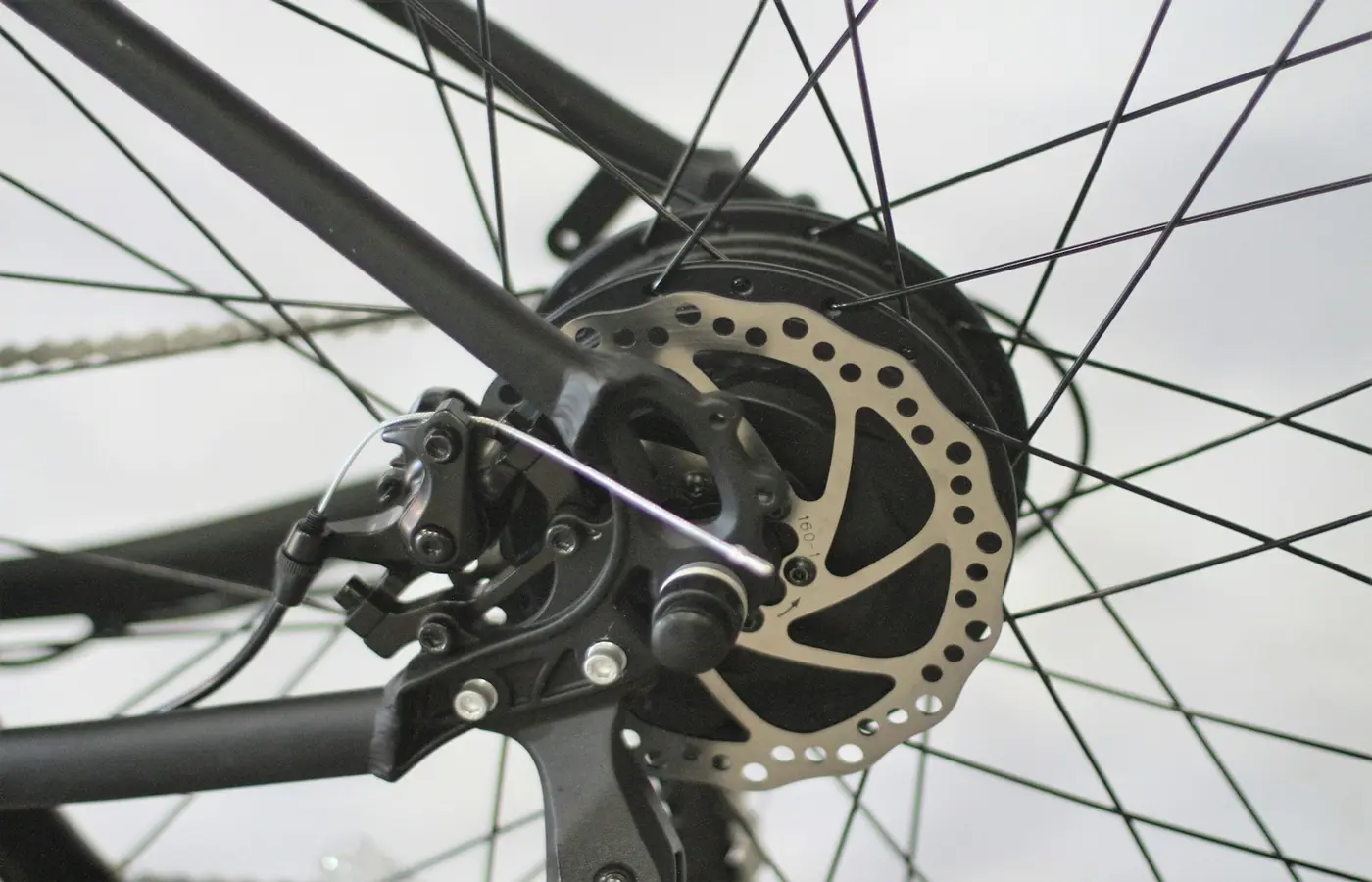
This distinction matters especially when sourcing e-bikes from China. A factory listing may show peak power prominently because it describes short-duration performance. A regulator may instead assess continuous rated power, maximum continuous rated power, motor capability, or a combination of power and speed. Some rules also require functional pedals, pedal-dependent assistance, a specific throttle behaviour, permanent labelling, or type approval for vehicles outside the ordinary e-bike category.
The practical rule is simple: do not classify an e-bike from a headline watt figure alone. Classify the exact delivered configuration against the rules where it will be placed on the market and used.
Why peak watts are not enough
“Peak power” usually describes the highest output a motor-controller-battery system can deliver briefly under particular conditions. It may occur during acceleration, climbing or high-current operation. It is not necessarily a power level the system can sustain without thermal limits, battery-voltage drop or controller protection reducing output.
Legal definitions do not use one universal power term. For example:
- The United States federal consumer-product definition for a low-speed electric bicycle uses a motor of less than 750 W and a maximum motor-only speed of less than 20 mph under specified test conditions.
- Canada’s federal Motor Vehicle Safety Regulations define a power-assisted bicycle around an electric motor of 500 W or less and a motor-powered speed capability of no more than 32 km/h on level ground.
- The European Union’s vehicle-category exclusion for ordinary pedal-assist cycles refers to maximum continuous rated power of no more than 250 W, with assistance progressively reduced and cut off at 25 km/h, or earlier when the cyclist stops pedalling.
- In Great Britain, electrically assisted pedal cycles (EAPCs) use a maximum continuous rated power limit of 250 W and a 25 km/h (15.5 mph) assistance cut-off.
These are materially different tests. A bike described as “1,000 W peak / 250 W rated” may require close examination in a market using continuous rated power. The same description could be a warning sign in a market that regulates motor capability more broadly, applies a different class system, or requires the manufacturer’s declared rating to match the hardware and software configuration.
A retailer’s product page is not a legal classification decision. It can be incomplete, use a different measurement basis from local law, or describe an optional controller mode rather than the configuration shipped to the buyer.
Power terms importers should separate
Manufacturers, motor suppliers and retailers do not always use power terms consistently. Before comparing listings or preparing compliance documents, separate the following concepts.
| Term | What it usually describes | Why it needs verification |
|---|---|---|
| Peak power | Highest short-duration output under stated or unstated conditions | May depend on battery voltage, controller current, temperature and boost mode; it is not automatically a legal power rating. |
| Rated power | A manufacturer-assigned rating for the motor or system | The test basis may vary between suppliers. Ask whether it is mechanical output, electrical input or a continuous thermal rating. |
| Continuous power | Power sustainable for a defined period without exceeding operating limits | Often closer to the concept used in EU and UK rules, but the relevant legal wording and test method still matter. |
| Nominal power | A label sometimes used as a standard or typical rating | “Nominal” is not automatically interchangeable with “continuous” or “rated.” Confirm the manufacturer’s definition. |
| Input power | Electrical power drawn from the battery or controller | It is not the same as mechanical power at the wheel or motor shaft because losses occur in the system. |
| Output power | Mechanical power delivered by the motor | A product page may not state whether “output” means shaft output, wheel output or a calculated estimate. |
A watt number should therefore be read with its qualifier. “750 W” without a statement of whether it is rated, input, output, maximum or continuous power is incomplete technical information.
For importers, the key question is not merely what number appears in advertising. It is: what does the manufacturer declare for this model, and does that declaration use the same concept as the destination market’s rule?
Motor labels and controller settings both matter
The motor label can be useful evidence, but it is only one part of the vehicle. A controller with higher current settings, a different firmware file, an unlocked speed mode or a replacement battery may change the system’s real-world capability.
Ask for a model-specific record covering:
- motor model number and permanent motor marking;
- declared rated or continuous power, including the terminology used;
- battery nominal voltage, maximum voltage and capacity;
- controller model, current limit and firmware version where available;
- maximum assisted speed in the destination configuration;
- throttle behaviour and any walking-assist function;
- factory settings, regional variants and available unlock modes.
A declaration for a 250 W, 25 km/h configuration does not necessarily describe a bike supplied with a higher-current controller or a 45 km/h mode enabled.
How selected markets define e-bike power and vehicle classes
The following summary is a starting point for classification work, not a substitute for checking current national, state, provincial and local rules. Rules can change, and road-access rules may be more restrictive than the basic vehicle definition.
| Market | Key legal power concept | Main power limit | Assisted-speed condition | Operational point to check |
|---|---|---|---|---|
| United States, federal consumer-product definition | Motor power | Less than 750 W | Less than 20 mph under motor power alone in the federal definition | Federal law does not replace state vehicle, registration or trail-access rules. |
| Canada, federal vehicle definition | Electric motor power | 500 W or less | Motor capability no more than 32 km/h on level ground | Provinces and territories set many rider and road-use requirements. |
| European Union ordinary pedelec exclusion | Maximum continuous rated power | 250 W or less | Assistance reduced and cut off before 25 km/h, or when pedalling stops | Vehicles outside the exclusion may fall into type-approval categories. |
| Great Britain EAPC rules | Maximum continuous rated power | 250 W or less | Motor assistance must cut out at 25 km/h (15.5 mph) | Pedals and throttle arrangement must be checked; non-EAPCs may require registration and other motorcycle-type obligations. |
United States: federal definition is not a nationwide riding rule
At federal level, the low-speed electric bicycle definition primarily affects consumer-product treatment. It does not create one uniform national rule for road use.
States commonly use their own e-bike definitions and may use a three-class framework. In broad terms, that framework distinguishes pedal-assist bikes limited to 20 mph, throttle-capable bikes limited to 20 mph, and pedal-assist bikes that can assist to 28 mph. However, the exact wording, power ceiling, label requirement, age rules, helmet requirements and permitted riding locations vary by state. Cities, park authorities and land managers can impose additional access rules.
For a U.S. importer, a federal-style “under 750 W” claim is therefore insufficient. Check the intended state’s current vehicle code, labelling rules and local access restrictions. Do not assume that a bike lawful for consumer sale is automatically lawful on every bike path, trail or public road.
Canada: federal definition and provincial use are separate questions
Canada’s federal power-assisted bicycle definition is relevant to vehicle regulation, but provinces and territories retain important authority over operation. Their rules can address helmets, minimum rider age, road access, cargo use, modification, insurance, licensing or whether a particular high-speed vehicle is treated as a moped.
The federal definition also includes vehicle characteristics beyond watts and speed, including operable pedals, handlebars, wheel requirements and a permanently affixed manufacturer label. Importers should ensure that the label and accompanying documentation identify the exact model and support the configuration being imported.
European Union: the 250 W figure is tied to pedal assistance
In the EU, the commonly cited 250 W limit is not simply a generic permission for any electric two-wheeler with a 250 W sticker. The exclusion used for ordinary pedelecs is tied to pedal-assistance behaviour: assistance must be progressively reduced and finally cut off when the vehicle reaches 25 km/h or when the cyclist stops pedalling.
A vehicle with a more powerful continuous rating, a motor that continues to propel without pedalling beyond a limited assistance function, or assistance beyond 25 km/h may fall outside this exclusion. That does not automatically mean it cannot be sold or used. It means the relevant vehicle category, type-approval route, national registration rules, insurance obligations and rider licensing requirements may need to be assessed.
Great Britain: check the EAPC definition and throttle design
Great Britain’s EAPC framework similarly combines a continuous-rated-power ceiling, a speed cut-off and pedal-cycle characteristics. A bike outside the EAPC definition may be treated as a motor vehicle rather than an ordinary e-bike for road-use purposes.
Throttle questions deserve particular care. A throttle’s legality can depend on the vehicle’s date, design, speed capability and whether approval requirements apply. Do not rely on a listing that calls a throttle “legal” without confirming how it operates in the final configuration and checking current UK guidance.
A higher peak figure may still need careful verification
A higher peak-power claim is neither a universal approval nor a universal disqualification. Its relevance depends on what the applicable rule regulates.
A 1,000 W peak claim paired with a 250 W continuous-rated claim may still need substantial evidence in an EU or UK assessment. The importer should establish that the 250 W figure is the relevant continuous rating for the complete production system, that the assistance behaviour meets the applicable definition, and that the delivered configuration cannot be casually transformed into a different vehicle category through a hidden or advertised mode.
Conversely, a 250 W motor label does not settle the issue if the bike assists beyond the legal speed threshold, has a full-power throttle arrangement inconsistent with the applicable category, or is delivered with software settings that differ from the documents.
California is a useful reminder that proposed changes should not be treated as current law. A 2026 California Assembly committee analysis for AB 1557 describes proposed revisions to e-bike definitions and power limits, but a bill analysis is not proof that the proposal has become law. Importers should verify legislative status, effective dates and final statutory text before changing product specifications or labels based on proposals. The committee analysis is available here.
Documentation checklist for importers, dealers and riders
Documentation cannot by itself guarantee legal road use, but it is essential for showing what vehicle was supplied and for conducting a proper classification review.
Request before placing an order
- Exact model name, model code and destination-market variant.
- Frame serial-number format and location.
- Motor model number, motor label artwork and declared power terminology.
- Battery specification, charger specification and controller model.
- Controller current limit, firmware version and destination-market speed setting.
- A written statement of maximum assisted speed and throttle operation.
- User manual matching the supplied model and configuration.
- Wiring diagram or electrical-system specification where available.
- Photos of production labels, including the frame label and motor marking.
- Any declaration of conformity, compliance declaration or test documentation required for the target market.
- Records identifying optional parts or settings that change speed, power or throttle function.
Verify before shipment and on arrival
- Match the purchase order, invoice, manual, labels and controller specification to the same model code.
- Confirm that the production configuration—not merely the supplier’s catalogue option—matches the destination requirement.
- Check that any permanent marking required in the destination market is present, legible and not contradicted by advertising.
- Retain records for the batch, serial-number range and firmware version.
- Review local registration, insurance and road-use requirements separately from product compliance documents.
- Do not market an optional unrestricted mode as ordinary public-road e-bike use unless that claim has been verified for the relevant jurisdiction.
Dealers should also avoid altering controller settings after import without reassessing classification. A modification that raises the assisted speed, changes throttle operation or increases sustained power can affect the vehicle’s legal status even if the motor casing retains its original label.
Frequently asked questions
Is peak motor power the same as an e-bike’s legal power rating?
Usually not. Peak power normally refers to short-duration capability, while laws may refer to motor power, maximum continuous rated power, speed capability or a combination of technical and operational conditions. Use the power term specified by the applicable rule.
Can a 1,000 W peak e-bike be legal where the limit is 250 W or 500 W?
Possibly, but not from the peak figure alone. The answer depends on the jurisdiction’s exact power metric, the declared continuous or rated power, speed cut-off, pedal-assist behaviour, throttle function and delivered controller configuration. It may also depend on whether the vehicle is assessed as an ordinary e-bike or a different regulated vehicle type.
Which documents should an importer request before ordering e-bikes from China?
At minimum, request the exact model identifier, motor and controller specifications, power-rating definition, speed-setting statement, throttle description, battery details, labels, manual and any destination-market conformity documents. Ensure each record relates to the model and configuration actually being shipped.
Does changing a controller setting or speed limit change an e-bike’s legal class?
It can. If the change affects continuous capability, motor-assisted top speed, pedal dependence or throttle operation, the vehicle may no longer fit the category under which it was originally sold. Recheck the relevant law before enabling or supplying the modified configuration.
Before you buy, import or ride
Use a five-step classification check:
- Identify the destination jurisdiction. Start with the country, then check state, provincial, territorial and local rules where relevant.
- Identify the legal test. Determine whether the rule uses motor power, continuous rated power, speed capability, pedal assistance, throttle behaviour or several of these factors.
- Obtain model-specific evidence. Request records for the exact frame, motor, controller, firmware and speed setting being supplied.
- Check the delivered configuration. Labels, manuals and invoices must match the actual hardware and software—not a different export or off-road variant.
- Escalate uncertain cases. Where a bike may fall outside the ordinary e-bike definition, obtain current guidance from the relevant transport, vehicle-registration or type-approval authority before import or sale.
The useful question is not “What is the biggest watt number in the listing?” It is whether the complete e-bike, in its actual destination-market configuration, meets every element of the legal category claimed for it.