 China eBike
E-Bike Regenerative Braking: How It Works, Compatible Motors, and Real-World Limits
Understand e-bike regenerative braking, which motor systems can support it, its limits for range, and what to verify in manufacturer documentation.
Regenerative braking can sound like an obvious feature for an e-bike: braking creates energy, so why not send that energy back to the battery? In practice, it is only possible on certain motor and drivetrain designs, and its useful energy recovery depends heavily on the route, battery condition, controller settings, and how often the rider is actually slowing down.
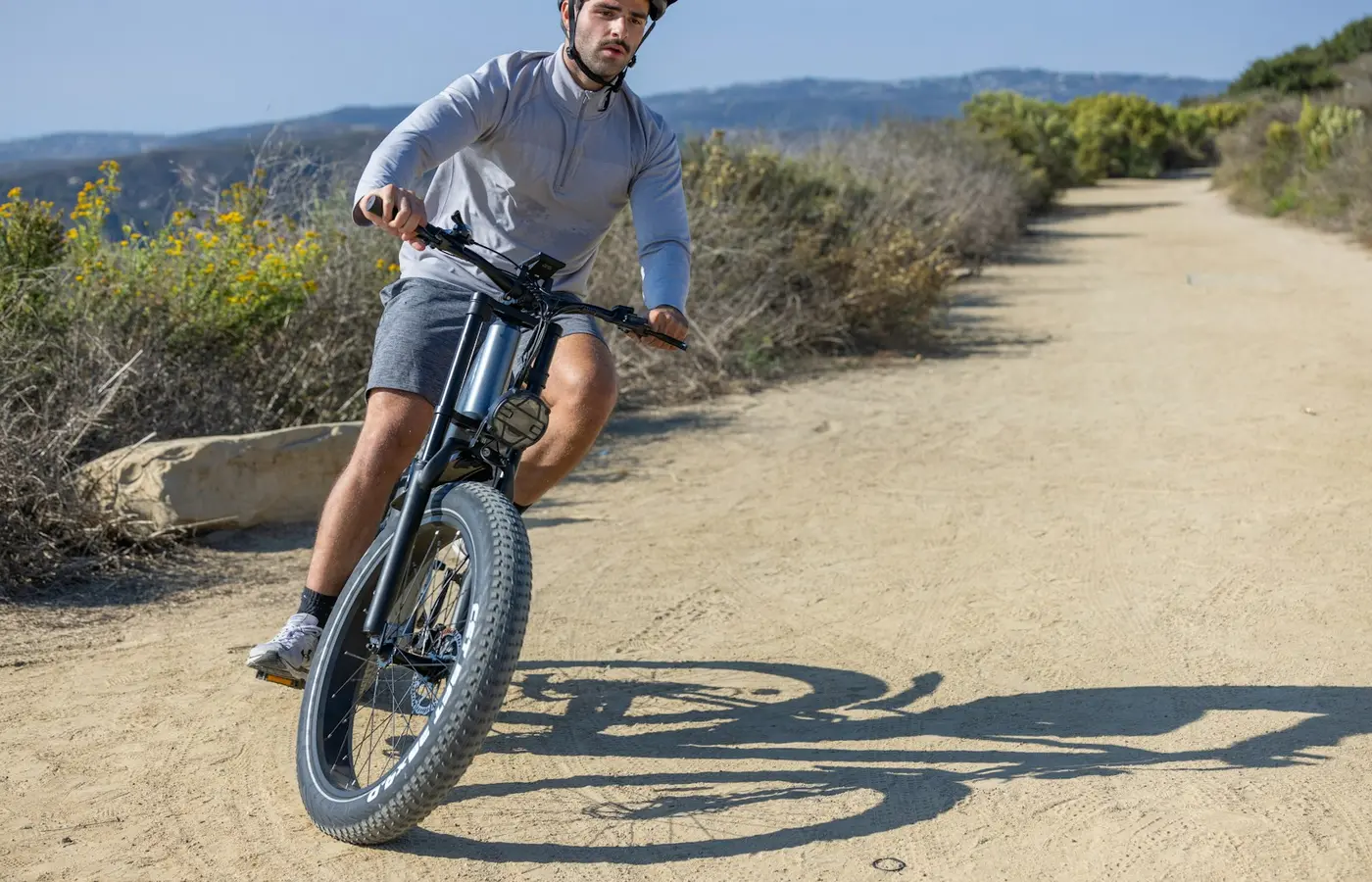
For buyers, importers, and product teams, the key question is not whether a motor is labelled as a hub motor or a mid-drive. It is whether the complete e-bike system is designed to keep the motor mechanically connected to the wheel during deceleration and to safely route generated electricity into the battery.
What e-bike regenerative braking does during deceleration
An electric motor can generally operate in two directions of energy flow:
- Motoring: electricity from the battery turns the motor and helps propel the wheel.
- Generating: the moving wheel turns the motor, which produces electricity instead of consuming it.
During regenerative braking, the rider slows the e-bike and the rotating wheel drives the motor. The controller manages the electrical output from the motor and directs recoverable energy toward the battery. At the same time, the motor creates resisting torque, contributing to deceleration.
Grin Technologies describes regenerative braking as using the propulsion motor as a brake and returning braking energy to the battery rather than dissipating all of that energy as heat through friction braking.1 That definition is useful because it separates two related but distinct functions:
- Electrical braking is motor-generated resistance that slows the bike.
- Regeneration is the portion of that braking energy that the system can actually accept and store in the battery.
A system may provide electrical braking while limiting or disabling battery charging under certain conditions. The practical outcome depends on the controller and battery-management design, not the motor alone.
Why the motor must stay coupled to the wheel
The central mechanical requirement is straightforward: the wheel must be able to turn the motor when the bike is coasting, descending, or braking.
Many e-bikes use a freewheel or one-way clutch. This mechanism allows the wheel to rotate without forcing the motor to rotate. It reduces drag while coasting and can improve the feel of unpowered riding. However, it also breaks the mechanical path required for regeneration. If the wheel cannot drive the motor, the motor cannot act as a generator.
Grin Technologies notes that regeneration is possible in principle with a direct-drive hub motor or with a geared hub motor that does not freewheel, provided that the controller supports regenerative operation.1
This is why physical motor placement is not enough to establish compatibility. A rear hub motor may be suitable for regeneration, unsuitable because of an internal freewheel, or technically capable but paired with a controller that does not support the feature.
Direct-drive hubs: the usual regenerative-braking candidate
A direct-drive hub motor has no internal planetary reduction gear between the motor and wheel. In broad terms, the motor shell and wheel rotate together. That continuous coupling is why direct-drive hubs are commonly associated with regenerative braking.
The arrangement can support generator operation when the controller is designed for it. But it carries tradeoffs. Direct-drive hub motors are often larger and heavier than compact geared hub motors, and their coasting characteristics, wheel-build requirements, axle interfaces, and thermal behavior must be considered as part of the full bike design.
A direct-drive hub is therefore a useful starting point for a regenerative system, not proof that an e-bike has one.
Geared hub motors: possible, but commonly constrained by freewheeling
Geared hub motors use internal reduction gearing to let a relatively small motor drive the wheel. Many designs include a one-way clutch or freewheel arrangement. This helps the wheel spin freely when motor assistance is off, but normally prevents the wheel from back-driving the motor during braking.
That does not mean every geared hub motor is incompatible. A geared hub without a freewheel can, in principle, support regeneration if the controller and battery system also support it.1 Documentation for the exact motor model is needed to determine whether it has a clutch, whether the clutch can transmit torque in both directions, and whether the manufacturer permits regenerative use.
Mid-drive systems: architecture matters more than the label
A mid-drive motor applies power through the bicycle drivetrain rather than directly through the wheel hub. Most common e-bike mid-drive systems use freewheeling mechanisms and drivetrain arrangements intended to preserve normal pedalling and coasting behavior. Those arrangements often prevent the rear wheel from driving the motor during braking.
Kalkhoff explains that energy recovery is not used in its mid-drive context because of the architecture involved, while describing hub motors as the more typical route for configured energy recovery.2
That is useful manufacturer context, but it should not be turned into an absolute rule that no mid-drive can ever regenerate. A particular mid-drive system would need a documented reverse power path from wheel to motor, a controller able to manage generated current, and a battery system able to accept it. Those conditions are not typical assumptions to make from a product listing.
Which designs can support regeneration?
The table below summarizes the usual design logic. It is not a compatibility list: final confirmation must come from manuals or technical support documentation for the complete system.
| Motor or drivetrain arrangement | Can the wheel normally drive the motor while slowing? | Regenerative-braking potential | What must still be verified |
|---|---|---|---|
| Direct-drive hub motor | Usually yes | Common technical basis for regen | Controller support, brake input, battery charging acceptance, wiring and settings |
| Geared hub with freewheel or one-way clutch | Usually no | Normally unsuitable | Whether an internal clutch/freewheel is present and how torque is transmitted |
| Geared hub without freewheel | Potentially yes | Possible in principle | Controller and battery compatibility, plus manufacturer approval |
| Typical mid-drive system | Often no | Usually not available in common layouts | Exact drivetrain architecture and documented reverse-energy capability |
The important distinction is between motor capability and system capability. A motor can be mechanically suitable but connected to a controller that has no regenerative function. Likewise, a controller can have a regen setting but be paired with a battery pack whose management system restricts charging in the conditions where regeneration would occur.
Why regeneration usually adds less range than riders expect
Regeneration only has energy to recover when the bike is losing kinetic or gravitational potential energy. In practical terms, that means braking, descending, or both.
On a steady, flat route with few stops, there may be little energy available for recovery. On a route with long descents or repeated stop-start riding, there may be more opportunities. Even then, not all available energy becomes stored battery energy.
Losses and limits occur at several stages:
- The motor is not a perfectly efficient generator.
- The controller has electrical losses while controlling generated current.
- The battery may not accept all available charging current.
- Battery-management protections may reduce or block charging under conditions specified by the battery supplier.
- Mechanical braking may still be needed when more stopping force is required than the regenerative system is configured to provide.
A university thesis on e-bike powertrain energy recovery highlights the need for carefully configured control systems so that electric braking remains responsive and safe.3 Its discussion should be read as work on a particular research scope rather than as a universal prediction of range improvement for every e-bike.
No single percentage gain is meaningful without details such as rider and vehicle mass, descent profile, speed, braking pattern, motor winding, controller limits, battery state of charge, battery temperature, and the measurement method. A documented route-specific test can be useful; a general headline claim without those conditions is much less informative.
Battery state of charge is especially important
A nearly full battery has little room to accept additional energy. How an e-bike behaves in that situation is configuration-specific. The controller may reduce regenerative braking, disable battery charging while retaining some electrical braking behavior, change the braking response, or rely more heavily on mechanical brakes. Those outcomes should be confirmed in the product’s battery, controller, and display documentation.
The same caution applies to temperature. Lithium-ion battery systems commonly use management controls to protect cells during charging and discharging, but the exact permitted charging conditions and the effect on regeneration vary by battery pack and manufacturer. Buyers should not infer behavior from the motor type alone.
Braking feel, heat management, and mechanical brakes
Regenerative braking can provide a controlled and repeatable braking force when it is properly integrated. Grin Technologies describes the braking force as consistent and notes the importance of controller support for the function.1
For riders, however, predictable control matters more than the presence of a regen mode. The bike should have clearly documented behavior for brake-lever activation, throttle release, pedal-assist cut-off, adjustable regeneration levels where offered, and battery-full conditions.
Regenerative braking also does not eliminate the need for conventional friction brakes. Disc, rim, drum, or other mechanical braking hardware remains necessary for normal stopping performance, low-speed stopping, emergency braking, traction-limited conditions, and situations where the electrical system cannot provide sufficient braking force.
This is particularly relevant on long descents. A regenerative system can convert some downhill energy into battery charge and may reduce the braking work handled by friction brakes. But it should not be assumed to manage all heat or all stopping demands. The rider still needs correctly specified and maintained mechanical brakes, while the manufacturer needs to define electrical braking limits and control behavior.
Wheel traction is another constraint. A motor cannot apply braking torque beyond what the tire-road contact patch can transmit without skidding. Regen settings that feel manageable on dry pavement may not be appropriate on loose, wet, or icy surfaces. Manufacturers that offer adjustable modes should explain their intended operation and limitations.
What to check in an e-bike manufacturer’s documentation
Retailer descriptions often simplify regenerative-braking claims. For a purchase, conversion, fleet, or import decision, request the manuals and specification documents for the exact bike configuration.
Use this checklist:
- Motor construction: Is the motor direct drive, geared, or mid-drive? For geared hubs, is there an internal freewheel or one-way clutch?
- Mechanical coupling: Can the wheel back-drive the motor during coasting and braking?
- Controller function: Does the controller explicitly support regenerative braking, rather than merely motor cut-off when a brake lever is pressed?
- Brake-input compatibility: Which brake sensors, levers, switches, or hydraulic pressure sensors activate regeneration? Are they included with the bike?
- Battery charging acceptance: Does the battery-management documentation specify limits that affect regen, including full-charge behavior or charging restrictions?
- Control settings: Can the rider adjust regen strength? Is activation tied to a brake lever, throttle position, a display menu, or an automatic descent mode?
- Fallback behavior: What happens when the battery is full, disconnected, too cold, too warm, or otherwise unable to accept charge?
- Mechanical brake requirements: What conventional brakes are specified, and does the manufacturer state that they remain required for normal operation?
- Model-specific wiring: Are the controller, battery, display, motor, and brake controls supplied as a verified regenerative system rather than separately compatible-looking parts?
This documentation-first approach matters because regeneration is an integrated function. Grin’s compatibility guidance explicitly identifies the need for both an appropriate motor arrangement and a controller that supports regen.1
When regenerative braking is worth prioritizing
Regenerative braking is most relevant when an e-bike has repeated deceleration opportunities and a system designed around continuous motor-to-wheel coupling. Frequent descents, stop-start urban operation, cargo use, and heavier vehicles can make the feature more operationally relevant than a lightly loaded bike used mainly on flat, steady routes.
It may be less important where low motor mass, easy unpowered coasting, compact geared hubs, or common mid-drive layouts are the higher priorities. Those design choices can be entirely rational even when they exclude regeneration.
The practical decision is not whether regeneration is inherently good or bad. It is whether the route and vehicle use create enough recoverable braking energy to justify the added system requirements. Confirm the motor coupling, controller capability, brake controls, and battery behavior in the manufacturer’s documentation before treating regenerative braking as a meaningful buying criterion.
FAQ
Can a mid-drive e-bike use regenerative braking?
Some hypothetical or specialized drivetrain designs could support reverse energy flow, but common mid-drive e-bike architectures generally do not provide it. Kalkhoff describes energy recovery as incompatible with its mid-drive context.2 Check the documentation for the exact drivetrain rather than relying on the mid-drive label alone.
Do geared hub motors support regenerative braking?
A geared hub motor with a freewheel or one-way clutch normally cannot regenerate because the wheel cannot drive the motor during braking. A non-freewheeling geared hub may support regeneration in principle, but only with a compatible controller and battery system.1
Does regenerative braking charge an e-bike battery when it is full?
Do not assume that it does. A full battery may be unable to accept additional charging energy, and the resulting regen behavior depends on the specific controller and battery-management system. Consult the relevant product manuals.
Does regenerative braking replace an e-bike’s disc or rim brakes?
No. Regenerative braking can supplement deceleration and may reduce some friction-brake workload, but conventional mechanical brakes remain necessary for reliable stopping and for conditions where electrical braking is unavailable or insufficient.