 China eBike
E-Bike Motor IP Ratings Explained: What Water and Dust Resistance Really Means
Learn how to read an e-bike motor IP rating, what its dust and water tests cover, and why it does not define whole-bike weather resistance.
An e-bike motor IP rating can be useful when comparing products, but it is not a whole-bike weather-resistance score. A motor may have a stated ingress-protection rating while the battery case, display, controller, cable junctions, charging port, or charger have different ratings—or no published rating at all.
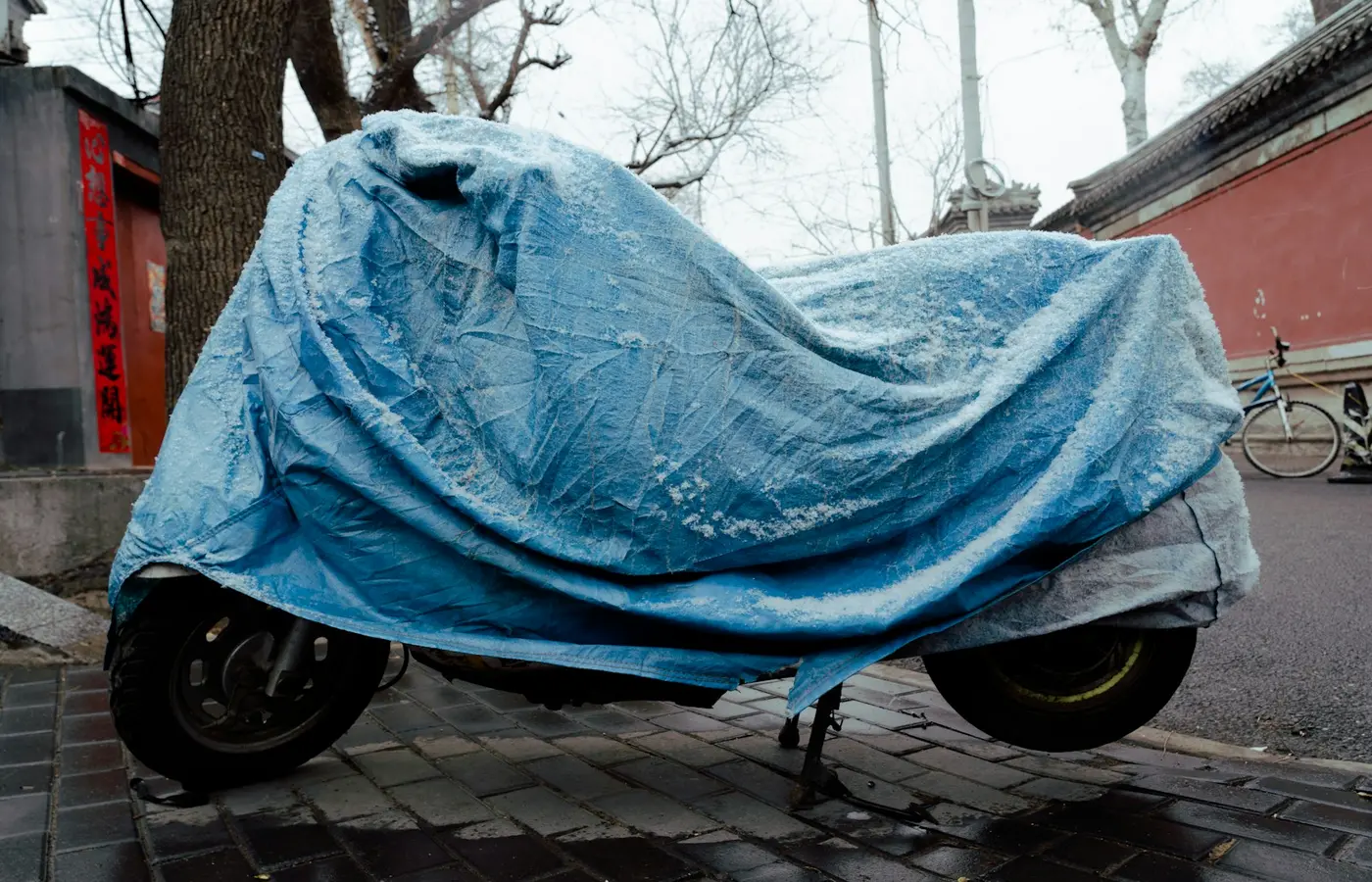
That distinction matters before riding in heavy rain, using dusty trails, washing an e-bike, or charging after a wet ride. The safest interpretation is narrow: an IP code describes specified protection for the named enclosure or component under defined test conditions. It does not by itself prove that the complete e-bike is suitable for flooding, pressure washing, saltwater exposure, wet charging, or long-term outdoor storage.
Why the motor rating alone does not define an e-bike’s weather resistance
An e-bike’s electrical system is made up of several separate components:
- Motor and motor cable exit
- Battery pack and battery enclosure
- Battery rail or frame-mounted contacts
- Controller, whether mounted inside the frame, battery cradle, or an external box
- Display, buttons, throttle, and sensors
- Wiring harnesses and connectors
- Charging port and its cover
- Charger and mains-side connections
A published rating for one item does not automatically transfer to the others. For example, an enclosure rating stated for a hub motor says nothing, on its own, about whether a removable battery’s contacts are protected against road spray. Likewise, a display rated for splashes does not establish that the controller, which may be hidden inside the frame, has the same protection.
This is why a listing that simply describes an e-bike as “waterproof” is incomplete. A useful specification identifies the component, the full IP code, and ideally the model or revision to which it applies. General e-bike guidance from retailers and brands also commonly distinguishes the motor, battery, display, and other electrical parts rather than treating the bicycle as one uniformly sealed unit.1
For a rider, the practical constraint is often the least protected exposed component. For a buyer or importer, the question is broader: which assemblies have documented ratings, how are cable entries sealed, and do the manuals impose limits that override a broad marketing claim?
How to read an e-bike motor IP rating
IP means Ingress Protection. The code is commonly written as IP followed by two numerals, such as IP54, IP65, or IP67.
The digits describe two different categories:
- First digit: protection relating to access to hazardous parts and ingress of solid foreign objects, including dust.
- Second digit: protection against ingress of water under specified test conditions.
For e-bike discussions, the most common solid-particle ratings are 5 and 6:
- IP5X: dust-protected. Some dust ingress may be permitted by the test concept, but not in a quantity that would interfere with satisfactory operation or safety.
- IP6X: dust-tight under the relevant test conditions.
The X means that no rating is declared for that category. Therefore:
- IPX5 gives a water-protection classification but makes no declared claim about dust protection.
- IP6X gives a solids-protection classification but makes no declared claim about water protection.
- IP65 makes claims in both categories: a first digit of 6 and a second digit of 5.
An X should not be read as a zero. It means the manufacturer has not stated a rating for that part of the code. The component could have been designed with some resistance in that category, but the IP marking does not tell the buyer what that resistance is.
The code applies to the item actually named
A useful claim looks like: “rear hub motor: IP65” or “display: IPX5.” An unhelpful claim looks like: “IP67 e-bike” without identifying what was tested.
The wording also matters. A motor shell may be protected, while the motor cable connector, torque sensor connector, or external controller connection is a separate part. If the documentation does not say that the rating covers the assembled motor and cable system, do not assume it does.
What the dust and water test digits actually establish
IP ratings come from a classification system with defined laboratory test categories. They are not a general durability grade and should not be translated into a promise that a component will tolerate every wet or dirty condition encountered in real riding.
The table below covers the ratings most likely to appear in e-bike specifications.
| Code element | General meaning | Practical e-bike interpretation |
|---|---|---|
| IP5X | Dust-protected | Relevant where a motor, controller, or display may encounter fine trail dust or road dirt. It is not a claim that the component is maintenance-free. |
| IP6X | Dust-tight | Stronger stated protection against dust ingress than IP5X, within the applicable test conditions. It does not address water. |
| IPX4 | Protected against splashing water | Often relevant to rain and road spray, but check the named component and the manufacturer’s riding restrictions. |
| IPX5 | Protected against water jets | Indicates performance in a defined water-jet test. It does not automatically authorize pressure washing. |
| IPX6 | Protected against powerful water jets | A higher water-jet category than IPX5, but still not a blanket approval for every hose, nozzle, pressure washer, or cleaning method. |
| IPX7 | Protected against temporary immersion | Addresses a defined temporary-immersion test. It does not mean indefinite submersion or suitability for charging while wet. |
| IPX8 | Protected against continuous immersion under manufacturer-defined conditions | The exact depth, duration, and conditions require the manufacturer’s documentation. An IPX8 label alone is incomplete for practical planning. |
The second digit is particularly easy to overinterpret. “Protected against water jets” and “protected against temporary immersion” are different test categories. A component with one water rating should not be assumed to have passed every other water test that a rider considers similar.
For example, an immersion rating does not necessarily tell you how a seal performs against a concentrated water jet directed at a cable gland. Conversely, a water-jet rating does not establish that a component can be submerged. Product instructions remain important because the installation orientation, connector arrangement, seal condition, and exposure expected by the manufacturer can affect real-world use.
Higher numbers are not a universal weather-resistance ladder
It is tempting to treat IP water digits as a simple scale where every higher number includes all lower-number situations. That is not a safe purchasing or maintenance assumption.
The tests differ in method and intended exposure. A buyer should verify the exact code and follow the component maker’s instructions, especially for ratings involving jets, temporary immersion, or continuous immersion. A rating may be technically meaningful while still not covering the specific stress created by a close-range pressure washer, a damaged port cover, repeated wet-dry cycles, or water forced into a connector by riding at speed.
What an IP rating does not tell you about rain, washing, or flooded roads
An IP code is valuable, but it has narrow boundaries. It does not establish all of the following:
- Long-term sealing performance after years of vibration, thermal cycling, UV exposure, or repeated battery removal
- Corrosion resistance, including corrosion caused by saltwater or winter road salt
- Resistance to detergent, degreaser, solvents, or abrasive cleaning methods
- Condition of seals after crash damage, cable abrasion, loose fasteners, or improper repair
- Safety of charging a wet battery, wet charging port, or wet connector
- Compatibility with high-pressure washing equipment
- Safe operation after water rises above the battery case or electrical connectors
- Protection of every electrical component on the bicycle
Rain is not the same as every kind of water exposure
Normal rain, road spray, a parked bicycle beneath a dripping canopy, and a pressure washer all expose an e-bike differently. Water can be driven into seams and connector interfaces by vehicle speed, a hose nozzle, wind, or direct spray from below. Dirty water may also carry grit and dissolved salts that remain after the water evaporates.
A documented motor rating can support a more informed decision about rain use, but it does not remove the need to inspect the rest of the electrical system. Owners should also consider the non-electrical risks of wet riding, including reduced tire grip, longer braking distances, obscured visibility, and water damage to bearings, chains, brake rotors, and other mechanical parts.
Pressure washing is a separate decision
Do not treat an IP rating as automatic permission to use a pressure washer. Pressure washing can direct a concentrated stream at seals, bearings, cable exits, display edges, battery latches, and charging-port covers from a very short distance. It can also strip lubricant from mechanical areas that are not part of the electrical enclosure rating.
Where an owner manual gives cleaning instructions, those instructions should control. If no manual guidance is available, a lower-risk approach is generally to remove loose dirt with a soft brush, wipe the bike with a damp cloth, and avoid directing water at electrical openings, connectors, bearings, and charging areas. Keep the charger and charging contacts dry.
Flooded roads introduce unknown exposure
Riding through standing water can submerge components that are normally above road-spray level. It may also expose the bike to contaminated water, hidden potholes, and water pressure at seals that was not part of normal riding assumptions.
Even if a single motor has an immersion-related rating, that does not confirm that the battery, controller, display, and connectors are protected to the same level. Avoiding water deep enough to reach electrical housings or battery contacts is the conservative choice unless the complete system documentation specifically addresses that exposure.
How riders and buyers should verify an e-bike motor IP claim
Treat an IP claim as a document-checking exercise rather than a marketing shortcut. Before relying on a rating, check these points.
1. Identify the exact component
Ask whether the rating applies to the motor shell, complete motor assembly, battery enclosure, display, controller, connector, or the full bike. If the document does not identify the item, the claim has limited value.
2. Look for the complete code
“Water-resistant” and “waterproof motor” are broad descriptions, not technical classifications. A complete code such as IP65 gives more information, while IPX6 tells you that the dust category has not been declared.
3. Match the document to the model and revision
Motor suppliers can change seals, cable routing, controllers, or battery cases over a product’s lifecycle. Confirm that the manual, technical data sheet, or support page covers the actual model and production version being considered.
4. Read restrictions as part of the specification
A manual may state a rating while also warning against immersion, direct spraying, outdoor storage, or wet charging. Those restrictions are not contradictions. They define the practical operating limits of the product.
5. Separate an IP marking from third-party certification claims
An IP code does not, by itself, tell a buyer who performed testing, whether a complete e-bike was assessed, or whether other safety requirements were evaluated. If a seller refers to a test report or certification, ask for the report scope, component identity, and applicable product version before drawing conclusions.
For importers, this verification should be part of supplier documentation review. Check the rating on engineering documents, confirm its scope in writing, and ensure that product labels, manuals, and sales material do not imply broader protection than the supplier can support.
Practical wet-weather and dust-exposure checklist
Use the rating as one input, alongside the manual and the condition of the bike.
For routine rain riding
- Confirm whether the motor, battery, display, and controller have published ratings or explicit rain-use guidance.
- Ensure battery covers, charging-port covers, and connector caps are fully closed.
- Avoid riding through water deep enough to reach battery or connector areas.
- After the ride, wipe off standing water and dirt, then allow the bike and charging area to dry before charging.
For dusty roads and trails
- Check whether the motor and other exposed electronics have a stated solids-protection rating.
- Inspect cable grommets, motor cable exits, and connector seals for damage.
- Clean accumulated dust without forcing it into seams or connectors.
- Follow the maker’s service schedule for drivetrain, brakes, suspension, and bearings; an IP code does not protect these mechanical systems.
For washing
- Follow the owner manual first.
- Do not assume IPX5, IPX6, or another water rating permits pressure washing.
- Keep direct spray away from the charging port, battery contacts, display controls, connectors, bearings, and cable entries.
- Do not charge until the battery, charge port, connector area, and charger are dry.
For buying or importing
- Request component-level documentation, not a single whole-bike water-resistance slogan.
- Record the full IP code and named component for each claim.
- Check whether the rating applies to the complete installed assembly or only an enclosure.
- Compare the supplier’s technical documents with the owner manual, product label, and sales copy.
- Treat unsupported “waterproof” language as incomplete until the manufacturer provides scope and conditions.
Frequently asked questions
Is IP65 good enough for riding an e-bike in the rain?
IP65 indicates declared dust-tight protection and protection against water jets for the rated component. That can be relevant to rain use, but it does not establish that the entire e-bike is equally protected. Check the battery, display, controller, connectors, and owner manual before treating the bike as suitable for heavy rain.
Can I pressure-wash an e-bike motor with an IP rating?
Not unless the manufacturer explicitly permits that cleaning method. An IP water rating refers to a specified test, while a pressure washer’s pressure, distance, nozzle pattern, duration, and direction may differ substantially. Pressure washing can also damage adjacent components that do not share the motor’s rating.
Does an IPX rating mean an e-bike motor is dustproof?
No. The X means that no solids-protection classification is declared. IPX5, for example, provides information about a water category only. Look for a first digit, such as IP5X or IP6X, if dust protection is important.
Can an IP67-rated e-bike component be submerged?
An IP67-rated component has a declared temporary-immersion classification under defined test conditions. That does not mean every installed e-bike component can be submerged, nor does it establish safety for prolonged immersion, repeated flooding, saltwater exposure, or wet charging. Follow the manufacturer’s instructions for the exact component and product.
Practical takeaway
Use an e-bike motor IP rating to compare the stated protection of that specific motor, not to make an all-purpose claim about the bicycle. For wet or dusty use, identify every exposed electrical component, verify its documentation, follow model-specific restrictions, and keep charging equipment and contacts dry. When documentation is vague, the cautious assumption is that the claim is narrower than the marketing language suggests.