 China eBike
E-Bike Battery Charger Compatibility: How to Check Voltage, Current, Connector, and Polarity
Learn how to match an e-bike replacement charger by checking charging voltage, current limits, connector pins, polarity, and maker guidance.
A replacement charger is not compatible simply because its plug fits the battery or bike. The charger must suit the specific battery system’s charging voltage, permitted current, connector wiring, and any electronic requirements imposed by the battery management system (BMS).
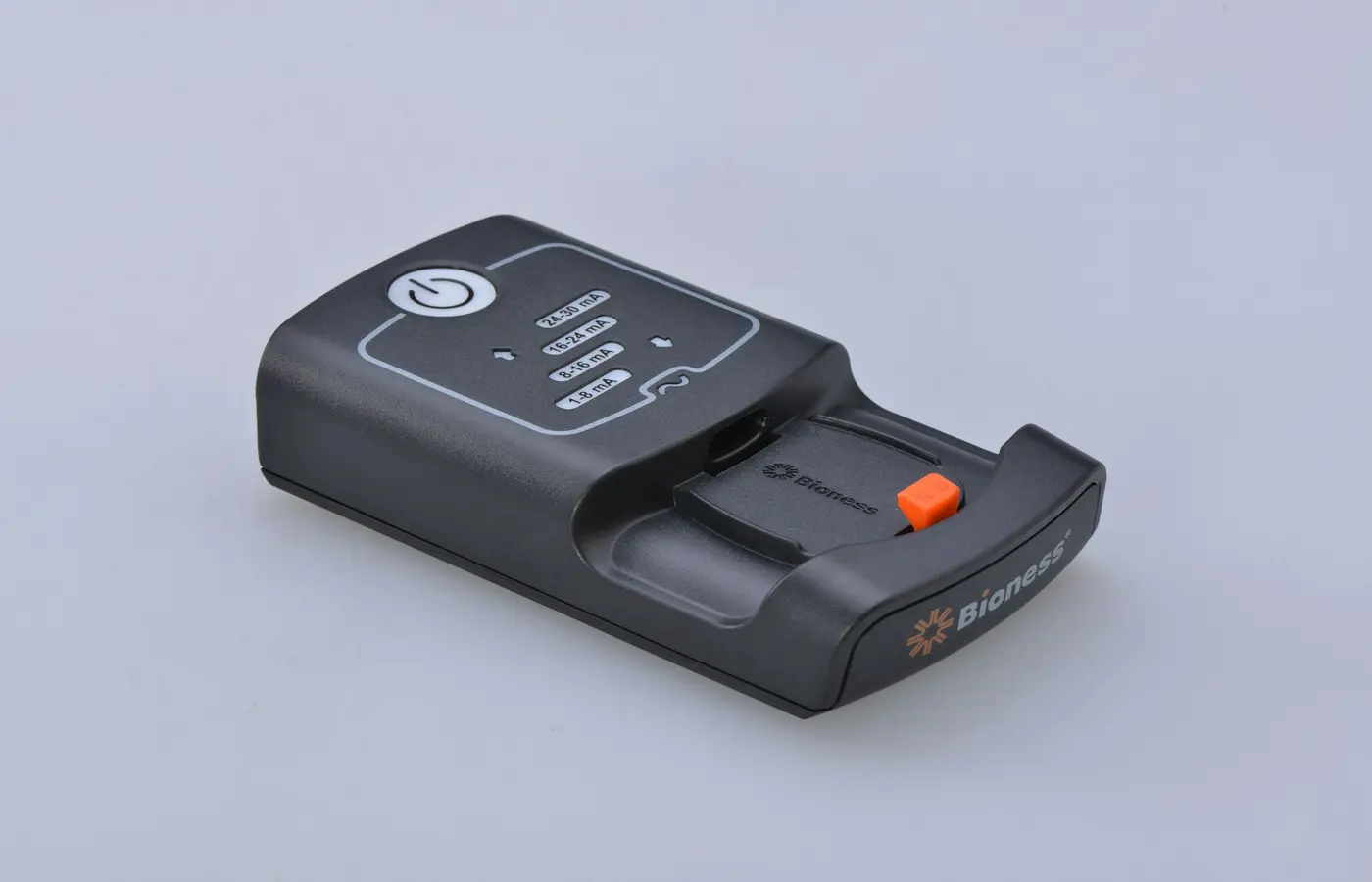
The safest route is to buy the original replacement charger or one that the battery or bike manufacturer explicitly lists as compatible. If that is not possible, treat every specification as something to verify—not something to infer from the battery’s nominal voltage, a connector shape, or a seller listing.
Start with the battery and bike model, not the charger plug
Before comparing charger labels, identify exactly what you have:
- Bike brand, model, and model year
- Battery brand and part number
- Battery nominal voltage and capacity, if shown
- Original charger model and label specifications
- Charge-port location: battery case, bike frame, or a proprietary dock
- Any documentation supplied with the bike or battery
This information matters because the charger is part of a complete battery system. A battery pack may contain a BMS that monitors cell voltage, temperature, current, and other conditions while charging. Some systems also use additional contacts or charger-specific signalling. A physically similar battery, charger, or connector may therefore be unsuitable.
Bosch states that its charger must match the battery and advises riders to use compatible chargers to help avoid battery damage, overheating, and short circuits.1 Likewise, Vvolt warns that a battery should be used only with its corresponding vehicle, even where another component appears to fit.2 These are brand-specific instructions, but they illustrate the broader principle: mechanical fit does not establish electrical or system compatibility.
Start with the original charger label if it is available. Then compare it with the replacement candidate and the battery maker’s documentation. A manufacturer support page, replacement-parts listing, or written confirmation for the exact battery and bike model is more useful than an online listing that says a charger is “universal.”
If the original charger is missing, damaged, or unreadable, contact the bike, battery, or drive-system manufacturer before connecting an alternative. Do not use trial-and-error charging to identify compatibility.
Check output voltage: nominal battery voltage is not charger voltage
The most common source of confusion is the difference between a battery’s nominal voltage and a charger’s DC output voltage.
A battery described as “36 V” or “48 V” is normally being described by its nominal system voltage. The charger label instead states the voltage it is designed to supply during charging. Those figures are not necessarily the same.
For example, Ride1Up says that its 36 V bikes use 42 V chargers and that its 48 V bikes use 54 V chargers.3 Those are documented examples for that manufacturer’s systems, not universal rules for every e-bike battery sold as 36 V or 48 V.
The battery maker’s stated charging specification controls. FIT similarly instructs users that the battery voltage must match the charger’s specified battery charge voltage and that approved FIT Li-ion e-bike batteries should be charged with a FIT charger.4
Read the charger label carefully
Look for wording such as:
- Input: the AC mains supply accepted by the charger, for example a voltage range and frequency.
- Output: the DC voltage and maximum current delivered to the battery.
- Polarity symbol: often shown near the output specification on chargers with coaxial barrel connectors.
- Model number: useful when checking a manufacturer replacement-parts page.
The output line is the relevant starting point for battery compatibility. Do not confuse it with the input rating. A charger capable of accepting a particular wall-outlet voltage is not necessarily appropriate for a battery system with a similar number on its label.
Voltage checks before first use
Before connecting a replacement charger, confirm all of the following from reliable documentation:
- The exact battery model is approved for the charger model.
- The charger’s stated DC output voltage matches the battery system’s required charging voltage.
- The charger is intended for the battery chemistry and charging architecture involved.
- The charger is intended for the charge port being used, whether on the battery or on the bike.
Do not assume that a charger with a lower output voltage will merely charge more slowly, or that a higher-voltage charger will simply charge faster. Either mismatch may prevent charging, trigger protection circuitry, or damage equipment. Manufacturer documentation should settle the question.
Match charging current to the battery maker’s allowed limit
Charger current is usually expressed in amperes (A). It affects the potential charging rate, but it also affects heat generation in the charger, wiring, charge port, and battery cells.
A replacement charger’s current rating should be within the battery manufacturer’s permitted range. The original charger’s current rating is a useful reference point, but it is not automatically a universal maximum or minimum for every charger that might fit the same battery.
Some manufacturers offer both standard and faster approved chargers for particular batteries. In that case, the important fact is not that the faster charger has a higher number on its label; it is that the manufacturer has approved that charger for that battery system.
Optibike cautions that charging with voltage or current set too high can damage a battery or reduce its lifespan.5 That warning supports a conservative replacement strategy: do not select a higher-current charger merely to reduce charging time unless the battery maker explicitly permits it.
Why “same voltage, more amps” is not enough
It is tempting to view current as a simple speed setting. In an uncomplicated electrical example, a charger with a higher available current can charge a compatible battery faster. But e-bike charging systems are not always interchangeable at that level.
The battery may have limits set by cell selection, BMS programming, internal wiring, thermal design, port hardware, or the manufacturer’s charger-control logic. A proprietary battery may also expect characteristics that are not apparent from the voltage and ampere figures alone.
For this reason:
- Use an approved fast charger only where the manufacturer lists it for the battery.
- Do not treat an unverified high-current charger as an upgrade.
- Do not assume a lower-current charger is automatically safe or suitable; it may still have the wrong voltage, connector wiring, or control behaviour.
- Avoid estimating charging time from capacity and charger current unless the manufacturer provides the relevant information and conditions.
If documentation gives a maximum charging current, use it as a limit. If it identifies only approved charger models, follow that list rather than attempting to derive compatibility from electrical ratings alone.
Verify the connector, pin layout, and polarity before connecting
A connector can look correct and still be wired incorrectly. This is particularly important with barrel connectors, multi-pin plugs, magnetic connectors, and battery docks that resemble common formats.
Check the connector in this order:
- Connector family and physical fit: Does the plug and receptacle match without force, looseness, or modification?
- Number of contacts: Count visible pins, sockets, or contact rings. Similar-looking plugs may have different contact arrangements.
- Pin layout: Determine which contact is positive, negative, ground, sense, communication, or unused, if applicable.
- Polarity: Confirm positive and negative assignments from the battery or charger manufacturer’s documentation.
- Port purpose: Confirm that the port is actually a charging input, rather than an accessory, service, discharge, or communication connection.
Optibike warns that incorrect polarity during charger or connector work can damage the connector, charger, or battery. It recommends checking polarity and connections with a multimeter before use.5 This is a sensible verification step for a qualified person working from reliable pinout information; it is not a reason to reverse-engineer an undocumented battery system.
Do not rely on wire colours
Wire colours are not a dependable compatibility check. Optibike notes that wire-colour combinations have varied between charger models.5 A red wire is often used for positive and black for negative in low-voltage DC equipment, but colour conventions are not proof of a particular charger’s internal wiring or connector pinout.
Do not cut plugs, splice wires, make adapter cables, or alter a battery port to force compatibility. These changes can bypass safeguards, introduce poorly insulated connections, or create a polarity error that may not be obvious until equipment is damaged.
If connector details cannot be verified from an official wiring diagram, approved adapter documentation, or manufacturer support, stop and obtain the correct charger.
Account for the BMS and brand-specific charging rules
The BMS is the electronics inside most modern lithium-ion e-bike batteries that supervises charging and discharging conditions. Its presence does not mean every charger with the right output voltage is acceptable.
Depending on the system, the battery, bike, and charger may have model-specific requirements involving:
- Temperature protection and permitted charging conditions
- Charge-port sensing or interlock contacts
- Battery identification or communication connections
- Charger start-up behaviour
- Firmware or system-generation compatibility
- Requirements to charge on-bike, off-bike, or through a specific dock
For proprietary systems, original or explicitly approved chargers are generally the most defensible replacement choice. Bosch directs users to compatible chargers for its batteries,1 while FIT specifies charging approved FIT Li-ion e-bike batteries with the FIT charger only.4
This does not mean every non-original charger is necessarily unsafe. Some independent chargers may be approved by the battery maker or supplied as an authorized replacement. The key distinction is evidence: compatibility should be documented for the relevant battery system, not inferred from a matching plug and a broadly similar output label.
Safe replacement-charger checklist before the first charge
Use this checklist before connecting a replacement charger for the first time.
| Check | What to confirm | Stop if |
|---|---|---|
| Battery identity | Brand, part number, voltage system, and compatible bike model | The battery model cannot be identified |
| Charger approval | Original charger, authorized replacement, or explicit maker approval | A seller claims compatibility but the maker documentation does not support it |
| Output voltage | Charger DC output matches the battery system’s specified charge voltage | You are comparing only nominal battery voltage or cannot confirm the required charge voltage |
| Charging current | Charger current is within the maker’s allowed range or the charger is specifically approved | The charger is a higher-current substitute with no approval |
| Connector and pins | Plug, pin count, pinout, and polarity match the documented charge port | The plug merely fits, contacts differ, or polarity is uncertain |
| Condition | Cable, plug, charger housing, and port show no damage, corrosion, overheating, or loose contacts | There is damage, an exposed conductor, or a deformed connector |
| Charging instructions | Connection sequence, environment, and temperature guidance match the relevant manuals | You do not have applicable instructions for an unfamiliar system |
Use the charging procedure specified by your bike or charger manufacturer. For example, Ride1Up instructs users to plug its charger into a grounded outlet before connecting it to the bike or battery.3 That is useful guidance for Ride1Up owners, but riders using other systems should follow their own charger and battery manuals rather than assuming every brand uses the same sequence.
During charging, place the equipment where the manufacturer’s instructions permit, keep the charger and cable unobstructed, and do not continue if the charger, connector, or battery behaves abnormally. Unusual heat, smell, swelling, damage, intermittent charging, or repeated error indications are reasons to disconnect according to the applicable instructions and seek manufacturer or qualified-service support.
Frequently asked questions
Can I use a 42 V charger with a 36 V e-bike battery?
Possibly, but only if the battery manufacturer specifies that charging voltage for that exact battery system. Ride1Up documents 42 V chargers for its 36 V bikes,3 but that does not establish compatibility with every battery described as 36 V. Confirm the battery model’s required charging voltage and approved charger list.
Can I use a charger with the same plug but a different current rating?
Only when the battery maker approves that charger or confirms that its current rating is permitted. The same connector does not confirm suitable charge current, voltage, polarity, pinout, or charger behaviour. Avoid unverified high-current replacements intended to charge faster.
How do I check charger polarity before using a replacement charger?
First consult the battery and charger documentation for the connector pinout or polarity symbol. If reliable documentation calls for electrical verification, a competent person can use a multimeter to confirm the charger’s output polarity before connection. Do not rely on wire colours, connector shape, or assumptions about barrel-plug conventions. Do not probe or modify an undocumented battery pack.
Is an original-brand charger always necessary for an e-bike battery?
Not always, if the battery or bike manufacturer explicitly approves another charger model. However, an original charger or authorized replacement is usually the clearest option when the battery is proprietary, uses a multi-pin connector, or lacks complete technical documentation. Where approval cannot be confirmed, do not charge the battery with an alternative.
The practical decision framework
Choose a replacement charger in this order:
- Find the original or manufacturer-approved replacement for the exact battery model.
- Confirm the charger’s specified DC output voltage against the battery maker’s charging requirement.
- Confirm that the charging current is permitted for that battery.
- Verify connector type, pin layout, and polarity from documentation—not physical fit or wire colour.
- Stop and ask the battery or bike manufacturer if any item remains uncertain.
A charger is a safety-critical component, not an accessory selected by plug shape alone. When specifications are incomplete, the correct decision is to pause rather than improvise.