 China eBike
16-Inch vs. 20-Inch Folding E-Bikes: How Wheel Size Affects Ride and Portability
Compare 16-inch and 20-inch folding e-bike wheel sizes for storage, carrying, comfort, handling, rider fit, and daily commuting.
The right folding e-bike wheel size depends less on a simple 16-inch-versus-20-inch verdict than on the problem the fold must solve. If the bike must fit beside a desk, in a compact flat, under a train-seat area, or into a small car boot, a 16-inch format may deserve close attention. If the bike will spend more time rolling over patched asphalt, drainage covers, rough cycle paths, and longer urban routes, a 20-inch format may be the more comfortable starting point.
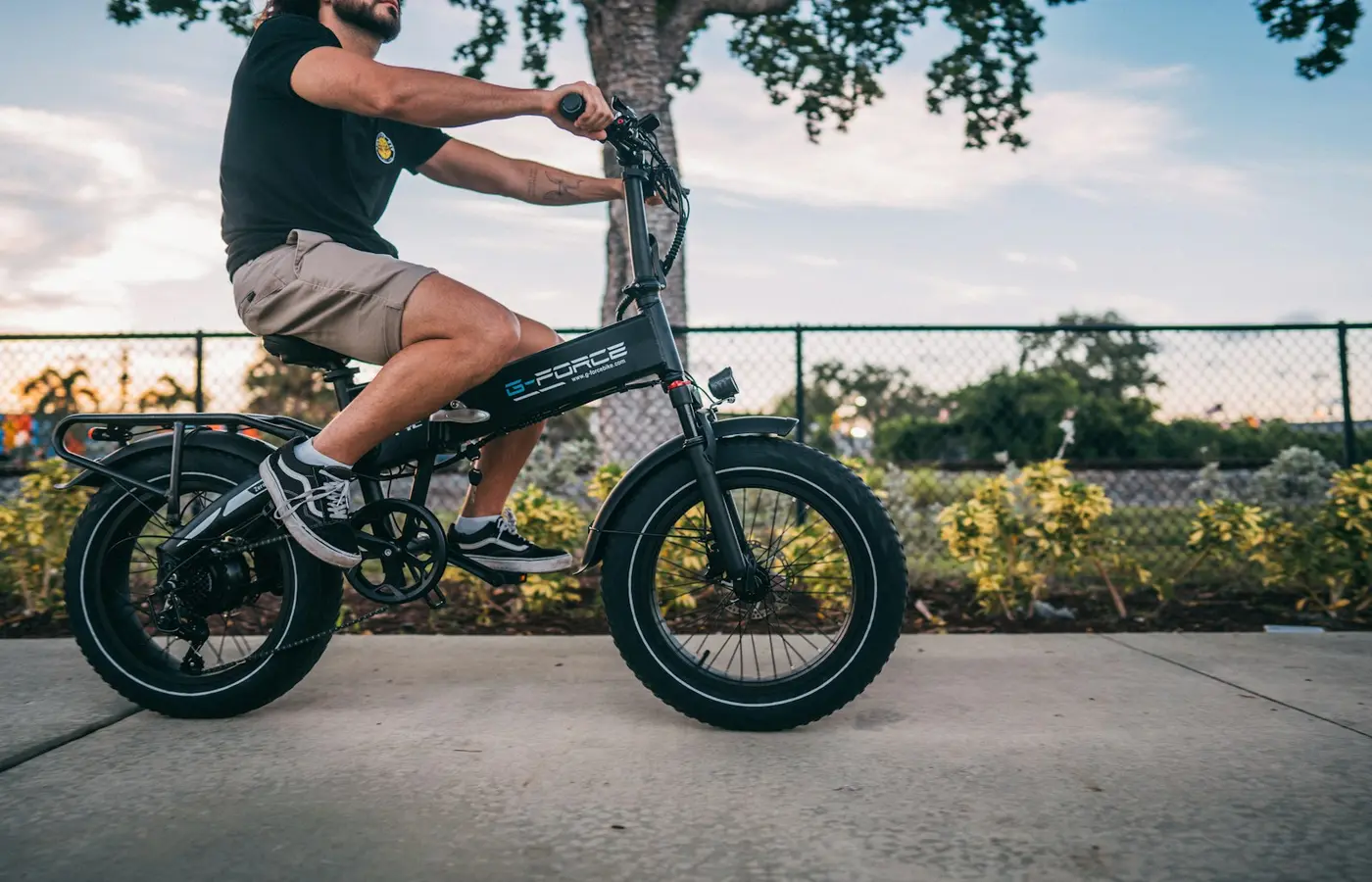
That distinction is useful, but incomplete. A folding e-bike can have small wheels and still be bulky or difficult to lift. It can have 20-inch wheels and still fold into a practical package. Battery size, motor type, frame construction, tire width, wheelbase, accessories, and the folding mechanism can matter as much as the number printed on the tire.
Start With the Trip You Need the Fold to Solve
Before comparing wheel diameters, define the part of your journey that makes a folding bike necessary.
For some riders, the bike is mainly a last-mile vehicle: it is carried from a flat to a lift, taken on public transport, then ridden a short distance. In this case, folded volume, carrying balance, and the number of folding steps may be more important than high-speed composure.
For others, folding is occasional. The bike may live in a car boot, be stored inside an office, or be taken on weekend trips, while the daily ride is still several kilometres each way. These riders may accept a larger folded package in return for larger tires, a longer wheelbase, or a less compact riding position.
A useful first question is not “Which wheel size is best?” It is: Will you carry the bike, roll it while folded, store it, or merely fold it occasionally?
Carrying deserves special attention. A folding e-bike is not automatically easy to lift. Motors, batteries, racks, mudguards, suspension parts, and heavy-duty frames can add substantial mass. The location of that mass also matters. A bike with a manageable listed weight can still be awkward if it folds with the drivetrain exposed, lacks a secure folded latch, or has no natural handhold.
Public-transport access is another separate issue. A compact fold may improve the chances of taking a bike indoors or onto a train, but it does not guarantee permission. Transport operators, workplaces, apartment buildings, and ferry services may have rules about folded dimensions, peak-hour access, batteries, or where a folded bike can be placed. Check the current policy of the specific operator rather than relying on wheel size alone.
What 16-Inch and 20-Inch Wheel Labels Actually Mean
A folding e-bike wheel size is a nominal category, not a complete description of the wheel or the bicycle.
A tire labelled 16 inches does not tell you its precise outside diameter once mounted, and the same applies to a 20-inch tire. Tire width, tread depth, rim standard, and inflation all affect the installed size. In practice, two bikes marketed with the same nominal wheel size can have visibly different tire volume and different real-world rolling behaviour.
More importantly, wheel labels do not reveal:
- Tire width and casing volume
- Frame wheelbase and steering geometry
- Fork and rear-frame design
- Rider position and handlebar reach
- Suspension, if fitted
- Motor, battery, and accessory weight
- The folded length, width, and height
- Whether the folded bike locks together securely
That is why a 16-inch folding e-bike should not automatically be assumed to fold smaller than every 20-inch model. Folding layout can reverse the result. A 20-inch bike with a well-integrated hinge, telescopic steering column, folding pedals, and compact handlebar arrangement may store more neatly than a poorly packaged 16-inch design.
The same caution applies to weight. Smaller wheels can reduce some component size and mass, but the complete bike weight may be driven more strongly by battery capacity, frame material, motor design, rack, lights, suspension, and puncture-resistant tires.
When comparing listings, use the manufacturer’s stated complete bike weight and folded dimensions, rather than treating wheel size as a shortcut for either measurement. If a battery can be removed, note both the complete-bike weight and the weight you would actually lift after removing it.
Ride Feel: Stability, Obstacles, and Comfort Depend on More Than Diameter
Wheel diameter does affect how a bicycle meets surface imperfections. All else being equal, a larger wheel approaches a small obstacle at a shallower angle than a smaller wheel. That can make broken pavement, shallow potholes, raised joints, and rough path surfaces feel less abrupt on a 20-inch setup than on a smaller wheel.
But “all else being equal” is rarely true with folding e-bikes.
A 16-inch bike with wide, moderately inflated tires can be more forgiving than a 20-inch bike fitted with narrow, high-pressure tires. A longer-wheelbase 16-inch design may feel more settled than a short-wheelbase 20-inch bike. Suspension can reduce some impacts, although it adds weight, complexity, and possible maintenance requirements. Rider posture also changes perception: an upright position can be practical in traffic but may transfer more of a sharp impact through the rider’s body.
Rough streets, kerbs, and grates
For routes with frequent poor surfaces, 20-inch wheels often offer a useful margin of calmness. The difference is most noticeable when the bike is ridden at ordinary commuting speeds over repeating imperfections rather than on smooth pavement.
This does not mean a 20-inch folding e-bike should be ridden carelessly into potholes or high kerbs. Small-wheel bikes of either size can react more sharply than full-size commuter bicycles when they encounter a deep hole, loose surface, or square-edged obstacle. Riders should slow down, unweight the front wheel where appropriate, and avoid striking obstacles head-on.
Drainage grates deserve particular care. Wheel size does not eliminate the risk of a tire entering a poorly oriented or wide-slot grate. Cross them at a safe angle when conditions permit, especially in wet weather.
Comfort is largely a tire question
Tire volume and pressure are among the most practical comfort variables a buyer can assess. A larger-volume tire can deform around minor surface texture instead of transmitting every vibration through the frame. However, pressure must remain within the tire and rim maker’s stated limits, and it should be suitable for rider weight, cargo, weather, and puncture risk.
For a potential purchase, look for the published tire size, recommended pressure range, and clearance around the frame and mudguards. Do not assume that a bike can accept a wider tire later; clearance, rim compatibility, and folding interference may limit upgrades.
Portability: Compare the Whole Folded Package, Not Just the Wheels
A compact wheel format can support a compact folding design, which is why many 16-inch e-bikes appeal to riders with limited storage space. Yet portability is a system-level result, not a wheel-size specification.
Use this checklist when comparing two folding e-bikes:
| What to compare | Why it matters |
|---|---|
| Folded length, width, and height | Determines whether the bike fits in a cupboard, boot, lift, or luggage area. |
| Complete weight | Shows what must be lifted if the battery stays installed. |
| Removable-battery arrangement | May reduce lifting weight, but adds a separate item to carry and charge. |
| Folded balance | A folded bike should be stable enough to hold, move, or park without fighting the frame. |
| Latch or magnet system | Helps prevent the two halves from opening while being carried. |
| Protruding parts | Pedals, brake levers, derailleurs, seatposts, and handlebars can snag clothing or other luggage. |
| Ability to roll when folded | Can matter more than a small weight difference in stations and corridors. |
| Folding sequence | A quick, repeatable process is more likely to be used daily. |
A 16-inch model is often the logical place to look when storage space is the binding constraint. It may also be easier to position in a narrow hallway or place beneath a desk. But buyers should physically compare the quoted folded dimensions with the storage space available. Measure doorways, lift interiors, luggage compartments, and the space between shelving rather than estimating by eye.
A 20-inch bike may be less convenient for frequent carrying, particularly upstairs, but could still be practical if it is stored on the ground floor, rolled from platform to platform, or folded mainly for vehicle transport. In those scenarios, the improvement in ride quality may be worth a larger package.
Handling, Fit, and Drivetrain Choices for Urban Riding
Small wheels do not determine handling by themselves. Steering response is shaped by fork geometry, handlebar width, wheelbase, weight distribution, tire profile, and the stiffness of the frame and folding joint.
A compact folding bike can feel lively at low urban speeds, which may be useful when filtering through tight storage areas or navigating slow traffic. At the same time, a short wheelbase and quick steering can feel less relaxed when descending, riding in crosswinds, or travelling quickly on uneven roads. A 20-inch folding e-bike is often designed around a slightly larger footprint, but that does not guarantee a more stable feel; the geometry still needs to suit the rider and intended speed.
Adult fit is not decided by wheel size
A 16-inch folding e-bike can work for an adult commuter if its seatpost, handlebar adjustment, reach, and stated rider limits fit that person. Conversely, a 20-inch model can still feel cramped if the cockpit is short or the adjustment range is limited.
Check the manufacturer’s published guidance for rider height, maximum load, seatpost extension, and handlebar adjustment. Treat broad height ranges cautiously: torso length, flexibility, preferred posture, and shoe size can all influence fit. Pedal clearance also matters on compact frames, particularly when cornering or riding over uneven surfaces.
If possible, test the folded and unfolded operation before buying. Confirm that the saddle reaches a suitable pedalling height, the handlebar does not feel too close, and the bike can be controlled comfortably while starting, stopping, and turning at low speed.
Gearing and motor assistance need to suit the route
Smaller wheels change the distance travelled per wheel revolution, so drivetrain gearing must be selected accordingly. Manufacturers account for this through chainring, sprocket, cassette, or internal-gear choices. The relevant question is not whether 16-inch or 20-inch wheels are inherently better geared, but whether the bike’s actual gear range and assist system match the rider’s terrain.
For flat, short trips, a simple drivetrain and moderate assist may be adequate. For steep streets, cargo, frequent starts, or longer rides, assess the available low gearing, motor torque characteristics where officially stated, battery capacity, and the legal assist limit in the intended market.
Wheel size does not establish whether an e-bike is legal for a particular road, cycle facility, or public-transport service. Classification depends on local rules covering matters such as motor output, assisted speed, throttle operation, and equipment requirements. Confirm the rules for the country or city where the bike will be used, especially when importing a Chinese-market model.
Which Folding E-Bike Wheel Size Fits Your Use Case?
A 16-inch folding e-bike is often worth prioritising when the bike must occupy the smallest practical space and be handled frequently between rides. It can be a strong match for short urban journeys, mixed-mode commuting, compact homes, and riders who value a tightly packaged fold. The compromise may be greater sensitivity to poor road surfaces, depending on tire setup and frame geometry.
A 20-inch folding e-bike is often worth prioritising when the route is longer, the pavement is inconsistent, and the bike will be ridden more often than carried. It may offer a more settled starting point for urban commuting, especially when paired with adequate tire volume and a suitable riding position. The compromise is usually a larger folded package, although individual designs vary widely.
Before choosing, compare these measurable details for the exact bikes on your shortlist:
- Folded length, width, and height against your real storage space.
- Complete weight, plus battery-removed weight if the battery is detachable.
- Tire size, tire pressure guidance, and the quality of roads on your normal route.
- Folding steps, latch security, and whether the bike can be rolled while folded.
- Rider-height guidance, maximum load, saddle height, and handlebar adjustment.
- Gear range, assist behaviour, and hill suitability for your regular journeys.
- Local legal classification, transport rules, spare-parts availability, and service support.
The better folding e-bike wheel size is the one that solves the daily constraint you actually have. For some buyers, that is the smallest possible folded footprint. For others, it is a less compromised ride after the bike is unfolded.
Frequently Asked Questions
Are 16-inch folding e-bikes easier to carry than 20-inch models?
Not necessarily. A 16-inch model may be more compact, but complete weight and carrying awkwardness depend on the battery, motor, frame, accessories, and folding layout. Compare the listed weight, folded balance, handholds, latch system, and whether the bike can roll when folded.
Do 20-inch folding e-bikes ride more comfortably on rough roads?
They can, because a larger wheel can meet small obstacles less abruptly. However, comfort also depends strongly on tire volume, tire pressure, wheelbase, suspension, rider position, and road conditions. A well-equipped 16-inch bike may be more comfortable than a poorly set-up 20-inch model.
Can a 16-inch folding e-bike work for an adult commuter?
Yes, provided the specific model fits the rider and the route. Check the maker’s rider-height and load guidance, seatpost range, handlebar adjustment, pedal clearance, tire setup, and gearing. Wheel size alone does not determine whether a bike fits an adult.
Which measurements should I compare before buying a folding e-bike?
Start with folded length, width, height, complete weight, removable-battery weight, tire dimensions, rider-fit range, and maximum load. Then compare the folding process, folded latch, ability to roll the bike when folded, service support, and the rules affecting where you plan to ride or carry it.